
NZCMRR Classic Festival 2027 Class Guide: Vintage, Pre-War, Classic ’70s, P82, P89 & P95
Quick answer: the 47th NZCMRR Classic Festival is not one single “old motorcycle” category. The current official listing spans Vintage, Pre-War, Pre-63, Classic ’70s, Post Classic P82/P89/P95, sidecars and Regularity. The easiest way for a first-time spectator to understand it is to read each machine through two questions: which rule period does it belong to, and which capacity or format group is it running in?
Important 2027 status: NZCMRR lists a wider event window of Friday 15 to Sunday 17 January 2027 at Manfeild Circuit Chris Amon. Motorcycling New Zealand (MNZ) currently lists Saturday 16 to Sunday 17 January, permit 22073, with the permit marked Pending. That may mean Friday forms part of the wider event programme rather than the competition dates, but no Friday activity should be assumed until organisers publish it. Supporting documents and final supplementary regulations were not available when this guide was prepared.

The class map in one minute
The official NZCMRR technical rules, revised 9 June 2026, work alongside the current MNZ Manual of Motorcycle Sport. They organise classic racing by engineering period, not merely by what looks old. A beautifully restored motorcycle can resemble an earlier era, but eligibility depends on the applicable rule set and, for Post Classic machines, the age of major components.
- Vintage: motorcycles from before 1931.
- Pre-War: motorcycles from before 1946.
- Pre-63 Classic: machines governed by the pre-1963 Clubmans, Factory Racing or Modified definitions.
- Classic ’70s: Japanese motorcycles from 1 January 1963 to 31 October 1972, and non-Japanese motorcycles from 1 January 1963 to 31 December 1975, subject to the detailed technical rules.
- Post Classic: the later P82, P89 and P95 periods defined through MNZ Appendix P.
This makes the Festival useful for club visitors: the paddock becomes a moving timeline of frame design, brakes, engines and bodywork. It also explains why two motorcycles that look broadly similar may appear in different groups.

Vintage, Pre-War and Pre-63: where the timeline begins
Vintage is the earliest layer, covering pre-1931 machinery. Pre-War moves the timeline forward to pre-1946 machines. The current MNZ event listing groups Pre-31 Vintage with Pre-War 350, 500 and Open classes in one of its published lines, but that is a current listing under a pending permit—not permission to predict the final race order.
Pre-63 adds another level of technical distinction. The current listing names Clubmans, Factory Racing and Modified categories across capacity bands. For spectators, the useful lesson is simple: “Pre-63” is an eligibility period, while Clubmans, Factory Racing and Modified describe different rule pathways within it. Do not identify a machine’s category from paintwork alone; use the official programme, timing display or paddock information once published.
Classic ’70s: two different cutoff dates
Classic ’70s is often misunderstood because its cutoff is not identical for every country of origin. Under the current NZCMRR rules, Japanese motorcycles close at 31 October 1972, while non-Japanese motorcycles extend to 31 December 1975. The current MNZ listing includes Classic ’70s 250, 350, 500 and Open groupings.
This distinction matters when a club prepares a visitor briefing. Saying “anything from the 1970s” is inaccurate. A better explanation is that the class is rule-defined, with origin-specific date limits and technical requirements. Final eligibility belongs to event officials, not to a spectator’s visual judgement.
Build a reusable club briefing backdrop
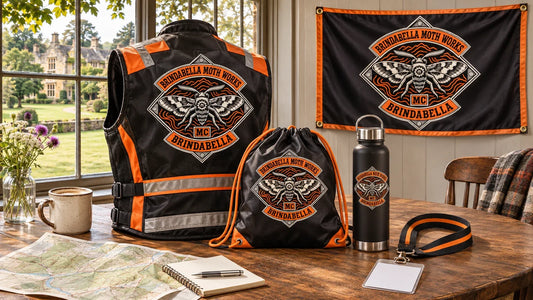
A logo-only banner can turn a private clubhouse class-study night into a consistent club activity without copying NZCMRR event branding or implying official status. Use your approved club artwork, reinforced hems and suitable fixing points for repeated indoor or outdoor use.

P82, P89 and P95: read the newest major component
MNZ Appendix P defines the Post Classic periods. In practical terms, P82 covers the period after P72 and before 31 December 1982; P89 follows P82 and closes before 31 December 1989; P95 follows P89 and closes before 31 December 1995. Appendix P also makes an essential point: period eligibility follows the major components and the newest applicable component, not simply the styling of the finished motorcycle.
The current 2027 event page lists P82 Senior and Junior; P89 F1, F2 and F3; and P95 Superbike, F1, F2 and F3. These labels help visitors anticipate a broad engineering progression, but they are not a confirmed session sequence. Because permit 22073 remains pending, combinations, entries and race order must wait for the final documents.
Sidecars and Regularity are not footnotes
The current listing includes Pre-63, Classic ’70s and Pre-82 sidecars. Sidecar racing has its own visual and technical language, and a club group should treat it as a separate discipline rather than trying to map every detail to solo classes.
Regularity is also different from a normal race. MNZ currently describes it as a parade event in which participants start from pit lane and aim for consistent lap times; a participant considered to be racing may be black-flagged. That makes “fastest wins” the wrong explanation. Consistency and controlled participation are the key ideas.
How to recognise capacity bands without guessing identity
For Vintage through Classic ’70s, NZCMRR’s current rules use number-board colours as a useful capacity cue: dark green with white numbers up to 250cc, dark blue with white numbers up to 350cc, yellow with black numbers up to 500cc, and red with white numbers over 500cc. Vintage machines use black boards with white numbers.
Those colours are a learning aid, not a rider-identification system, and this guide does not extend them to P82, P89 or P95. Use the final official programme and timing information for rider, machine and class identity. Never invent a rider name or officer title for a club display, patch or article graphic.
Turn class learning into a club tradition
A custom club challenge coin can mark your own class-study series or group trip without pretending to be an event award. Keep it club-logo-led: antique brass, 2D/3D relief and a neutral mechanical reverse work well without dates, results or unofficial event marks.

A practical club study plan before January
- Start with the era: learn the five broad steps—Vintage, Pre-War, Pre-63, Classic ’70s and Post Classic.
- Add capacity: use the official number-board colour guide only where NZCMRR applies it.
- Separate formats: solo racing, sidecars and Regularity need different explanations.
- Check status again: revisit the MNZ event page for permit status and supporting documents.
- Use final documents: let supplementary regulations, the programme and timing—not social media guesses—settle the running order and participant details.
A permanent logo-only metal sign can anchor this reference material in a private clubhouse. It should identify the club, not imitate an official circuit sign or display unverified event claims.

Create a durable private-club reference display
Commission a laser-cut, embossed or printed metal sign using approved club artwork. Choose the shape, finish and mounting approach during quotation, while keeping event names, dates and results off the design unless you have verified permission and facts.
Frequently asked questions
Is the 2027 NZCMRR Classic Festival programme final?
No. MNZ lists permit 22073 as Pending and currently provides no supporting documents. The class lines are useful planning information, but final combinations and schedule should come from the approved supplementary regulations and programme.
Is the event 15–17 January or 16–17 January 2027?
NZCMRR lists 15–17 January as the wider event window; MNZ currently lists 16–17 January. Until a detailed programme appears, treat Friday activity as unconfirmed and check both official pages before travel.
What is the difference between Classic ’70s and P82?
Classic ’70s uses NZCMRR’s origin-specific cutoff dates and technical rules. P82 is a later MNZ Post Classic period whose eligibility is assessed under Appendix P, including major-component rules.
Can spectators identify a class by colour alone?
No. Number-board colours can help with capacity bands in the NZCMRR Vintage-to-Classic-’70s rules, but the final programme and timing information are the reliable identity sources.
Official sources and disclosure
Sources consulted: NZCMRR Technical Rules; MNZ Road Manual of Motorcycle Sport; MNZ Appendix P; MNZ 47th NZCMRR Classic Festival listing; and the NZCMRR 2027 event listing. Checked 17 November 2026.
Editorial disclosure: Motor Club Shop is not the event organiser, MNZ or NZCMRR. Product images are original concept visuals made with authorised club artwork. They show private-club customisation ideas, not official Festival merchandise, signage, credentials or awards. Always verify the final permit, programme, entry list, access information and supplementary regulations with the organisers.
Tags:
Previous
NZCMRR Classic Festival 2027: Dates, Manfeild Location & First-Visit Checklist
Next
Sidecar Oschersleben 2027 verstehen: Fahrer, Beifahrer & Zuschauer-Guide
Related articles

ABR Festival 2027 Test Rides & Trail Pass Guide
Nov 17 2026