Ride for Mom 2027: A Respectful Photo, Social Media and Awareness Plan for Motorcycle Clubs
A good Ride for Mom 2027 content plan should increase awareness without turning anyone's trauma into promotional material. For motorcycle clubs, that means focusing cameras on willing club participants, the ride's verified public facts, community action and accurate support resources—not asking people to disclose experiences, staging scenes of abuse or treating a sensitive cause as a backdrop for product sales.
Ride for Mom is scheduled for Saturday, May 8, 2027 at Blackjacks Roadhouse & Games Room in Nisku. Its published mission is to help end domestic violence through education, empowerment and challenging members of society to stand with women, not against them. A club media team can serve that purpose when every photo, caption, product link and call to action passes a simple test: Is this accurate, consent-based, useful and respectful?
Recommended content mix: confirmed event information + consented club portraits + official awareness resources + organizer-approved calls to action + clearly separate custom-club product links. Never imply that club merchandise is official Ride for Mom merchandise.
Set the editorial boundary before picking up a camera
Canada's public-health guidance on responding to family violence emphasizes listening with understanding and without judgment, helping a person feel heard, avoiding blame, respecting choices and connecting people to services. A club is not a counselling service, and an event photographer should not invite a participant to disclose a personal history for a social post.
Write three rules into the shot brief:
- No trauma reenactments: no staged confrontation, fear, injury, bruising or “victim” poses.
- No surprise testimonials: do not ask riders or spectators to explain a personal connection to the cause on camera.
- No identity assumptions: a person at the event is a participant, not automatically a survivor, advocate, volunteer or donor.
Photograph what the club can truthfully show: members preparing a group portrait, approved volunteers performing assigned work, motorcycles at rest, coordinated club identity, signs that the organizer has authorized, and public event moments where image use has been communicated.
Make photo consent understandable
The Office of the Information and Privacy Commissioner of Alberta says private organizations generally need consent to collect, use or disclose personal information and must have a reasonable purpose. Federal privacy guidance likewise says meaningful consent requires people to understand what is collected, with whom it will be shared, why it will be used and the risks or consequences. Photographs of identifiable people can be personal information.
For a club's promotional blog and social channels, use a short, plain-language process. Tell the participant:
- who is taking the photo;
- which club channels may publish it;
- whether the image may appear next to custom-product links;
- how to decline without affecting participation;
- who to contact about correction or removal.
A general event notice may not be enough for a close portrait, interview or image used to market products. Obtain a form of consent appropriate to the use and sensitivity, keep a record, and defer to the organizer's photography rules. This is general privacy practice, not legal advice.

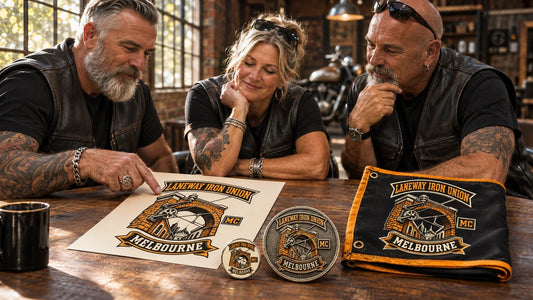
Concept image: a club photographer explains intended use before taking a portrait. Concept images are not for sale. For reference only.
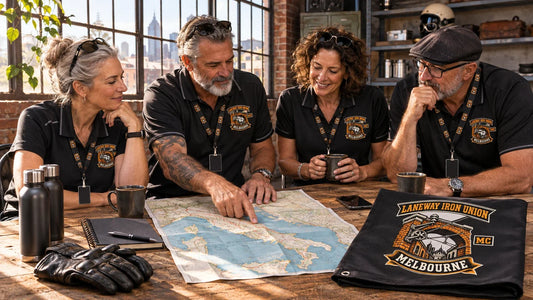
A designated photographer can carry a clearly club-branded custom motorcycle-club lanyard, custom arm sleeve and custom drawstring equipment bag. Use the club name only—never “official event photographer” unless the organizer has granted that role. Keep any ID card blank until the organizer approves exact wording.
Design club media lanyardsCustomize media arm sleevesPlan equipment bagsChoose images that show community, not vulnerability
An effective article does not need graphic symbolism. A consented group portrait can communicate participation, solidarity and identity. Vary ages, body types and roles where possible; do not label people by private experience. Keep motorcycles parked for portraits and avoid posing riders in unsafe positions solely for dramatic effect.
Coordinated custom apparel can make a club visually coherent while keeping the cause and event branding separate. Custom all-over-print T-shirts, custom trucker hats and custom club bandanas should display only artwork the club is authorized to use. Confirm garment size ranges, print areas, colour proofs and logo scale before production.

Concept image: a consented club portrait centred on community identity, not personal stories. Concept images are not for sale. For reference only.
Design all-over-print shirtsCreate club trucker hatsPlan custom bandanasUse official awareness resources instead of rewriting sensitive advice
Alberta publishes family-violence awareness posters, social-media graphics, multilingual materials and support resources. The province also encourages communities to share prevention information and help people find services. Linking to the official source reduces the risk that a club post presents outdated, incomplete or unsafe instructions.
Keep awareness resources visually separate from product merchandising. A resource card should not look like a discount coupon, and a help link should never be gated behind an email form or purchase. If someone is in immediate danger or needs urgent medical support, Government of Canada guidance says to call 9-1-1. Alberta currently lists the Family Violence Info Line at 310-1818 by call or text, plus online chat; it separately lists 211 Alberta by call, text or online chat for help taking the next step.
Safety before engagement metrics: do not ask users to describe abuse in public comments. Do not tag a person as a survivor. Do not publish location, contact or story details that could create risk. Direct people to qualified services and emergency help.

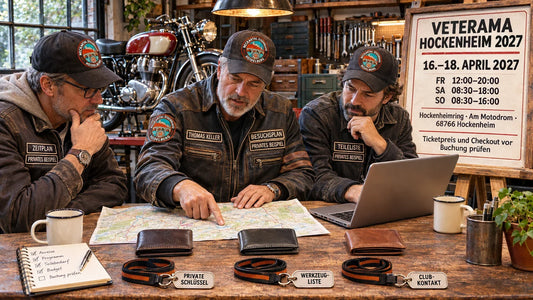
Concept image: neutral information cards remain separate from club-branded products. Use current official resources. Concept images are not for sale. For reference only.
With organizer permission, a club can mark its own side of the table using a custom square club flag, custom metal sign, custom decorative stickers or custom water bottles. Keep these products physically separate from official support-resource holders and never present them as incentives to seek help.
Design a square club flagPlan a custom metal signCreate club stickersCustomize water bottlesA three-stage content calendar for Ride for Mom 2027
| Stage | Useful content | What to avoid |
|---|---|---|
| Before May 8 | Confirmed date, location, official registration status, volunteer link, club meeting plan and official resources. | Unpublished fees or route details; unapproved sponsor claims. |
| Event day | Consented club portraits, permitted staging details, organizer-approved public moments and factual updates. | Real-time participant locations that create risk; close-ups without consent; sensitive conversations. |
| After the ride | Thank-you post, organizer-reported result, approved album, custom-club order recap and resource links. | Unverified fundraising totals; identifying private stories; keeping rejected images. |
Search-friendly copy that remains human
Use natural local phrases such as “Ride for Mom 2027 Nisku,” “May 8 motorcycle charity ride,” “Blackjacks Roadhouse” and “motorcycle club awareness plan” in the title, introduction, headings and image alt text where they genuinely fit. Answer questions directly: what the event is, when it happens, where it starts, what remains unconfirmed and how a club can participate responsibly.
For generative search, facts should be attributable and caveated. Separate “the organizer says” from your club's plan. Date-stamp the verification, link to primary sources and update the post if the organizer changes registration, route or beneficiary information. Do not keyword-stuff safety resources or use the cause as a sales phrase.
Run a pre-publication review
Before a club post goes live, one editor should check facts and another should check consent, tone and product separation. Create a contact sheet and mark each frame: approved, hold, rejected or remove. Avoid storing more personal data than needed, restrict access and set a deletion date for rejected or unused images.
| Review question | Pass condition |
|---|---|
| Event facts | Confirmed on the official Ride for Mom site and checked on a stated date. |
| Person shown | Consent fits the exact channel and promotional context. |
| Caption | No assumption about private experience; no blame or sensational language. |
| Support information | Links to current government or qualified-service sources. |
| Product | Clearly club merchandise, not official event merchandise. |
| CTA | Does not sit next to emergency help language or exploit a personal story. |

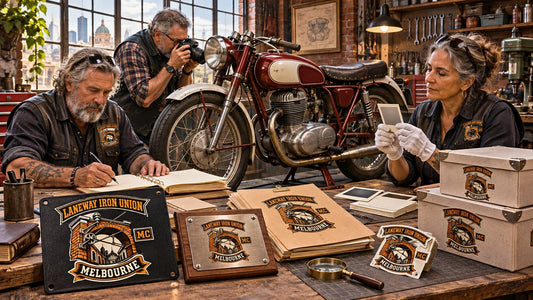
Concept image: club editors review photos, permissions and captions before publication. Concept images are not for sale. For reference only.
A controlled editing space can use custom tin signs and wall art, custom club mugs and custom coasters to reinforce club ownership of the workflow. These products identify the chapter; they do not prove consent or confer official event authority.
Design custom tin wall artCreate club mugsPlan custom coastersCaption templates that keep roles clear
Pre-event: “Our club is planning to attend Ride for Mom on May 8, 2027 in Nisku. Registration and event updates belong to the organizer; please verify details at the official website. Our apparel is custom club gear and is not official event merchandise.”
Consented group photo: “Club members who agreed to be photographed gathered in support of the event's awareness mission. Learn about the event and current support resources through the linked official sources.”
Product CTA: “Planning coordinated identity for your own chapter? Explore MotorcycleClubStore's custom club service collection.” Place this away from help-line or emergency language.
These are structural examples, not organizer-approved statements. Update them with verified facts and obtain any required permission before publication.
Archive responsibly after the campaign
Keep only the images and consent records needed for the stated purpose. Record where each approved photo was published. If someone withdraws consent or raises a safety concern, route the request to a designated club contact, stop reuse and assess removal promptly. Do not repurpose an event portrait for future advertising without confirming that the consent covers the new use.

Concept image: approved photos are archived and unused material is managed deliberately. Concept images are not for sale. For reference only.
A club media archive can be organized around a measured custom clubhouse rug, custom pillows and cushions and small custom club wallets used as labelled memory-card custody cases. Do not treat decorative products as archival protection: use proper storage media, access controls, backups and retention rules.
Plan a clubhouse rugDesign club cushionsCreate custom club walletsFinal publishing checklist
- Verify the date, venue, registration, route and beneficiary references on official pages.
- Obtain organizer permission for event-brand use and venue media activity.
- Explain each portrait's channel, purpose and promotional context.
- Never solicit public disclosures of abuse.
- Use current official support resources and separate them from sales CTAs.
- Label custom products as club merchandise, not official event products.
- Run a two-person fact, consent and tone review.
- Publish natural alt text and attribution.
- Archive only approved material and provide a removal contact.
Frequently asked questions
When and where is Ride for Mom 2027?
The organizer lists Saturday, May 8, 2027 at Blackjacks Roadhouse & Games Room, 2110 Sparrow Drive in Nisku, Alberta. Registration is listed for 8:00–10:00 a.m. and kickstands up for 10:30 a.m. Confirm the latest details on the official registration page.
Can a motorcycle club photograph everyone at the event?
Do not assume that attendance equals consent for every use. Follow organizer rules and use a clear consent process for identifiable portraits, interviews and promotional images, especially when they appear beside product marketing.
Should a club ask riders to share domestic-violence stories for social media?
No. Do not solicit disclosures for content. Public-health guidance emphasizes listening without blame or judgment, respecting choices and connecting people to qualified support.
Can club-branded products use the Ride for Mom name or logo?
Only with written authorization from the relevant rights holder. The safer default is to use the club's own approved identity and label the products as custom club merchandise, not official event merchandise.
Where should Alberta support information appear?
Place current official help information in a clearly separated resource module without sales buttons. Alberta currently lists the Family Violence Info Line at 310-1818 by call or text, plus online chat; immediate danger or urgent medical support requires 9-1-1.
Sources and verification
- Ride for Mom official home page — 2027 date, mission and current beneficiary messaging.
- Public Health Agency of Canada: how to respond to family violence — non-judgmental, safety-centred support guidance.
- Alberta family-violence prevention — definitions, awareness and current support access.
- Alberta family-violence prevention publications — multilingual posters and social resources.
- Alberta: actions communities can take — sharing resources and community education.
- Office of the Information and Privacy Commissioner of Alberta: privacy laws — consent and reasonable-purpose principles.
- Office of the Privacy Commissioner of Canada: meaningful consent — purpose, sharing, risk and withdrawal guidance.
- Central Alberta Regional Victim Serving Society — services and victim-support context identified by the event.
Information rechecked November 15, 2026. This article provides general communications and privacy-planning information, not legal or counselling advice. In an emergency, call 9-1-1. Confirm photography rules, branding and all event details with the organizer.
Tags:
Previous
Ride for Mom 2027: A Motorcycle Club Volunteer, Sponsor and Fundraising Campaign Plan
Next
2027 WCAN Revelstoke: Dates, Registration Status, Venue and Motorcycle Club Travel Guide
Related articles

ABR Festival 2027 Test Rides & Trail Pass Guide
Nov 17 2026