VCC Rally 2027 Motorcycle Eligibility Guide: VIC, WoF & Rego
Quick answer: A motorcycle being prepared for the 2027 VCC National Motorcycle Rally needs three separate checks: VCC event eligibility, a current Vehicle Identity Card (VIC), and legal readiness for New Zealand road use. VCC states that every vehicle entered in a national rally or speed event must hold a current VIC, which is valid for 10 years. A VIC does not replace the motorcycle's WoF, vehicle licence, registration, number plate, the rider's motorcycle licence or an approved helmet.
Last fact-checked: 17 November 2026. This is a document-and-readiness guide, not an eligibility decision, vehicle inspection or legal opinion. Confirm your motorcycle with VCC and its road-use status with NZ Transport Agency Waka Kotahi before the rally.
The three-gate test before the Timaru rally
The 30th VCC National Motorcycle Rally is scheduled in Timaru from 12–14 February 2027, followed by an optional After Rally Tour from 15–18 February. Before focusing on luggage or club merchandise, work through three different gates:
- Club category: does VCC classify the motorcycle as club-eligible for its construction era and configuration?
- Event identity: is the VIC current and does it correctly describe the motorcycle and its major components?
- Road use: if the motorcycle will use public roads, are its WoF, licensing, registration, plate, rider licence and helmet requirements satisfied?
Passing one gate does not automatically pass the other two. A current WoF is not a VCC identity decision. A VIC is not a WoF. A motorcycle's vehicle licence—often called “rego”—is not proof of VCC eligibility and is not the same thing as initial registration or legal ownership.
Start with the VCC construction-era categories

VCC's official club-eligible vehicle page includes motorcycles and publishes these core construction periods:
- Veteran: constructed before 31 December 1918.
- Vintage: constructed from 1 January 1919 to 31 December 1931.
- Post Vintage: constructed from 1 January 1932 to 31 December 1945.
- Post War: constructed from 1 January 1946 to 31 December 1960.
- Post 1960: constructed from 1 January 1961 to 31 December 1980.
- Post 1980: constructed from 1 January 1981, but not eligible until the day immediately after the 30th anniversary of original construction, as determined under the Club Vehicle Technical Code.
The rally registration form uses similar labels and currently includes a Post 80 range of 1981–1997. Do not treat a dropdown selection as the final identity decision. VCC separately publishes rules for historic racing vehicles, Period Specials, modified production vehicles and authentic reproductions. A rebuilt, modified or unusually documented motorcycle may need more careful review than its apparent year suggests.
What a VIC proves—and what it does not

VCC describes a Vehicle Identity Card as evidence that a club-eligible vehicle is correctly described and has the correct major components—such as engine and chassis—for its make and year. It can apply to registered vehicles and unregistered special-purpose vehicles.
Most importantly for this event, VCC's current page says: a vehicle entered in any national rally or speed event must hold a current VIC. It also says a VIC is valid for 10 years and must then be renewed. The live rally form asks for a VIC number and issue date; even if a browser does not visually mark those boxes as required, the national-event rule remains the stronger eligibility instruction to check with VCC.
Before entering or travelling, compare the card with the motorcycle in front of you:
- Is the card still within its 10-year validity period?
- Does the recorded vehicle identity still match the current motorcycle?
- Has ownership changed, requiring the current VCC transfer process?
- Have major components or configuration changed since the card was issued?
- Is the category used on the rally entry consistent with VCC's records?
Do not alter a card or infer that an old card remains valid after substantial changes. VCC says the scheme is administered by National Office through the local branch. Use that channel for a real determination.
VIC, DOMAS and Lighting Endorsement are different
VCC's current application page separates three purposes:
- VIC: vehicle identity and VCC event eligibility.
- DOMAS: Date of Manufacture and Authenticity Statement, used when returning a vehicle to the road after registration has lapsed or when it has never been registered in New Zealand. VCC says NZTA recognises its DOMAS for registration purposes.
- Lighting Endorsement: a separate Form B process for a vehicle that already has a DOMAS or VIC and requires that endorsement.
Form A covers VIC and/or DOMAS and is listed by VCC as updated in September 2026. That does not mean an application started now will be completed by a particular date. No processing-time promise is made here. If the motorcycle lacks a current VIC, contact the branch and National Office immediately and make travel decisions from their response.
Use club lanyards only for private organisation

A custom lanyard can keep a private club's own accommodation card, emergency contact card or document checklist together while members are off the motorcycle. It must not imitate a VIC, rider licence, official rally credential, marshal pass or organiser badge.
MotorClubShop's custom lanyard process can review an authorised logo at the selected width, repeat spacing, material, attachment and blank-holder size. Keep the holder blank in the artwork proof until the club has verified exactly what private information belongs there. Never invent member names or roles.
Remove or secure a neck lanyard before riding. A loose lanyard can become a snag hazard and is not riding equipment.
Road legality: WoF, licensing, registration and plate

NZTA states that privately operated motorcycles need a current WoF. Motorcycles must also display a current vehicle licence label and a clearly visible rear number plate. Motorcycles used on the road must be registered and licensed, the rider must hold a motorcycle driver licence, and an approved safety helmet must be worn.
For motorcycles over four years old, NZTA's current WoF page lists a 12-month WoF interval. But a pass is not a guarantee until the next sticker date: the owner must keep the motorcycle in WoF condition between inspections.
NZTA lists general WoF safety areas including tyres, brake operation, structure, lights, speedometer, steering and suspension, exhaust and fuel system. It also explains what a WoF does not fully assess, including the general condition of the engine, clutch or gearbox and lubricant levels. A long rally weekend therefore needs more than checking the label date.
A document check is not a mechanical inspection
Use the following as a conversation starter with the person who maintains the motorcycle, not as a substitute for competent inspection:
- Confirm the WoF and vehicle-licence expiry dates extend through the intended travel period.
- Check that the rear number plate and required labels are present and visible.
- Review current condition in the areas NZTA identifies for WoF, including tyres, brakes, structure, lights, steering/suspension, exhaust and fuel system.
- Discuss items a WoF does not fully cover, such as engine, clutch, gearbox and lubricant condition.
- If the motorcycle is modified, establish whether low-volume vehicle certification or another approval applies; do not guess.
- Carry only tools and spares you understand how to use safely, and secure them away from moving or hot components.
If a vehicle has failed a WoF or is not road-legal, follow NZTA's restrictions. This article does not advise riding it to the rally.
Choose a motorcycle-friendly key tag
A club key tag can make a small ignition key easier to locate, but its weight, length, ring and position matter. Heavy metal pieces can strike painted surfaces or move around near the steering head. For a vintage motorcycle key, a lightweight textile tag may be the more practical starting point, subject to the actual machine and rider preference.
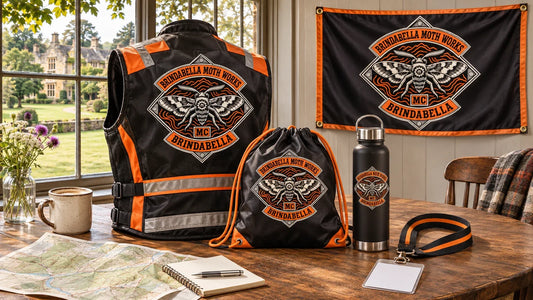
MotorClubShop can adapt authorised club artwork to embroidered, woven, leather or metal keychain formats. Confirm finished dimensions, attachment hardware and weight in the proof or sample. The concept image is not a claim that the tag is safe on every ignition position.
Build one private document kit per motorcycle

For a club travelling together, one private kit per motorcycle can keep photocopies or reference notes organised. A useful index might record where the rider securely stores the originals, emergency contact details, insurer or roadside-assistance information, and the club's private meeting plan. Do not publish sensitive numbers or leave valuable originals unattended.
A custom drawstring bag can identify the club's own document and personal-gear kit. It is not the organiser's rally bag, does not confer entry and should not display VCC or rally artwork without permission. Size the bag around the real contents, test it filled and keep it secured during transport; a drawstring bag is not a waterproof or load-rated motorcycle luggage claim.
Four-week verification sequence
Work backwards from travel rather than leaving identity and road-use questions to check-in:
- Now: locate the VIC, read its issue date and compare the recorded motorcycle with its current state.
- Next: ask the local VCC branch about any identity, category, ownership or modification uncertainty.
- Then: check WoF and vehicle-licence expiry, registration/plate status, rider licence and approved helmet.
- Mechanically: arrange competent inspection or maintenance early enough to address issues without rushing.
- Before departure: recheck current documents and condition; do not assume nothing changed after the first review.
The “four-week” label is an editorial planning structure, not an organiser deadline or a guaranteed approval timeline. A missing or expired VIC may take longer than your schedule allows.
Frequently asked questions
Does a motorcycle need a current VIC for the 2027 national rally?
VCC's official VIC page states that a vehicle entered in any national rally or speed event must hold a current VIC.
How long is a VCC VIC valid?
VCC says a VIC is valid for 10 years and must then be renewed.
Is a VIC the same as a WoF?
No. A VIC supports VCC vehicle identity and event eligibility. A WoF is part of New Zealand road-use compliance and vehicle safety inspection.
What is a DOMAS used for?
VCC says a DOMAS supports putting a vehicle back on the road after registration has lapsed or registering one that has never been registered in New Zealand. It is separate from a VIC.
Does a current WoF prove the engine and gearbox are ready for a rally?
No. NZTA explains that a WoF does not cover every aspect of mechanical condition, including the general condition of the engine, clutch and gearbox.
Are the club products shown official VCC rally equipment?
No. They are non-official MotorClubShop concept images using separate authorised artwork and provide no eligibility, roadworthiness or event access.
Official sources
- VCC official club-eligible vehicle categories
- VCC official VIC and DOMAS information
- South Canterbury Branch official rally entry page
- Official 2027 rally registration form
- NZTA official motorcycle requirements
- NZTA official WoF guidance
- NZTA official vehicle-licensing guidance
Concept images are not for sale and are for reference only. They do not depict an actual VIC, official credential, inspection, event participant or rally-issued product. MotorClubShop is not affiliated with, endorsed by or an official supplier of the Vintage Car Club of New Zealand, its South Canterbury Branch or the 2027 National Motorcycle Rally.
Tags:
Previous
Rotorua Motocross Finale 2027: Starts, Flags, Points & Tie-Breaks
Next
VCC National Motorcycle Rally 2027 Late Entry Guide: Deadline, Fees & Routes
Related articles

ABR Festival 2027 Test Rides & Trail Pass Guide
Nov 17 2026