

2027 Okanagan Ride for Dad Safety Checklist: Weather, Bike Checks & Small-Group Riding
How should a motorcycle club prepare for the 2027 Okanagan Ride for Dad before the route and start details are released? Build a private club plan around the one confirmed event fact, then keep every unconfirmed field visibly pending. The official Ride For Dad national calendar lists the Okanagan motorcycle event for Sunday, June 13, 2027. When this guide was fact-checked on November 20, 2026, the Okanagan chapter still displayed 2026 operating details rather than a complete 2027 venue, start time, route, registration fee, pledge threshold or finish program.
This guide therefore focuses on what a club can responsibly control: source checking, motorcycle readiness, June weather decisions, small-group riding, intersection awareness, rest-point organization and stationary check-in. It does not turn last year's schedule into a prediction. It also keeps custom club products in their proper role—identity, organization and off-bike communication—not certified riding protection or official Ride For Dad credentials.

2027 Okanagan Ride for Dad: quick planning answer
- Confirmed: Sunday, June 13, 2027, in the Okanagan region of British Columbia.
- Not yet confirmed for 2027: start venue, start time, route, fee, pledge threshold and finish activities.
- Best preparation now: appoint one source checker, inspect motorcycles early, divide groups larger than six, brief the route only after it is official, and plan for changing June conditions.
- Product boundary: custom banners, flags, shirts, bags, drinkware, signs, stickers, lanyards and arm sleeves can organize club activity; they do not replace approved helmets or purpose-made protective gear.
1. Separate official event information from your club plan
Create a two-column record. The first column contains only information published by the official Okanagan Ride For Dad chapter or national calendar. The second contains your club's independent meeting point, departure time, group assignments and contact procedure. This distinction prevents a private rendezvous from being mistaken for the official event start.
Assign one member to check the official chapter page at a regular interval. That person should record the source URL and date checked, then issue a single written update when new 2027 details appear. Avoid screenshots without dates, copied social posts without provenance and messages that combine official and club information into one block. Seven days before departure, reconfirm the official page; 24 hours before, check current weather and DriveBC advisories; on ride morning, repeat the final check.

A wide banner works when information must be readable across a room. A rectangular flag works as a static identity marker when the authorized emblem fits the format without distortion. Before ordering either, specify finished dimensions, viewing distance, attachment method, front/reverse reading and the exact approved logo file. Do not add a 2027 venue or time until the organizer publishes it.
Build a source-controlled briefing display
Use your club's authorized artwork and keep event logistics in replaceable cards or a separate verified handout.
Plan Custom Event Banners Explore Custom Rectangular Flags2. Use climate normals for packing—not as a forecast
Environment and Climate Change Canada's 1991–2020 Kelowna normals report a June daily average of 16.6°C, a daily maximum of 24.0°C and a daily minimum of 9.1°C. These values describe historical average conditions at Kelowna; they are not a forecast for June 13, 2027 and do not describe every location or hour along a future route.
Use the normals only to prompt questions: Could the club face a cool morning and warmer afternoon? Where can riders safely add or remove layers? What current forecast and road information will be checked before departure? A packing plan should preserve each rider's responsibility to choose appropriate protective equipment and decide whether conditions are within their skills.

Before leaving
Check the current forecast, road advisories and wildfire or closure information relevant to the confirmed route. Pack a dry base layer, rain layer, hydration and any personal essentials without overloading the motorcycle.
At the staging area
Keep bags and loose clothing away from wheels, chains, belts, exhausts and controls. Put on or remove layers while stationary in a safe area, not in the departure lane.
Custom performance shirts are useful for off-bike volunteers or as ordinary club apparel where appropriate. Drawstring bags can organize a stationary registration pack or spare layer. Neither item should be marketed as impact, abrasion, weatherproof or visibility protection unless the exact product has verified specifications supporting that claim.
Coordinate the club's off-bike weather kit
Design Custom Performance T-Shirts Plan Custom Drawstring Bags3. Complete the motorcycle check early enough to fix problems
ICBC tells riders to check oil, brakes, cables, chains, tires and handlebars, and to use a qualified mechanic when uncertain. The valuable part of this advice is timing: the inspection should happen early enough to correct a problem rather than discover it in the departure queue. Every rider remains responsible for the roadworthiness of their own motorcycle; a club checklist is an organizational tool, not a mechanical certification.
Seven-day and ride-morning checklist
- Tires and wheels: inspect condition and damage; use the motorcycle or tire manufacturer's guidance for pressure.
- Brakes and controls: confirm normal movement and response. Investigate unfamiliar feel, noise or leakage.
- Fluids and drive system: check oil and the chain, belt or shaft system using the owner's manual.
- Lights and signals: verify headlight, brake light, turn signals and horn.
- Mirrors and handlebars: confirm secure adjustment and unobstructed control movement.
- Load security: secure luggage; remove loose cords or straps that could contact hot or moving parts.
- Rider condition: do not ride impaired, fatigued, unwell or beyond your ability.

A custom metal sign is a durable way to display the club's agreed inspection sequence in a garage. Decorative stickers can identify club-owned bins, document wallets or stationary equipment. Keep the wording neutral—“pre-ride reminder” is safer and more accurate than “certified safe.” For the sign, approve finished dimensions, mounting holes, edge treatment, print or relief method and one full-size artwork proof.
Create a repeatable garage reminder system
Explore Custom Tin Signs & Wall Art Plan Custom Decorative Stickers4. Split large groups and brief a predictable plan
ICBC's Learn to Ride Smart guide recommends keeping groups small and dividing a group larger than six. It also advises planning the route, signalling early, allowing extra time and using a speed comfortable for the least experienced rider. If a traffic light separates the group, front riders should stop at a safe place and wait rather than encouraging anyone to race through a gap.
On an open highway, the guide describes staggered formation and a minimum two-second following distance, increased in poorer conditions. It says single file may be needed on blind curves and hills. These are planning principles, not a command to hold formation when road, traffic, weather or rider judgment requires more space.
Example: Thirteen riders should not be treated as one long convoy. A practical briefing could divide them into three independent small groups, each with the same verified destination and safe regroup procedure. Exact regroup points should be chosen only after the official 2027 route is known.
5. Plan rest stops without creating a rush to catch up
Rest points should reduce pressure, not create it. Tell riders that a separated member follows the agreed route and stops safely; nobody exceeds a comfortable legal pace to close a gap. Choose locations with sufficient legal parking and enough space for the group only after the route is confirmed. Do not use shoulders, driveways or business property without checking suitability and permission.

Water bottles and tumblers can be assigned to the stationary support table or separated by small-group number. Before ordering, specify capacity, lid type, surface finish, logo orientation and whether individual numbering is offered. Confirm the final proof on the curved product surface: thin lettering and the top and bottom rockers must remain readable without distorting the authorized emblem.
6. Treat intersections as an individual decision point
ICBC reports that six in ten motorcycle crashes in British Columbia occur at intersections. Its rider guidance emphasizes visibility, blind spots, signalling and not assuming that another road user has seen the motorcycle. A group briefing should remind riders to scan for turning vehicles, preserve space and make their own safe decision. A lead rider moving through an intersection does not mean the following rider can proceed.
British Columbia's Motor Vehicle Act requires a motorcycle operator or passenger to properly wear a motorcycle safety helmet, and the province's helmet regulation lists recognized standards. Riders should consult the current law and product markings rather than treating a club garment or promotional item as approved protective equipment.
7. Keep check-in identifiers off the motorcycle when they can snag
Lanyards are useful at a stationary check-in desk, but a loose lanyard should not be treated as riding equipment. Collect, remove or securely stow loose identifiers before anyone mounts a motorcycle. Arm sleeves can identify stationary volunteers or provide ordinary club apparel, but they should not be described as certified visibility, impact, abrasion or medical products without verified specifications.

For a clean custom order, provide the authorized logo, finished lanyard width, clip and holder requirements, arm-sleeve size range, quantities and deadline. Approve the emblem at actual production scale. Long rocker text may need careful sizing; do not simplify, abbreviate or redraw it merely to fit a small surface.
Prepare a stationary check-in kit
Plan Custom Motorcycle Club Lanyards Explore Custom Club Arm SleevesA 24-hour communication card for each small group
Once the organizer publishes the 2027 details, give every rider a concise card containing the official destination, the source-check timestamp, the private group assignment, the agreed regroup procedure and the instruction to call emergency services when necessary. Keep private medical or personal information off public-facing products. Store emergency contacts only where authorized people can access them.
At the briefing, use a closed-loop check: state the plan, ask each rider to repeat their group and destination, resolve questions, then remove loose stationary credentials. If a motorcycle, rider, road or weather condition makes the plan unsuitable, changing or cancelling the private club ride is a successful safety decision.
A practical 15-minute club briefing sequence
A short briefing works when the order is fixed and the information is current. Begin with a timestamp: identify who checked the official event page, when it was checked and which details remain pending. Next, state the club's private meeting point and make clear that it is not the organizer's start location. Read the current weather and road-advisory decision, including any condition that would trigger a delay, route change or cancellation.
Move next to the motorcycles and riders. Ask each rider to confirm that the personal pre-ride check is complete; do not ask one volunteer to certify every machine. State the small-group assignments, identify the first and last rider in each group, and confirm that every member has the same destination. Review the separation procedure: nobody runs a red light, exceeds a comfortable legal speed or makes an unsafe shoulder stop to catch up. Finish by removing lanyards and other loose check-in items, resolving questions and confirming that anyone may decline to ride.
Minutes 0–5
Source timestamp, confirmed event facts, pending fields, private meeting point, current forecast and DriveBC advisories.
Minutes 5–10
Personal motorcycle check, rider readiness, group size, route knowledge, legal pace and safe separation procedure.
Minutes 10–15
Rest-point plan, emergency procedure, questions, removal of loose credentials and final individual decision to ride.
After the briefing
Keep the written source record and group list. Do not publish private phone numbers or medical information on banners, flags, drinkware or apparel.
Proof every custom product as a separate surface
The same logo file cannot simply be pasted at one size across a banner, curved bottle, narrow lanyard and small sticker. Give each product its own proof. Check the exact spelling of CAVALIERS DU LAC SAINT-JEAN and ALMA, the separate MC box, the tyre, lake, leaves and berries, then inspect how the design behaves at actual finished size. On narrow products, request a legibility test rather than allowing the supplier to abbreviate the club name or silently simplify the emblem.
Record the approved proof version, product dimensions, quantity, colour reference and approver. Confirm the banner's eyelets and hems, the flag's orientation, the bag's cord construction, the sign's mounting method, the drinkware's lid and capacity, and the lanyard's clip and holder. A coordinated set should share one authorized identity while respecting the geometry and manufacturing method of every item.
Frequently asked questions
When is the 2027 Okanagan Ride for Dad?
The official national calendar lists Sunday, June 13, 2027. Check the official Okanagan chapter again before travelling because operating details can change.
Where and what time will the 2027 ride start?
When checked on November 20, 2026, the official chapter had not published a complete 2027 start venue and time. This guide intentionally does not reuse the 2026 location or schedule as 2027 information.
How many motorcycles should ride in one group?
ICBC's Learn to Ride Smart guide says a group larger than six should be divided into two or more smaller groups. Conditions, experience and route complexity may support even smaller groups.
Are custom shirts, sleeves or bags protective riding equipment?
No. The products discussed here support club identity and off-bike organization. Riders still need approved helmets and suitable purpose-made protective equipment.
Can our club print the Ride For Dad logo on its merchandise?
Only with permission from the rights holder. Use your own authorized club artwork and avoid designs that imply organizer sponsorship or official credentials.
Should a lanyard be worn while riding?
Use lanyards at stationary check-in, then remove or securely stow loose items before riding to avoid an unnecessary snag or distraction risk.
Official and primary sources
- Ride For Dad national event calendar
- Okanagan Ride For Dad official chapter
- ICBC motorcycle safety
- ICBC motorcycle safety release
- ICBC Learn to Ride Smart
- British Columbia Motor Vehicle Act, motorcycle helmet section
- Designation of Motorcycle Safety Helmets Regulation
- Environment and Climate Change Canada: Kelowna 1991–2020 climate normals
- DriveBC advisories
Tags:
Previous
Voyage Québec–Vancouver à moto 2027 : rouler en petits groupes et prendre les traversiers
Next
2027 Okanagan Ride for Dad: Date, Registration Status & Motorcycle Club Planning Guide
Related articles

柏秀樹RS清水|申込確認チェック
Nov 21 2026
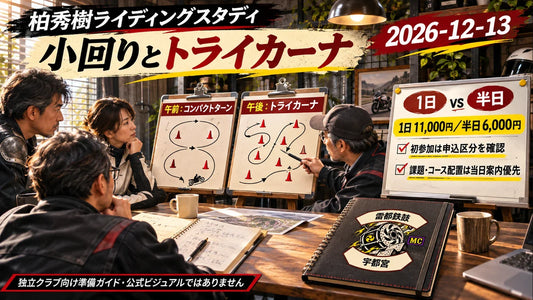
柏秀樹RS清水|小回りと半日選び
Nov 21 2026
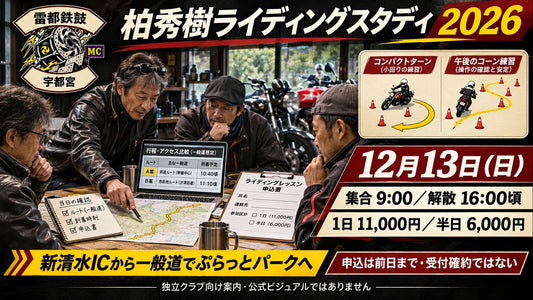
柏秀樹RS清水|料金・アクセス
Nov 21 2026
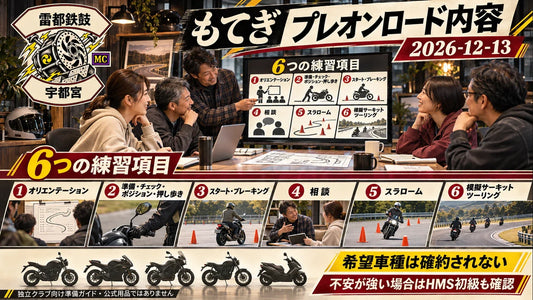
HondaGOもてぎ|講習内容と車種選び
Nov 21 2026