Biker Necklaces: Materials, Fit and Everyday Wear
Quick answer: Choose a biker necklace by material, chain length, clasp security, pendant size, skin comfort and how it behaves off the bike; reproduce club artwork only with permission.
At a glance

Start with the wearer, not the symbol

A biker necklace can be a daily accessory, a ride-day piece, a personal memorial or an authorized club product. Those uses require different decisions. A compact pendant may be comfortable under a shirt, while a larger piece is more visible but heavier and more likely to strike a tank, zipper or jacket hardware. Before choosing a design, note when the recipient will wear it, what other jewelry they already use and whether they prefer understated or prominent pieces.
Club identity requires a separate decision. A club name, logo, rocker, chapter name, colors or office marker should be reproduced only with documented permission from the organization that controls it. Buying or receiving a necklace does not create membership, rank or authorization.
Compare necklace materials

Material affects appearance, weight, skin contact, care and price. Sterling silver has a bright finish and can develop tarnish that needs polishing. Stainless steel is generally durable and lower maintenance, but the exact alloy and finish still matter. Brass and bronze offer warmer color and can develop a changing patina. Plated finishes can be attractive, yet abrasion, sweat and repeated contact may eventually expose the base metal.
Ask the seller to identify the material rather than relying on color alone. People with known metal sensitivities should check both the pendant and every component that touches skin, including the chain, clasp, jump rings and bail. Product-specific care instructions take priority over general advice.
Choose pendant size and weight
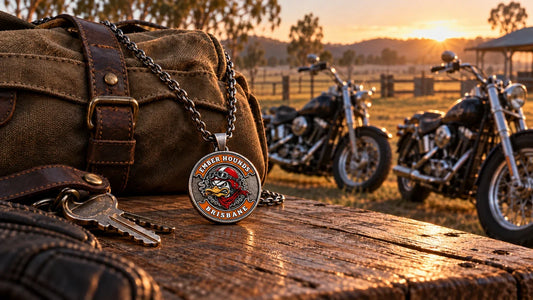
Review the pendant’s actual dimensions in millimeters and its weight in grams. Product photos can make a small pendant look substantial or hide how thick a heavy piece is. A useful comparison places the pendant beside a ruler or a common object and shows it worn on a person. Confirm that the bail opening is large enough for the intended chain and any end caps.
Weight should be considered together with chain strength. A heavy pendant on a fine chain creates a mismatch at the clasp and links. A very thick chain can also overwhelm a small pendant or fail to pass through the bail. When in doubt, test the exact pendant-and-chain combination rather than treating either item in isolation.
Select a practical chain length
Chain length determines where the pendant sits relative to a T-shirt collar, vest opening and jacket zipper. Measure an existing necklace that already fits the wearer instead of guessing from a general size chart. Neck circumference, body shape, garment layers and pendant height can all change the final position.
- Shorter placement: keeps the pendant higher but may feel tight under layers.
- Mid-chest placement: often provides visibility with casual clothing, depending on the wearer.
- Longer placement: creates more movement and may contact zippers, buckles or the motorcycle.
For riding, loose jewelry can create snag or impact hazards. Some riders choose to remove necklaces, secure them under clothing or reserve larger pieces for off-bike use. The safe choice depends on the motorcycle, gear, riding position and local conditions.
Inspect links, clasp and bail
Look closely at the parts most likely to fail. The clasp should close fully and be easy for the wearer to operate. Jump rings should be properly closed, and soldered connections are generally more secure than open rings when appropriate to the construction. The bail should move freely without sharp edges that abrade the chain. Check the pendant for unfinished points, burrs or projections that can catch fabric.
Before regular wear, gently test the necklace over a soft surface. Check that the pendant hangs facing forward, the clasp does not open under light tension and the chain does not kink at the bail. Recheck these areas periodically because wear is cumulative.
Evaluate artwork before production
Detailed club artwork often needs controlled simplification for a small metal pendant. Very fine lettering, narrow gaps and isolated details may become weak, merge during casting or disappear after polishing. The maker should prepare an original production drawing that preserves the authorized identity while adapting line width, relief and connection points to the intended size.
Approve an actual-size proof, not only a zoomed-in screen image. Confirm the outer silhouette, lettering, negative spaces, bail placement, back surface and any engraving. Keep the approved version and written authorization with the order record so later reorders use the same controlled artwork.
Care and storage
Remove the necklace before activities that expose it to harsh chemicals, abrasive contact or conditions the maker says to avoid. Wipe away sweat and moisture with a soft cloth and store the piece so the chain cannot knot or scrape the pendant. Use only cleaning methods suitable for the confirmed material and finish; an aggressive polish can remove intentional oxidation or plating.
Inspect high-wear points after riding, travel or heavy use. If a link, clasp or bail is distorted, stop wearing the necklace until it is repaired by a qualified jeweler or the manufacturer.
Buying checklist
- Confirm material, finish, dimensions and weight.
- Measure a known-good chain length on the intended wearer.
- Match chain strength and bail opening to the pendant.
- Check skin sensitivities and every metal component.
- Decide whether the piece is intended for riding or off-bike wear.
- Obtain written authorization for any club identity.
- Approve the actual-size design and retain the final proof.
Frequently asked questions
Does this guidance apply in every situation?
No. Motorcycles, products, local requirements and organization rules vary, so verify the details for the actual situation.
When is written authorization needed?
Obtain written approval before reproducing a club name, logo, colors or identity-bearing product.
Tags: