

How to Inspect Leather Crossbody Bags Before Buying
Inspect a leather crossbody bag before buying by verifying the stated leather or textile, examining full-resolution photos of seams and edges, checking the closure and pocket layout, and tracing the strap load path through its tabs, rings, clasps and adjustment hardware. Then compare dimensions and strap range with the items and clothing you actually use.
Verify the stated material
Terms such as lambskin, vegetable-tanned leather, distressed leather, horsehide and selvedge denim describe different constructions and appearances. Read the exact product and selected variant instead of assuming every brown or black bag uses the same leather.

This soft lambskin bag uses a curved body. Inspect the leather surface, opening, wide strap attachments and how the curved shape affects usable space.
Inspect panels, seams and edges
Use front, back, side and interior images when available. Look for consistent seam paths, reinforced corners and clean transitions where panels meet. Edge paint, folded edges and raw or burnished edges are different construction choices; the listing should make the visible treatment understandable.

This vegetable-tanned leather chest bag provides a compact structured example for checking panel alignment, edge treatment and attachment tabs.
Check the closure and opening
A zipper, flap, buckle, snap or drawcord must suit the intended contents. Compare opening width with the largest rigid item and inspect how the closure ends are anchored. A bag can have adequate exterior dimensions but a narrower usable opening.

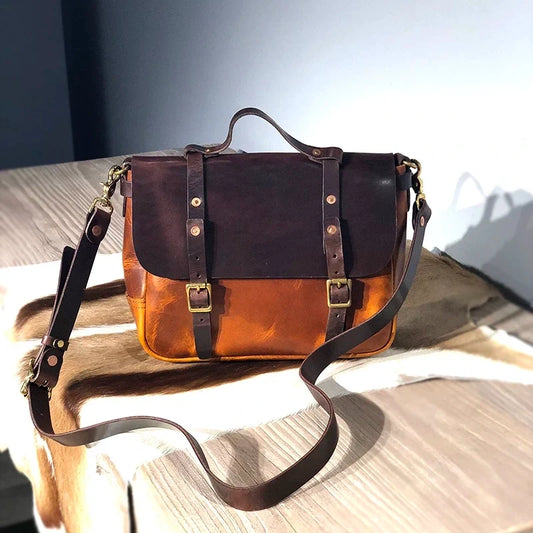
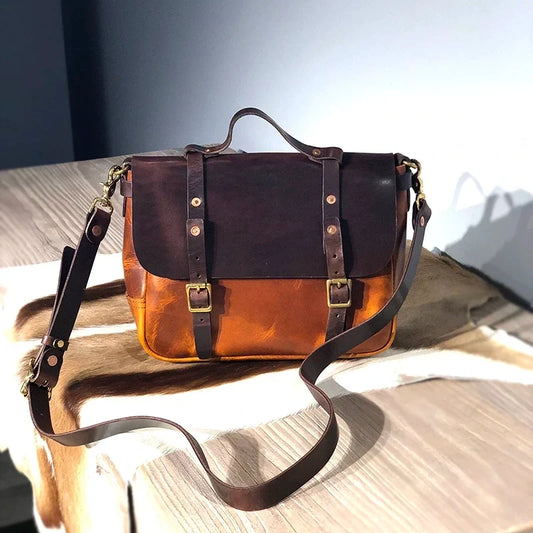
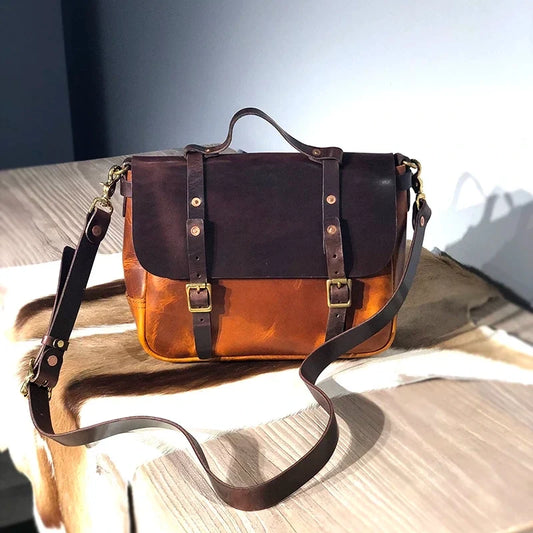
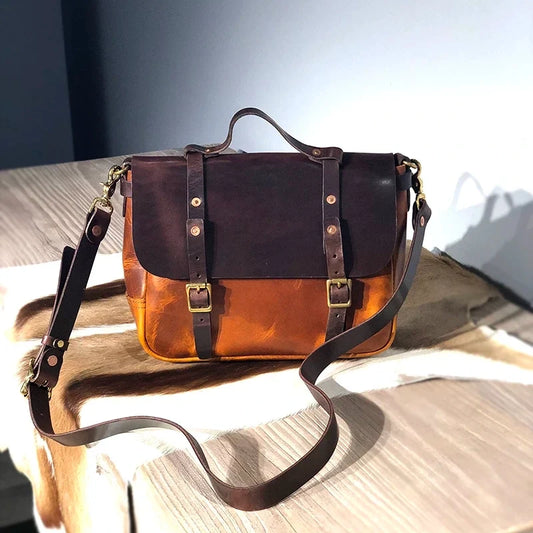
This thick vegetable-tanned messenger bag has a more structured body. Inspect flap alignment, closure placement, corner construction and the route into the main compartment.
Trace the strap load path
Follow the strap from the shoulder area to the adjuster, clasp or buckle, ring, leather tab and bag panel. These connected parts carry the load together. Confirm whether the strap is detachable or fixed and whether the published range fits the intended carry position.
| Inspection point | What to verify |
|---|---|
| Material | Exact leather, textile, lining and selected color |
| Seams | Panel alignment, corners and reinforcement |
| Closure | Opening width, zipper ends, flap or buckle alignment |
| Strap | Range, width, adjuster, clasps, rings and tabs |
| Interior | Pocket count, lining, seams and usable shape |

This denim-and-leather bag lets you inspect how dissimilar materials join, especially at the base, strap tabs, zipper and pocket edges.
Inspect hardware and attachment points
Look closely at buckles, sliders, rings, clasps, rivets and zipper pulls. Finish color alone does not establish hardware material or durability. Check whether each fitting is fully shown and whether its surrounding leather or textile appears reinforced.

This distressed leather saddle-style bag is useful for checking flap hardware, strap connections and the consistency of an intentionally worn surface.
Check the interior and usable capacity
Compare pocket count, lining, dividers and opening shape with a real carry list. Exterior measurements include seams and structure, so they do not equal usable interior space. Ask for clarification when the interior or closure is not shown clearly.

This asymmetric horsehide bag requires attention to its non-rectangular usable space, zipper path, pocket placement and strap attachment geometry.
Questions to ask before ordering
- What exact material applies to the selected color or variant?
- Are the strap and shown accessories included?
- What are the exterior dimensions and adjustable strap range?
- How many compartments and pockets are present?
- Is the hardware material stated or only its finish color?
- Are interior, side, base and attachment-point photos available?
- What care instructions apply to this material and finish?
Do not infer load rating, waterproofing or motorcycle suitability when the product page does not state it. When riding, the bag must not interfere with controls, movement, visibility or protective gear.
Frequently asked questions
Can photos prove leather quality?
They help inspect visible construction, but they cannot prove every material or durability claim. Use the written specification and ask about missing details.
Are exterior dimensions usable capacity?
No. Seams, lining, curves, structure and pockets reduce usable space.
What is the most important strap area?
The entire load path matters: strap, adjuster, clasp or buckle, ring, attachment tab and surrounding panel.
Does distressed leather mean damaged leather?
Not necessarily; it may describe an intentional finish. Inspect for the stated appearance and distinguish it from defects.
Can any crossbody bag be worn while riding?
No. Confirm intended use and ensure it cannot interfere with controls, movement, visibility or protective gear.
Materials, dimensions and availability verified against active Motor Club Shop listings on September 13, 2026. Current product and variant details take priority.
Tags:
Previous
Compare Motorcycle Foot Controls by Comfort, Construction and Use Case
Next
Are Biker Earrings Suitable for Daily Wear?
Related articles
How to Inspect and Maintain Motorcycle Lighting
Sep 13 2026
Full-Grain vs Top-Grain Leather Crossbody Bags
Sep 13 2026