Motorcycle Rally Photo Consent Checklist: The 7-Step CONSENT Method
Direct answer: A useful motorcycle rally photo consent checklist separates three decisions that are often blurred together: the organiser’s published photography terms, each person’s current choice about being photographed, and the club’s separate choice about posting or forwarding an image. The seven-step CONSENT method below gives one club officer a timestamped, minimal record before the ride, at the venue and after the final post. It is an operational checklist, not legal advice, and it never turns a club back patch into event accreditation.
The immediate case study is the ADMCC Sawmill Rally 2026 entry page, checked on 27 October 2026. It lists the event for Sunday, 15 November 2026 at Mansfield State Forest, with registration closing at 11:00 pm AEDT on 8 November. The page also includes photography and filming terms and tells a participant who does not wish to be photographed or filmed to advise ADMCC in writing by email. Those are organiser terms for that event; a club still needs a separate, respectful process for its own camera roll, group chat and public channels.

What the verified Sawmill Rally page says
Use the organiser’s live page as the source of record, not a screenshot passed around a chat. As of the check above, the page states:
- Date and place: 15 November 2026 at Mansfield State Forest, with the displayed event window running from 6:30 am to 4:00 pm AEDT.
- Entry structure: one rider per registration. Riders entering as a team are told to use a team name, and every team member must register and pay separately.
- Displayed price and deadline: AUD 130 plus the platform fee, with sales shown as ending at 11:00 pm AEDT on 8 November 2026.
- Photography notice: the page says participants and attendees may be photographed or filmed, describes possible promotional use, and provides a written opt-out route through ADMCC.
These facts should be rechecked before a club publishes its own briefing because event details can change. The checklist below is deliberately built around a timestamp: it records what was visible when the club made its plan without pretending that a copied version will stay current.
The CONSENT method in seven steps
C — Confirm the current organiser page
Record the live URL, the date and local time of the check, the named event contact channel and the exact photography wording that matters to your members. Save only what the club needs to coordinate; do not copy an entire registration record into a new spreadsheet. For the Sawmill Rally case, note the one-rider-per-registration rule, team-name instruction, closing time and the organiser’s written photo preference route.
O — One rider, one registration record
When an organiser requires separate entries, a team leader should not treat a single team name as proof that every rider is registered. Use a simple completion status—such as “member confirmed”—rather than collecting payment screenshots, identity documents or unnecessary personal details. The team name helps the organiser group entries; it is not a substitute for each rider’s entry.
N — Name the team consistently
Choose one approved spelling before members enter. One officer can post the exact team name in the private briefing, then close that message to edits. Consistency reduces matching errors and avoids ad hoc chapter names. It also keeps the club’s visual identity separate from the organiser’s identity: a club name or patch shows who the members are, not who operates or endorses the event.
S — Save a minimal, dated receipt of the decision
The club record should answer only three questions: who confirmed their own registration, what the organiser’s current photography route was, and what the member chose for the club’s channels. Avoid storing copies of government IDs, payment cards or full registration forms. A small, dated decision log is easier to correct and delete than a chain of screenshots.

E — Express the organiser-facing preference through its stated route
If a member does not wish to be photographed or filmed under the organiser’s published process, the member should use the route the organiser actually provides. In this case, the official entry page asks the person to advise ADMCC in writing via email. A club officer can remind members of that route, but should not promise an outcome or speak for someone without permission.
N — Note a separate club-sharing choice
A person’s interaction with the organiser does not automatically answer whether the club may post the image publicly, place it in a newsletter or forward it to a sponsor. Australia’s eSafety Commissioner advises asking before sharing photos or videos and recognises that consent can change. The Office of the Victorian Information Commissioner recommends clear event notices and treats consent as best practice when identifiable people are involved. Record the club choice separately and make it easy to update.
T — Timestamp the final check and closeout
Recheck the official page 24–48 hours before departure, then review the club’s selected images before any public post. Record removals or changed choices, remove duplicate copies from shared editing folders where practical, and identify one person responsible for the final upload. A timestamp does not freeze consent; it shows when the club last asked and what it did next.
Three layers, three different records
A good system keeps the layers visible:
- Organiser layer: the live registration page, ticket terms, venue notice and contact method.
- Person layer: the individual’s current preference, communicated through the relevant route.
- Club layer: a narrow record covering the club’s own channels and named media custodian.
The Office of the Australian Information Commissioner explains that photos and videos can contain personal information. That is a useful reason to minimise what the club copies, who can access it and how long it keeps it. It is not a reason to invent legal conclusions; where obligations are unclear, use the organiser’s contact and seek appropriate professional advice.
Use a channel matrix, not one blanket answer
“The club may use my photo” is too broad to manage well. A compact matrix can separate a private attendance album, a members-only group, the public website and public social channels. A member may be comfortable appearing in one place and not another. Record only the channels the club actually uses, provide a clear “no public sharing” choice, and avoid forcing an explanation. If a proposed use changes—for example, a private group image is later selected for a public promotion—ask again for that new context.
The same distinction helps photographers. Give the named club photographer a short shot list and an exclusion list immediately before the event, then repeat the boundary at the point of upload. Do not distribute a full member register. A practical instruction can be as narrow as: “These five people confirmed the public group portrait; everyone else stays outside the public frame unless they opt in at the time.” This reduces guesswork without turning a volunteer into a privacy officer.
Control the image handoff
Choose one private upload folder and one media custodian. Ask contributors to upload originals there instead of broadcasting them through multiple chats. The custodian can remove near-duplicates, screen backgrounds and select only the images needed for the agreed channels. Once the approved set is published, close the temporary folder on the club’s stated timetable and keep only the minimal record needed to manage later changes. This creates a traceable handoff: capture, review, approve, publish and close.
Where a club back patch fits—and where it does not
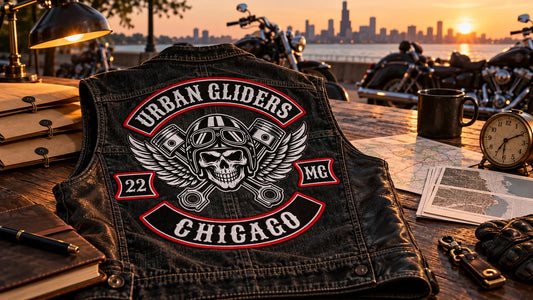
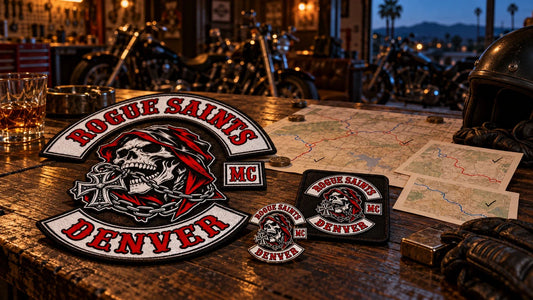
A clearly approved back patch can help members recognise their own group at a busy meeting point and can make an empty vest or gear bag identifiable in a controlled product photo. It must not be described as a pass, marshal credential, security marker or organiser-issued badge. The safest editorial language is simple: the patch identifies the club’s own approved design.

Before ordering, test the approved artwork at the distance at which members are expected to recognise it. Check the top rocker, centre artwork, bottom rocker and any small side mark against the source file. Keep one club identity per product and one approved artwork version per production batch. The Custom Back Patches collection currently presents three public quote or gallery routes, including large embroidered, woven-detail and multi-image reference options. Choose construction and size from the artwork’s real detail needs rather than adding unapproved text to make it “more event specific.”
A 15-minute pre-publication check
- Minute 1–3: open the organiser’s live page; verify date, venue, registration status and photography route.
- Minute 4–6: compare the club’s minimal log with the current member list; remove anyone who is not attending.
- Minute 7–9: place proposed images in a private review folder; exclude anyone whose current choice is unclear.
- Minute 10–12: check faces, name tags, number plates, documents, bystanders and background screens for unintended personal information.
- Minute 13–14: verify the club patch against the authorised master and make sure no event or manufacturer mark implies affiliation.
- Minute 15: have the named custodian publish the approved set and record the time of the final check.
If a choice changes after publication, treat that as an action item rather than a debate. Remove or replace the image where the club controls it, document the request briefly, and check whether copies remain in scheduled posts or shared folders.
What to do when the answer is unclear
Pause the public post. An uncertain name match, an unrecorded guest or a face partly visible in the background is not a reason to guess. Move that image to a review folder, contact the relevant person through the club’s normal channel and set a short decision deadline. If confirmation does not arrive, choose another frame or crop only when the crop still preserves the meaning of the image and does not expose someone else. The absence of an objection is not the same thing as a clear club-sharing choice.
For a mixed-club gathering, each club should manage its own members while the person making the public post checks the final image. Do not infer permission from a vest, a patch or attendance at the venue. Clothing identifies a group; it does not communicate a universal media preference. That boundary is especially useful when an event has its own photography clause, because it keeps the organiser’s notice and each club’s downstream publishing process visibly separate.

Frequently asked questions
Does accepting an event’s entry terms give a motorcycle club permission to repost every photo?
No. The organiser’s terms and the club’s own posting decision are separate layers. Ask and record the club-facing choice independently.
What should a club store in its photo-choice log?
Keep only what is necessary: the member identifier the club already uses, the relevant channel choice, the date checked and the custodian who recorded it. Avoid copying payment data, identity documents or full registration records.
Can a member change their mind after saying yes?
Yes. Build an update route into the process and act on changed choices where the club controls the image or post.
Is a club back patch an event credential?
No. A club patch identifies an approved club design; it does not prove registration, grant access or imply organiser endorsement.
When should the organiser page be rechecked?
Check when the club first briefs members, again before the registration deadline, and once more 24–48 hours before departure or publication.
What if the organiser’s page and an old screenshot conflict?
Use the live first-party page as the current source, note the check time, and contact the organiser if the live wording remains unclear. Do not publish the screenshot as a current instruction.
Source and independence note: This article was prepared from publicly available organiser and Australian privacy-safety guidance checked on 27 October 2026. MotorClubShop is not affiliated with ADMCC, Sawmill Rally, eSafety, OVIC, OAIC, any motorcycle manufacturer or any club shown in the original illustrative product visuals.
Tags:
Previous
Love Ride Rally 2026 Update: No Group Ride—A 5-Step Club Reset Plan
Next
Fall Spyder, Bike & Trike Fest 2026: A PACKET Check-In & Lineup Plan