

Saskatoon Ride for Dad 2027: Volunteer Roles & Club Recognition Guide
Quick answer: For the Saskatoon Ride for Dad on June 19, 2027, use the official chapter volunteer form to express interest in an event role, then wait for the organizer to confirm placement, scope and instructions. A motorcycle club can prepare its own members, keep a contact list and thank contributors afterward, but it should never self-assign official registration, finance, traffic, route or media authority. Any custom polo, coin, plaque, mug or exchange flag should remain a private club item—not an organizer credential or official award.

The official Saskatoon chapter page currently names Brent McFadzen as Co-Chair, Vince Streukens as Ride Captain and Amanda Williams as Volunteer Coordinator. Those are real organizer roles reverified on November 17, 2026. Public source verification does not grant merchandise rights: the names and roles must not be copied onto chest patches, club apparel, passes or recognition products without explicit authorization, and a club must not invent parallel titles that look official.
This is the third and final article in our Saskatoon series. Use the date, registration and start guide for current event logistics, and the club fundraising guide for official donation-tool boundaries.
Which volunteer interests does the official Saskatoon form list?
The chapter’s “Become a Ride For Dad Prostate Cancer Fighter” form asks applicants to select areas of interest and describe relevant volunteer or work experience. The choices visible at the time of review are:
- Administration/registration
- Sponsorship Sales
- Finances
- Event Planning
- Souvenir sales
- Traffic Control/Blocking
- Communications
- Ride logistics
- Social media
- Fundraising
- Media Relations
- Volunteer recruitment/coordination
- Other
These are interest categories, not automatic appointments. Submitting the form does not prove that an applicant is accepted, trained, insured, authorized to stop traffic or permitted to speak for the organizer. The organizer must define the role, supervisor, schedule, location, equipment, briefing and escalation path.
Official role, club support or personal participation?
| Activity | Who controls it? | Safe club-side action |
|---|---|---|
| Event registration, participant records and finance | Official organizer and its authorized systems | Direct members to the official process; do not build a look-alike desk or ledger. |
| Traffic control, blocking and ride logistics | Organizer and responsible authorities | Follow the official briefing; never self-deploy members into traffic. |
| Sponsorship, media and public statements | Authorized organizer representatives | Share official links; do not promise exposure or speak as the event. |
| Private club rendezvous and member check-in | The club, on lawful private arrangements | Keep it separate from official access and do not obstruct the venue. |
| Post-event private thanks | The club, with recipient consent and verified wording | Use club-owned artwork and describe the item as private appreciation. |
Build a useful volunteer application
- Choose the actual interest area. Select only categories that match the applicant’s experience and availability.
- Describe evidence, not a title. Give concise examples of relevant registration, logistics, communications, event or volunteer work. Do not award yourself an official role.
- State availability and limitations. Include times, mobility or equipment constraints that the coordinator genuinely needs to place the volunteer.
- Wait for confirmation. Do not print a badge, role label or staff shirt while the application is pending.
- Use the organizer’s briefing. Record the confirmed supervisor, reporting point, time and escalation contact from the official communication.
If a club has several interested members, each person should use the official process as directed rather than sending one unofficial roster as if it were an accepted team. Questions about placement belong with the Saskatoon chapter or the official contact route.
What the Saskatoon “Why We Ride” stories add
The Saskatoon page publishes first-person “Why We Ride” entries from Amanda Williams, Jim Mahoney, Vince Streukens, Brent McFadzen and Roddy Edwards. The national page says participation can take many forms—including volunteers, riders, donors, fundraisers and sponsors—and invites people to submit a story or tribute through the official channel.
These stories show that motivation is personal and can develop over years. For example, Brent McFadzen’s official story says he joined the Saskatoon effort in 2018 and values the mix of skills in its executive group. Vince Streukens’ official story describes entering as a volunteer and learning through involvement. Amanda Williams’ story connects motorcycles, family and a desire to build awareness. Readers should consult the original stories for their full words and context.
A club must not copy someone’s health history into marketing, summarize it as medical advice or print it on merchandise without explicit permission. If a member wants to contribute a story, use the official “Submit My Why” route and let the organizer control publication.
A consent-based post-event thank-you workflow
- Close the operational record first: return borrowed items, resolve custody questions and wait for the organizer’s confirmed results.
- Define the audience: decide whether the club is thanking its own members, a consenting partner club or another clearly identified recipient.
- Ask before publishing: obtain consent for names, photographs and public recognition. Private thanks do not require a social-media post.
- Verify every variable field: confirm spelling, date, role and service record from an authorized source. If a name or role is not necessary, leave it off.
- Keep the attribution honest: say “private club appreciation,” not “official Ride for Dad award,” “event volunteer credential” or “sponsor recognition.”
Five custom products for private club support and thanks
Each product below uses only club-owned artwork. MotorClubShop can adapt an authorized emblem to the selected product and proof, but product customization does not confer event status, permission or affiliation.
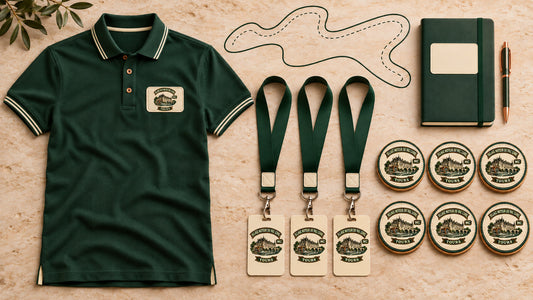
1. Polo shirts for off-bike club identity

A club polo can identify the wearer as a member of that private club during an off-bike meeting or approved social setting. Build the order from the actual garment size chart, fabric, colour, collar, placket and decoration proof. Use a controlled size list. Keep names and official-sounding positions off the shirt unless they are accurate, authorized and genuinely needed. An ordinary polo is casual apparel, not motorcycle protective equipment or an event credential.
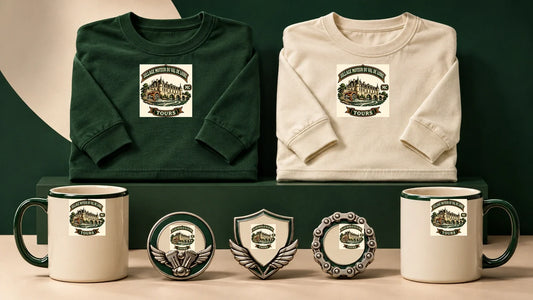
2. A challenge coin that remains a private keepsake

The challenge-coin collection describes sizes including 38 mm, 44–45 mm, 50 mm and larger formats, with construction options such as relief, enamel and antique metal treatments. Choose the diameter, thickness, metal, edge, front and reverse together. A private keepsake coin is not admission, a donation receipt, a contest entry, a service credential or an official event award.
Design Custom Club Challenge Coins
3. A commemorative plaque with controlled wording

MotorClubShop’s plaque collection discusses wood, metal and combined presentations, with exact construction confirmed in the design and proof process. Start with the display location and finished size. Put variable recipient data in a controlled source list, then have two authorized reviewers compare that list with the placed proof character by character. Never infer a name, title, role or years of service from conversation or social media.
Plan Custom Club Commemorative Plaques
4. Metal mugs selected by the exact sample

A metal mug can be a practical club thank-you item, but “metal mug” is not one universal specification. Confirm capacity, substrate, coating, rim and handle construction, usable logo area, decoration method and care instructions for the exact model. Do not claim insulation, heat retention or dishwasher performance without product-specific evidence. Keep it separate from alcohol service, fundraising credit and official recognition.
5. An exchange flag for an agreed private presentation

An exchange flag makes sense only when the intended recipient has agreed to receive it. Confirm finished dimensions, front and reverse treatment, fabric, fringe, cord, rod or hanging method, packing and intended display. Ask before presenting it at an event venue. Do not add organizer or sponsor marks, call it an award, or mount this small presentation flag on a moving motorcycle.
Plan Custom Club Exchange Flags
Send one consent-controlled recognition brief
Provide the authorized club logo, selected product, quantity, dimensions, model or material preferences, recipient-consent status, destination and needed-in-hand date. If personalization is requested, supply a controlled list containing only verified spelling and wording that the recipient has agreed to. Ask MotorcycleClubStore to confirm the decoration area, proof, sample route, minimum quantity, production time and shipping. Do not submit an organizer name, event role, health story or service record merely because it appears on a public page.
Request a Private Club Recognition Quote
Frequently asked questions
Does selecting a volunteer category confirm an official role?
No. It expresses interest. The organizer must confirm acceptance, scope, supervisor, briefing and authority.
Can a club create its own traffic-control team?
Not as an unofficial substitute for the organizer or responsible authorities. Members must follow the confirmed official plan and should never self-deploy into traffic.
Can real Saskatoon organizer names be printed on club merchandise?
Only with explicit authorization and a legitimate purpose. Publicly listing a person and role on the official page does not grant merchandise rights.
Can a private challenge coin or plaque be called an official Ride for Dad award?
No. Club-created recognition should be described clearly as private club appreciation and should not use protected event marks without permission.
How should a club share a personal “Why We Ride” story?
Use the official submission route, obtain the storyteller’s consent and preserve the person’s meaning and context. Do not turn a personal health story into medical advice.
Verified sources
- Official Saskatoon chapter page — volunteer-interest categories, chapter executives and local Why We Ride entries.
- Official Why We Ride page — participation forms and story-submission context.
- Brent McFadzen’s official story — Saskatoon involvement and executive-team perspective.
- Vince Streukens’ official story — volunteer-entry perspective and personal account.
- Official Ways to Give page — volunteering as a form of support.
- Official contact page — organizer contact route.
Source status rechecked November 17, 2026. Volunteer categories and the three publicly listed chapter roles were verified on the current official page; assignments and event procedures can still change. Public names, roles and personal stories are cited only as source context and are not printed on the private club product concepts.
Tags:
Previous
Saskatoon Ride for Dad 2027: Club Fundraising & Team Plan
Next
Prairie Hill MX 2027 Live Timing & Results: Club Tracking Guide
Related articles
柏秀樹RS清水|申込確認チェック
Nov 21 2026
柏秀樹RS清水|小回りと半日選び
Nov 21 2026
柏秀樹RS清水|料金・アクセス
Nov 21 2026
HondaGOもてぎ|講習内容と車種選び
Nov 21 2026
HondaGOもてぎ|北門とLRT送迎
Nov 21 2026
HondaGO BIKE LESSONもてぎ|参加準備
Nov 21 2026