
2027 CSBK RMM Race-Team & Paddock Operations Guide
Bringing a club-supported privateer team to CSBK’s first national weekend at Rocky Mountain Motorsports requires more than a motorcycle and a trailer. The confirmed race dates are May 21–23, 2027, but CSBK says the 2027 classes and competitor information will be announced later. A useful plan therefore has two layers: build a disciplined team workflow now, then replace every provisional item with the official 2027 rulebook, event registration, schedule and supplemental regulations when they appear.
Verified 2027 facts for a race-team planning board
- Weekend: May 21–23, 2027.
- Role in the season: opening round of the five-round Canadian Superbike Championship.
- Venue milestone: CSBK describes it as the championship’s first national race weekend at RMM.
- Race format: the national schedule announces ten Pro Superbike races, with doubleheaders at every round.
- Not yet published when researched: 2027 membership requirements, entry fees, RMM registration deadline, classes, paddock allocation, move-in times, technical schedule and event-specific supplemental rules.
This independent operations guide is not a CSBK or RMM bulletin. The 2026 CSBK rulebook and current RMM policies below are cited only as a preparation baseline. They do not override the future 2027 rulebook, registration terms, riders’ meeting or instructions from officials.
Why a club-supported privateer team needs a version-controlled plan
CSBK’s competitor page currently links its 2026 rulebook, 2026 membership and event registration, technical bulletins, riders’ meeting notes, homologated machines and class information. The 2027 schedule announcement explicitly says championship classes and competitor information will follow. That means a team should not submit a 2026 form, promise a 2027 class, order mandatory-looking graphics or budget a fuel quantity from an old bulletin without checking the new documents.
Create a simple rules register with five columns: requirement, source URL, season, last checked and owner. Mark every 2026 item “reference only.” When the 2027 rulebook arrives, the team manager should compare it line by line with technical bulletins and the RMM supplemental regulations. A screenshot in a group chat is not version control; save the official URL and publication date.
1. Build a small command structure before registration opens
| Role | Primary job | Failure it prevents |
|---|---|---|
| Entrant/rider | Signs their own entry and release; confirms licence, medical disclosure and class eligibility | Unregistered or incorrectly entered participation |
| Team manager | Owns official notices, schedule revisions, passes and contact with series staff | Two people acting on different rule versions |
| Technical lead | Owns motorcycle preparation, paperwork and inspection follow-up | Missing components, decals or declarations at tech |
| Paddock lead | Owns canopy, fire/safety equipment, storage, cleanliness and pack-down | Blocked work area and lost equipment |
| Runner/pit-board crew | Moves only when authorized and relays approved information | Credential misuse or conflicting signals |
The 2026 rulebook says a rider is responsible for attached crew and family conduct, and everyone in spectator, pit or paddock areas must have a valid pass. It also requires proper credentials for race personnel. Your club can use internal role cards to simplify teamwork, but they must never resemble, replace or imply an official entrant pass.

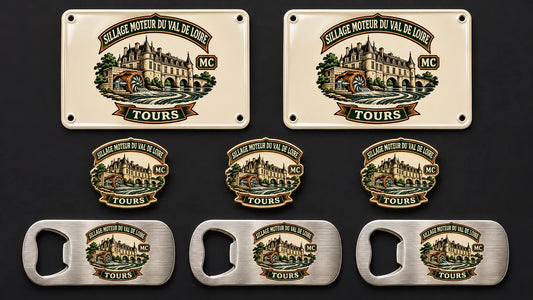
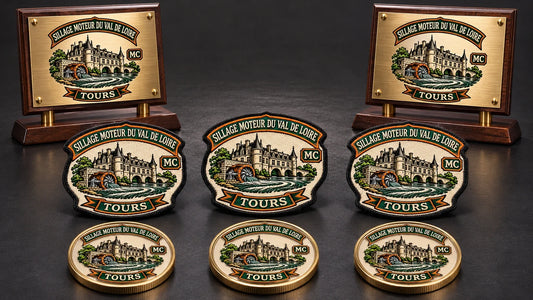
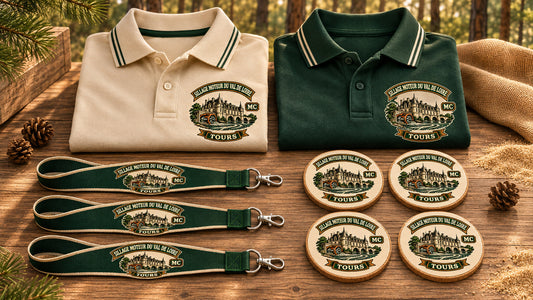
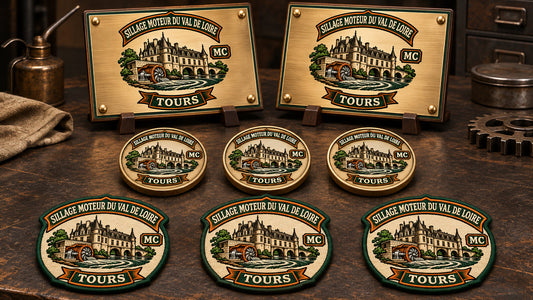
Custom club lanyards can identify “team manager,” “technical lead” or “runner” inside your own canopy, while closed document wallets keep private confirmation records off the visible board. Coordinated polos and a small metal team sign help the rider find the correct support point. None of these products grants access or should reproduce CSBK or RMM marks.
Plan Internal Club Lanyards Protect Team Documents in Custom Wallets Design Custom Team Polos Create an Internal Team Sign2. Treat registration as a gate, not an administrative afterthought
Under the 2026 rulebook, riders needed a CSBK Competition Membership before track participation, a qualifying competition status through an approved regional body, a signed event entry and release, and mandatory attendance at the riders’ meeting. The same book states that only the rider may sign the entry before final technical approval, though digital sign-in may be available. These details illustrate why the rider, not a club officer, must own the personal legal steps.
For 2027, wait for the official membership and RMM event-registration links. Before paying, confirm the class, eligibility, deadline, refund terms, crew-pass allocation and what the fee includes. Record the confirmation number privately. Do not place licence numbers, medical information, home addresses or payment receipts on a shared paddock board.
Do not carry forward old numbers blindly: the published 2026 homologation page, class structure, tire pricing and technical bulletin describe the 2026 season. Use them to identify questions, not to claim 2027 eligibility, cost or specification.
3. Prepare for technical inspection as a repeatable handoff
The 2026 rulebook required the rider or mechanic to present each motorcycle for technical inspection before on-track activity. It said the machine must be clean, presentable and ready; the fairing lowers must come to tech but be removed from the motorcycle; required paperwork must be submitted; self-made components must be declared; and the official tech sticker must remain displayed after approval. The technical inspector could also request later inspections or revoke approval.
Build a two-stage checklist. At home, verify fasteners, controls, fluid containment, number presentation, required protective equipment and every declared modification against the current 2027 rule. At the track, perform a clean-bike check, place the removed lower fairing on a padded carrier, assemble only the current documents and let one mechanic speak for the machine. Never print your own inspection sticker or treat a club patch as approval.

Durable custom performance shirts, gloves, caps, closed wallets and a dedicated tool bag can make the technical handoff easier to organize without copying official uniforms. Keep sponsor obligations, series marks and competition decals exactly where the current rulebook requires; club decoration belongs only in available, authorized space.
Plan Custom Crew Performance Shirts Customize Club Work Gloves Create a Dedicated Team Tool Bag4. Separate paddock work from hot-pit work
RMM’s current facility map distinguishes the paddock, pit lane, pit entrance and pit exit. Its published track orientation describes a fast lane and a slow/working area, gives a 30 km/h pit-lane limit, prohibits reversing and passing in the fast lane, and requires marshal authorization to enter the circuit. Those instructions are current venue orientation—not a substitute for the 2027 CSBK event briefing.
The 2026 CSBK rulebook said machines should move from the paddock to hot pit between sessions, not wait there early during on-track activity unless instructed. During qualifying, a motorcycle that entered pit road could not return to the paddock without official approval; bodywork removal, computer connection and refuelling were restricted, while tire and minor suspension changes were specifically addressed. The safe operational lesson is simple: decide which tools and people belong in each zone before the session begins.
A practical role board
- Paddock: deep maintenance, charging, parts storage, meal/rest rotation and documentation.
- Hot pit: only authorized crew, required tools, pit board and session-specific items.
- Runner: moves messages or permitted items without entering a restricted zone unless credentialed.
- Team manager: watches official schedule changes and decides when the workflow changes.

The 2026 rulebook allowed team-to-rider communication by pit board from pit lane and prohibited radio communication with an on-track rider. Confirm the 2027 rule before choosing communications equipment. Custom cadet caps, polos, internal lanyards and a metal task sign can distinguish your own crew, but official-looking garments must never imply trackside authorization.
Create Custom Team Cadet Caps Coordinate Team Polos Build Internal Role Lanyards5. Design the paddock for weather changes and fast recovery
RMM’s live information says operating hours can vary with weather and daily operations. May conditions should be checked close to the event rather than guessed months ahead. A privateer team can still prepare a modular system: dry base layers in sealed bins, warm off-bike layers, rain protection, labeled personal bags, clean towels and a controlled charging area. Apparel is never a replacement for certified riding equipment.
Use one shelf per function—rider, technical, pit, personal—and return every item to the same location. Keep fuels, chemicals, heat sources and electrical equipment under the applicable organizer and venue rules. The old RMM information packet contains paddock-vehicle, noise and overnight guidance, but it should not be treated as the final 2027 race-weekend policy. Ask for the current event-specific version.

6. Build session procedures around official timing
The 2026 rulebook made the riders’ meeting mandatory and said event schedules determine which sessions establish grids. It placed responsibility on competitors to review entry and grid information. Start procedures included pre-grid calls and a five-minute warning, but exact procedures were to be given at the riders’ meeting. That is why a team timeline must be anchored to the current official schedule, not a reusable “race-day template” with fixed clock times.
For each session, work backward from the official call: rider ready, motorcycle ready, tire process complete, permitted fuel state confirmed, pit-board crew positioned and runner released from other duties. If the schedule slips, the manager changes one master timeline and announces the revision. Nobody should improvise based on a social media post or last year’s timetable.
7. Close every day with a discrepancy log
Pack-down is part of race readiness. Count the motorcycle, wheels, stands, tools, chargers, issued apparel, passes and internal lanyards. Record damage, missing items and technical questions while memories are fresh. Secure the motorcycle and chemical containers under venue rules, and never assume overnight paddock access or vehicle movement until the 2027 bulletin confirms it.

For club-supported privateer programs, MotorcycleClubStore can organize an approved visual system across performance shirts, polos, cadet caps, hoodies, internal lanyards, wallets, bags, flags, signs and drinkware. Send one authorized logo, roster, product quantities, sizes, role variations, destination and deadline. Review the digital proof carefully—especially spelling, chapter name, logo placement and product scale—before production.
Create a Reusable Inventory Sign Order Closed Team Document Wallets Design a Custom Paddock Flag Build a Reusable Equipment-Bag Set2027 team readiness checklist
- Monitor the official CSBK competitor page for the 2027 rulebook, membership and RMM entry link.
- Confirm class eligibility and homologation from 2027 documents—not the 2026 class page.
- Read every technical bulletin and RMM supplemental regulation after publication.
- Assign rider, manager, technical, paddock, runner and pit-board responsibilities.
- Keep organizer passes separate from internal club role identification.
- Prepare the motorcycle and paperwork for inspection using the current checklist.
- Attend the entire riders’ meeting and revise the team plan immediately afterward.
- Use the official schedule as the only timing authority.
- Complete a people, motorcycle, tool and issued-gear inventory every evening.
Frequently asked questions
When is the 2027 CSBK round at Rocky Mountain Motorsports?
CSBK’s official schedule confirms May 21–23, 2027. It is the national championship’s opening round and first national race weekend at RMM.
Is 2027 CSBK competitor registration open for RMM?
The official pages reviewed on November 15, 2026 had not published the 2027 RMM registration link, entry deadline or fee. Use the CSBK Competitor Information and 2027 Events pages when updates are released.
Can a team use the 2026 CSBK rulebook for the 2027 race?
No. It is useful only as a planning reference. The 2027 rulebook, technical bulletins, event supplemental regulations and officials’ instructions will control the 2027 event.
Do custom club lanyards count as paddock credentials?
No. They are internal team identification only and must not copy or imply an official CSBK or RMM pass.
Can custom team apparel replace protective racing gear?
No. Club polos, performance shirts, hoodies and caps are off-bike or crew apparel. Riders must use the protective equipment required by the current competition rules.
Sources and verification links
- CSBK — 2027 National Championship schedule announcement
- CSBK — 2027 Events hub
- CSBK — Competitor Information
- CSBK — 2026 National Rule Book (planning reference only)
- CSBK — 2026 Riders Meeting Notes and Supplemental Regulations archive
- RMM — Rules, Regulations, Policies and Track Orientation
- RMM — published Track Orientation
- RMM — facility and circuit map
- RMM — FAQ and current venue facts
Editorial note: researched November 15, 2026. Product images are custom-design concepts using the Aspen Parkland Riders — Red Deer identity; they are reference visuals, not retail listings, and do not depict CSBK or RMM staff, credentials, technical approval, sponsorship or an actual 2027 entrant.
Tags:
Previous
Winter Camping Checklist for Elefantentreffen
Next
How to Organise a Club Trip to Elefantentreffen