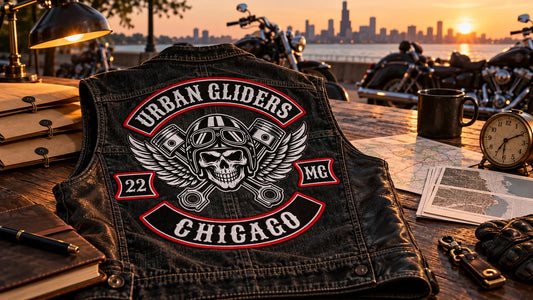
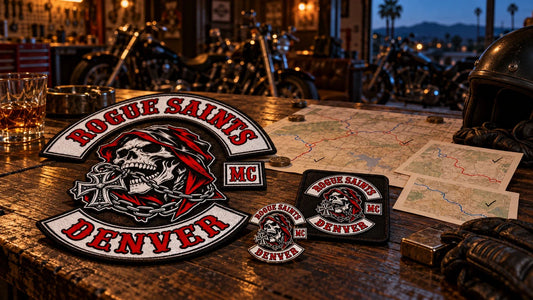
Arizona State CMA Rally 2026: A 4-Point Private Club Wayfinding Plan for Tombstone
Direct answer: public records place the Arizona State CMA Rally 2026 in Tombstone from Thursday, October 29 through Sunday, November 1. The City of Tombstone permit identifies Schieffelin Hall, Schieffelin Park and a section of 4th Street for different event uses. A visiting motorcycle club should not turn that list into an unofficial route or assume that every space is available for its own display. Instead, freeze the verified sources, choose one privately approved meeting point, assign one custodian to the club identity kit and record every change. The four-step MARK method below keeps public event facts, organizer instructions and private club decisions in separate lanes.
This guide is for V-twin cruiser clubs, chapter coordinators and equipment owners preparing for Tombstone. It is not an official event schedule, access pass, traffic plan, safety instruction or statement of affiliation. The Arizona State CMA Rally, its organizer, the City of Tombstone and each venue control their own activities and instructions. MotorcycleClubStore is not affiliated with, endorsed by or an official supplier to the event, CMA, the city or any motorcycle manufacturer.
Arizona State CMA Rally 2026 facts to verify first
The City of Tombstone council minutes record approval of a special-use permit for the annual Arizona CMA State Rally from October 29 to November 1, 2026. The corresponding published council agenda lists the same dates and spaces. A recent event listing also gives October 29–November 1 and names Schieffelin Hall in Tombstone.
The city records assign different uses to different places. They list Schieffelin Hall throughout the event; Schieffelin Park from 7:00 to 8:00 a.m. on Friday and Saturday for morning devotion; the park from 6:00 to 9:00 p.m. on Friday for a gospel music concert; and 4th Street between Fremont and Allen from 8:00 a.m. to 3:00 p.m. for children’s bicycle games. The permit text shown in the public record does not attach a day to the 4th Street time block, so this guide treats the day as unresolved rather than guessing.
| Public record | What it establishes | What it does not establish |
|---|---|---|
| Council minutes | Permit approval, dates and listed uses | Your club’s display or meeting permission |
| Council agenda | The request presented to council | A complete participant schedule |
| Event listing | Event window and Schieffelin Hall location | Live changes or venue-specific instructions |
| Club brief | A private regroup point and named owners | Official authority or priority |
There is one useful caution in the source set. The city’s public Schieffelin Park page lists ordinary park hours as 8:00 a.m. to 8:00 p.m., while the event permit includes specific 7:00–8:00 a.m. uses on Friday and Saturday. That difference should not be interpreted as a general early-access promise. A permit-specific activity and ordinary public opening hours can coexist; attendees should follow current organizer and city directions rather than extrapolating from either page.
The MARK method for a private club meeting point
MARK means Map verified venues, Assign one custodian, Render private identity clearly, and Keep a timestamped change log. It fits on one page and answers four practical questions: which public fact was checked, who owns the private kit, how members distinguish the club from official functions, and what changed after the sheet was printed.
M — Map verified venues without inventing a route
Create a source map with three neutral location rows: Schieffelin Hall, Schieffelin Park and the 4th Street segment identified by the city. Next to each row, write the public-record use, source URL and check time. Do not draw arrows between venues unless the organizer has published that movement. A venue list is not a procession route, parking instruction or permission to stop.
Then add exactly one club-only meeting point in a different color and label it “private club regroup — confirm permission.” The point should be described in ordinary landmark language shared only with members, not presented as an official entrance, registration desk or emergency location. If approval has not been obtained, leave the location blank and name the person responsible for asking.
The map should carry a version, not a promise: “checked October 27, 2026, 00:50 CST” is honest; “final official map” is not. Keep the city pages and event listing as links or QR references in the private brief, but do not reproduce a city seal, organizer mark or official-looking header.

Compare private-zone hanging flags
A — Assign one custodian and one backup
Give the identity kit to one custodian for each operating period and name one backup. The kit record should list the flag or banner, approved artwork reference, pole or mounting parts, base, protective sleeve, fasteners, storage location and next handoff time. “The club has it” is not a custody record; a person, time and location are.
The custodian’s first duty is identity control. The logo on the product must match the club’s authorized master artwork, and no event name, CMA mark, city seal, venue mark, motorcycle brand or sponsor should be added without documented permission. The second duty is placement control: obtain the relevant approval, keep the display inside the club’s private area and remove it immediately if directed.
A feather flag kit requires a more detailed count than a desk flag. Record the fabric, pole sections, base, ballast method if applicable and sleeve at issue and return. This is an inventory practice, not a claim that the product is safe or allowed in a particular location. Surface, weather, clearance and venue rules remain controlling.

Review feather-flag kits and handoffs
R — Render private identity clearly
A private club flag should answer “where is our group?” without looking like it answers “where must everyone go?” That distinction comes from both design and placement. Use only the club’s authorized identity, avoid government-style colors or arrows, and do not copy organizer typography. Keep the display with private equipment rather than at an entrance, curb, junction or public information point.
Each format has a different job. A compact square or rectangular flag can identify a club-owned table. A hanging flag can mark the rear wall of an approved private room. A feather or rally flag has greater visual reach and therefore needs a stricter placement decision. An exchange flag is a hand-held or tabletop identity piece for a private club-to-club gift, not a wayfinding sign. An event banner can form a private photo or hospitality backdrop only when its location and use are approved.
Use the five-second test: could a first-time attendee mistake the item for city signage, organizer registration, traffic control, emergency direction or proof of access? If yes, change the artwork, location or format. A private club flag is not an official event credential, city sign, organizer instruction, road marker or authorization to enter a controlled area.

K — Keep a timestamped change log
Prepare four columns: time, source or speaker, changed fact, and club response. Record “no change” when the verified page is unchanged; that proves the recheck occurred. When a live instruction changes the club plan, write the exact practical effect: “private regroup moved,” “banner not approved,” “custodian changed” or “4th Street time still unresolved.”
Do not silently overwrite an old version. Keep the previous line and add a new one so members can see why the plan changed. The log should never reproduce private registration details, payment data, licence information or another person’s contact information. Its purpose is operational clarity, not surveillance.
Close the record when the identity kit is packed. Count the fabric, hardware, sleeves and printed source sheet; note damage or missing pieces; confirm that every tie, base and temporary item has left the space. A clean closeout makes the next event brief faster because it preserves both the artwork reference and the real product inventory.

Coordinate club banners and closeout
Choose the product only after choosing the private job
The Custom Motorcycle Club Flags & Event Gear Collection presents seven requestable custom routes: square, rectangular, hanging, feather, exchange and rally flags plus event banners. That variety supports different private uses, but it does not prove that any product is permitted at this rally or in a city space. Start with the approved use, viewing distance, mounting method and pack size; then ask for the appropriate construction.
| Format | Private club use | Decision to confirm |
|---|---|---|
| Square / rectangular | Club-owned table or equipment zone | Approved position and mounting |
| Hanging | Rear wall of a private room | Wall use and clearance |
| Feather / rally | Outdoor private meeting point | Permission, surface, base and conditions |
| Exchange flag | Private club-to-club gift | Authorized artwork and recipient |
| Event banner | Private hospitality or photo backdrop | Space, rights and removal plan |
Provide the club’s approved master logo, intended size, intended use and mounting method when requesting a design. Check every word, symbol, color and border at the final proof stage. Do not add the rally title, organizer name, venue name, city identity or a motorcycle trademark unless the relevant rights holder has provided documented permission.
A 15-minute pre-departure MARK check
- Open the city council minutes and agenda; record the check time.
- Open the current event listing; note any difference in dates or location.
- List Schieffelin Hall, Schieffelin Park and the 4th Street segment without inventing a route.
- Mark the 4th Street day as unresolved unless a current organizer source confirms it.
- Do not treat the permit’s 7:00 a.m. activity as a general early-access promise.
- Choose one private regroup purpose and obtain the necessary placement permission.
- Name the identity-kit custodian and backup.
- Match every flag or banner to the authorized club artwork.
- Remove organizer, city, venue and manufacturer marks from the club design.
- Count the flag, base, pole sections, sleeve and fasteners.
- Prepare a timestamped change log with no sensitive personal data.
- Tell members that official instructions always override the private club plan.
Frequently asked questions
When is the Arizona State CMA Rally 2026?
City records and a current event listing place it from Thursday, October 29 through Sunday, November 1, 2026. Recheck the organizer’s current instructions before travelling.
Where is the Arizona State CMA Rally 2026 in Tombstone?
The city permit identifies Schieffelin Hall, Schieffelin Park and part of 4th Street for different uses. A current event listing names Schieffelin Hall. These records do not make every location a general club display area.
Does the permit show a complete event schedule?
No. It records approved uses of public spaces, not a complete participant itinerary. The public permit excerpt also leaves the day of the 4th Street 8:00 a.m.–3:00 p.m. block unclear.
Can our motorcycle club set up a flag at Schieffelin Park?
Do not assume so. Ask the organizer or venue authority responsible for the exact space and time. A city permit for event uses is not a blanket permission for a visiting club’s display.
Which motorcycle club flag format works best for a meeting point?
Choose after the use is approved. A compact flag suits a private table; a hanging flag suits an approved wall; a feather or rally flag has more visual reach but needs stricter placement, base and clearance decisions.
How should a club keep its sign separate from official wayfinding?
Use only authorized club artwork, avoid arrows and official-looking marks, place it inside the private club area, and state in the member brief that it is not registration, traffic control, emergency direction or proof of access.
Source note: checked October 27, 2026 at 00:50 CST. Public event facts can change. Use the City of Tombstone records and current organizer information as the controlling references.
Tags:
Previous
Boundary 500 Santa Ride 2026: A Donation Handover Checklist for Motorcycle Clubs
Next
La Cipotegato 2026: plan de identificación de 4 puntos para motoclubes en Tarazona