Halloween Motorcycle Ride 2026: A Motorcycle Club Costume Safety Checklist
Direct answer: A motorcycle Halloween ride costume is ready for the road only when it preserves an approved helmet and clear vision, leaves every control and body movement unrestricted, stays away from wheels, the drive system and hot exhaust parts, and does not hide required lights or reduce rider visibility. The safest club process is a 4–2–1 Costume Gate: four interference checks, two costume configurations and one named reviewer before kickstands up.
A public listing created on October 20 shows a Halloween Costume Ride scheduled for Saturday, October 24, 2026, in De Pere, Wisconsin, with costumes and decorated bikes encouraged. That makes this a last-mile planning question, not a distant seasonal idea. The listing is evidence that the event and search need exist; it is not a safety endorsement and this article is not affiliated with the organizer.
The practical rule is simple: build the fun around the ride, never the ride around the costume. A costume, custom shirt, club cap or decorative patch is not motorcycle protective equipment. When any element competes with an approved helmet, protective apparel, unrestricted controls or required vehicle equipment, the decorative element comes off before the motorcycle moves.
4 checksVision, movement, machine clearance and conspicuity.
2 versionsA stripped-down ride version and a fuller parked-bike photo version.
1 reviewerOne named ride lead gives the final go, revise or remove decision.
Why a club needs a costume gate, not a costume contest rule
A contest rule answers who wins. A costume gate answers whether the rider can join the moving group. Those are different decisions and they should happen at different times. Score originality after the motorcycles are parked; screen fit, visibility and interference before the engines start.
The Motorcycle Safety Foundation recommends a pre-ride riders’ meeting, an experienced lead and sweep, and manageable group sizes. Add the costume gate to that existing meeting instead of creating a separate, informal inspection. Every participant hears the same standard, the lead knows who has modified clothing or motorcycle decoration, and the sweep knows which riders may need an early stop if something loosens.
Make the standard product-neutral and person-neutral. Do not approve one rider because a costume looks familiar, then reject another because it looks unusual. Apply the same four checks to every garment, prop, illuminated accessory and motorcycle decoration.
The 4–2–1 Costume Gate
Check 1: helmet, face shield and vision stay fully functional
The New York State motorcycle manual says effective eye or face protection should give a clear view to either side, fasten securely and remain suitable for the available light. It also advises against tinted eye protection at night or in low light. A mask, hood, novelty visor film, fake hair, oversized glasses or helmet attachment fails the gate if it blocks peripheral vision, shifts in airflow, interferes with the helmet fastening system or reduces the rider’s ability to turn the head.
Do not attach horns, lights, fabric or rigid props to a helmet unless the helmet manufacturer explicitly permits that exact attachment. A plain, properly fitted helmet is a complete system; the club’s checklist is not a substitute for the manufacturer’s instructions or local helmet law.
Check 2: hands, shoulders, hips and feet reach their full range
Ask the rider to mount the motorcycle with the engine off, turn the handlebar fully left and right, operate clutch and front brake, move both feet between the ground and controls, and look over each shoulder. Sleeves, capes, oversized gloves, belts, artificial tails and rigid costume pieces must not snag, bunch, pull or limit those movements.
The New York manual also says jackets and pants should fit snugly enough not to flap while still allowing free movement, and that loose laces should be tucked away. For a costume ride, extend that logic to every added layer. If a piece flaps when a fan is aimed at it, catches during a dry control test or needs constant adjustment, move it to the parked-bike version.

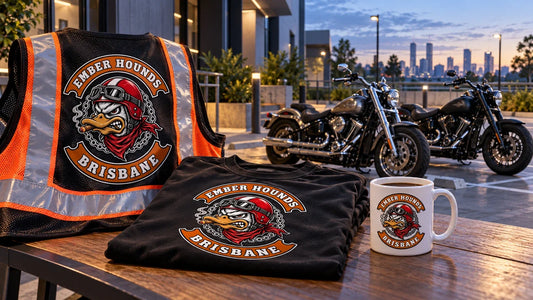
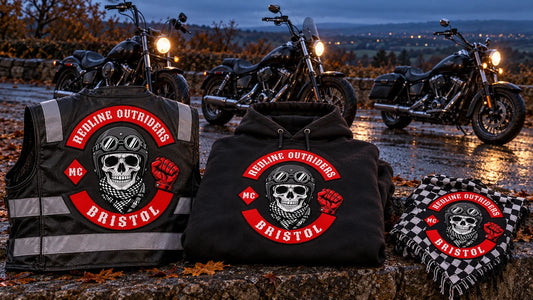
A fitted vest and authorized back patch can communicate club identity without adding trailing costume parts. Check the actual vest on the actual rider: clear the collar, arm openings and lower edge; verify that added decorations cannot reach controls; and keep removable contest props off the moving motorcycle. The linked Collection is a custom series page, not a retail product page.
Check 3: decorations clear wheels, drive components and heat
Inspect from front, both sides and rear. Nothing should be able to reach a tire, wheel, brake, chain, belt, shaft area, suspension, exhaust or intake. Test with the suspension loaded by the rider, not only with the motorcycle parked unloaded. Streamers, fake cobwebs, cloth panels and wire lights can move farther in wind than they do in the garage.
Do not route decorations across steering movement, brake lines, cables, vents or hot surfaces. Do not place adhesive or magnetic items where the manufacturer warns against them. If the club cannot prove secure clearance throughout steering and suspension travel, remove the decoration rather than relying on a slow route or good weather.
Check 4: lights, plate and rider conspicuity remain visible
NHTSA’s current rider-conspicuity guidance says protective clothing should also support visibility and notes that bright colors and retroreflective materials can improve conspicuity. A dark Halloween theme must not erase that function. Recheck the headlight, tail and brake light, indicators and any legally required plate from realistic viewing angles. Local vehicle and lighting rules vary, so the ride lead should verify the requirements that apply to the route.
Run a second check at the light level expected during the ride. A decoration that looks transparent in a bright workshop may hide a lamp or reflective area after sunset. The club should treat “visible in a photo” and “visible to road users” as two different tests.
Two costume configurations solve most conflicts
| Configuration | When it is used | What stays | What moves off the rider |
|---|---|---|---|
| Ride version | Any time the motorcycle is moving | Approved helmet, protective riding apparel, fitted club layer and non-interfering identity details | Loose props, oversized masks, trailing fabric, novelty headwear and unverified bike decorations |
| Parked-bike version | Photo stop, judging area or clubhouse after the keys are out | Club apparel and safe accessories appropriate for the gathering | Nothing returns to the moving motorcycle until it passes the four checks again |
Pack the off-bike pieces in a secure bag or support vehicle. Do not ask a rider to balance a prop across handlebars or strap it loosely to the motorcycle for the trip. Label the container by member or costume so the photo-stop change is quick and nothing is abandoned at the staging point.

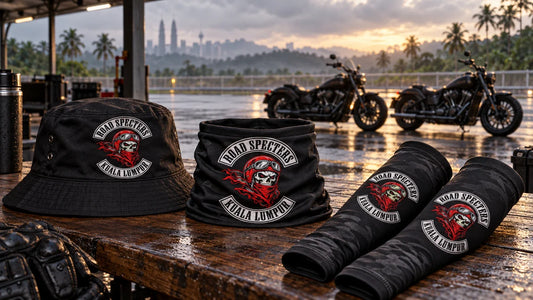
A custom club T-shirt works well for check-in, the parked-bike photo area and the clubhouse. It should not be described as impact, abrasion or weather protection unless the specific garment has verified protective specifications. Use custom apparel to organize identity and event roles while keeping certified or purpose-built riding gear in charge of protection.
Name one reviewer and make the decision traceable
The reviewer can be the ride lead or another experienced person named during the riders’ meeting. The role is not to judge taste. It is to apply the same four questions, record required changes and confirm that the revised setup was rechecked.
Use three outcomes: go, revise or parked-bike only. “Go” means all checks pass. “Revise” identifies the exact item to remove, shorten, secure or relocate, followed by a new check. “Parked-bike only” preserves the creative idea for the event without allowing it onto the moving motorcycle.
A simple paper roster is enough: rider name, motorcycle, costume version, four checkboxes, decision, reviewer initials and time. Keep medical or personal information off this sheet. The purpose is operational consistency, not surveillance.
Run the inspection 30 minutes before the riders’ meeting
- T–30: riders arrive in the ride configuration with fuel and normal riding gear ready.
- T–25: the reviewer performs the stationary vision, movement, clearance and visibility checks.
- T–20: members correct failed items and store parked-bike accessories.
- T–15: the group verifies lamps and checks decorations again at realistic light levels.
- T–10: the ride lead covers route, stops, hand signals, separation procedure and the location of the photo change.
- T–5: lead and sweep confirm the final roster; no new costume pieces are added after this point.
- At the stop: motorcycles are parked and keys are out before off-bike headwear or props appear.

A custom cap belongs at the parked-bike gathering, not under or instead of a motorcycle helmet. Keeping the cap and helmet physically separate during staging makes the boundary easy to understand. The same principle applies to novelty crowns, wigs, masks and other photo accessories.
Printable motorcycle Halloween ride checklist
- Approved helmet fits, fastens and remains unmodified unless the manufacturer permits the exact attachment.
- Face shield or eye protection is clear, secure and suitable for expected light.
- The rider can turn the head and look over both shoulders.
- Clutch, brake, throttle, switches and foot controls move through their full range.
- No fabric, lace, prop, wire or decoration flaps, snags or needs repeated adjustment.
- Nothing can reach tires, brakes, wheels, drive components, suspension or exhaust.
- Headlight, brake light, tail light, indicators and required plate remain visible.
- The ride version has been checked at the expected light level.
- Off-bike pieces are stored securely and have a named change location.
- Lead and sweep know the route, regroup plan and any approved decoration exceptions.
- One reviewer records go, revise or parked-bike-only before departure.
Fact and recommendation boundary: the 2026 event date and published riding guidance are facts drawn from the linked sources. The 4–2–1 Costume Gate, two-version system, 30-minute schedule and roster are editorial recommendations created for club operations. They do not replace local law, manufacturer instructions, certified training or professional safety advice.
Frequently asked questions
Can a rider wear a mask on a Halloween motorcycle ride?
Only if it does not interfere with the approved helmet, face protection, peripheral vision, breathing, hearing or head movement. In practice, many costume masks are better reserved for the parked-bike photo stop.
Are capes or trailing fabric safe on a motorcycle?
Trailing material creates foreseeable snag and wind-loading concerns. If it can flap, pull, reach a wheel or contact a hot or moving part, it should be removed from the ride version.
Can we decorate motorcycles with lights or fake cobwebs?
Only after verifying secure attachment, full clearance, visible required lights and compliance with local vehicle rules and manufacturer guidance. If those conditions cannot be confirmed, use the decoration only on a parked motorcycle.
Should the club inspect costumes before the riders’ meeting?
Yes. Begin about 30 minutes before the meeting so riders have time to remove or store failed items. The final roster should be confirmed before kickstands up.
Can a custom club T-shirt replace a protective riding jacket?
No. A normal custom T-shirt is club apparel, not verified motorcycle protective equipment. Wear it at check-in or the photo stop, or only where it does not displace appropriate riding protection.
Can a club cap be worn instead of a motorcycle helmet?
No. A cap is off-bike headwear and does not replace an approved, properly fitted motorcycle helmet. Keep caps and other novelty headwear for the parked-bike portion of the event.
Sources checked October 22, 2026
- MotoRidersUniverse, Halloween Costume Ride 2026 public event listing.
- National Highway Traffic Safety Administration, Strategies to Increase Rider Conspicuity and Use of Protective Clothing.
- New York State Department of Motor Vehicles, Motorcycle Manual: Preparing to Ride.
- Motorcycle Safety Foundation, Guide to Group Riding.
MotorClubShop is not affiliated with the listed event, its organizer, Harley-Davidson, NHTSA, New York DMV or the Motorcycle Safety Foundation. Images are original editorial concepts using an authorized club-logo reference. Product links lead only to custom Collection pages.
Tags:
Previous
UK Clocks Go Back 2026: A Motorcycle Club Dusk-Ride Reset Checklist
Next
Ride to Work Week 2026: A Motorcycle Club Commuter Check-In Plan