
Motorcycle Customization: Plan a Cohesive, Roadworthy Build
Quick answer: Plan motorcycle customization by defining the riding purpose first, then verifying legal, mechanical, ergonomic and electrical compatibility, documenting each change and obtaining written permission before adding any club identity; styling should not compromise control, visibility or serviceability.
At a glance
This guide separates practical decisions from assumptions and organization-specific rules. Confirm current local requirements, product documentation and club authorization for the actual situation.
Begin with use, not a shopping list

Write down how the motorcycle is actually used: commuting, touring, urban riding, events or closed-course activity. Identify the problems to solve before choosing parts. A consistent visual theme is useful, but function, fit and maintenance access should determine the sequence. Do not assume a part fits because a listing uses a familiar model name.
Verify compatibility and legality

Check the motorcycle and component manufacturer’s specifications, applicable road rules, inspection requirements and warranty implications. Controls, lighting, mirrors, exhaust, wheels, suspension and structural changes can affect safety or compliance. Use a qualified technician for work beyond your competence and keep receipts, part numbers and settings.
Protect ergonomics and visibility

Test reach to bars, levers, pedals and switches through the full steering range. Confirm cables and hoses do not bind. Luggage and decorative pieces must not obscure lights, plates, reflectors, instruments or cooling airflow. Sit on the stationary motorcycle in normal gear to evaluate clearances before road testing in a controlled setting.
Manage electrical and load changes
Additional lights, audio or heated accessories add electrical demand. Verify circuit capacity, connectors, fuse protection, routing and waterproofing with qualified guidance. Account for luggage and accessory weight within approved limits. Recheck fasteners and wiring after initial use according to the component instructions.
Add club identity last
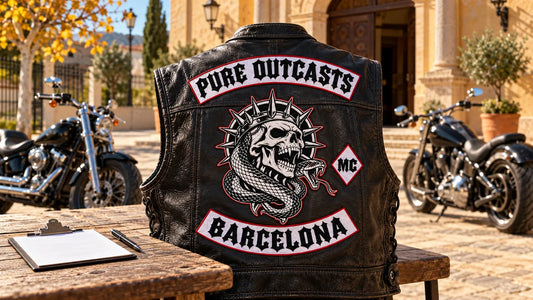
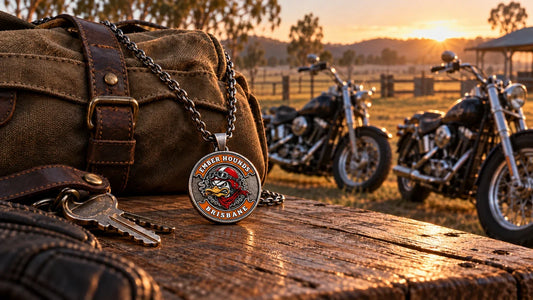
Obtain written permission for club names, colors and emblems, then proof scale and placement on the actual surface. Avoid covering safety labels or service points. A customized motorcycle remains the owner’s responsibility, and club artwork does not establish membership or endorsement beyond the documented approval.
Frequently asked questions
Does this guidance apply everywhere?
No. Laws, event rules, products and organization practices vary. Verify the current requirements and instructions for the place, product and group involved.
When is written club authorization needed?
Obtain written approval before reproducing a club name, logo, colors, chapter reference, role title or other identity-bearing artwork.
Tags:
Previous
Riding Towards Freedom: The End of Our Winter of Discontent
Next
Biker T-Shirts: Fit, Fabric and Club Artwork Guide