
Printed or Embroidered Club Cushions? Cover and Decoration Choices
Quick answer: Choose printing or embroidery only after confirming the actual cover fabric, artwork detail, filled or cover-only format, closure, and merchant-offered processes. Compare the same authorized emblem on applicable filled samples, check seams and zipper clearance, and approve the cover, insert, decoration, and product-specific care as separate fields.
A useful printed embroidered club cushion covers comparison holds the artwork and finished form constant. The Custom Clubhouse Cushions buying guide covers the complete order; this page focuses on decoration and cover construction without importing unverified material claims.
Confirm the product configuration first
Request the actual cover-fabric specification for the exact quoted item. Record whether the order includes a removable cover only, a cover with a separate insert, or a complete filled cushion. Identify the zipper or other closure, seam and piping construction, front and back treatment, and merchant-provided care information.
Do not infer fiber content, fabric weight, abrasion life, flame resistance, weather resistance, stain resistance, washability, or outdoor suitability from appearance. If a specification is absent, label it open and ask the merchant rather than filling the gap with a common industry assumption.

Compare processes offered for the exact cover
| Decision input | Printing inquiry | Embroidery inquiry |
|---|---|---|
| Artwork | Which colors, gradients, and smallest details are supported? | Which shapes need a stitch-ready interpretation or simplification? |
| Cover and placement | Which fabric, face, size, and area are currently offered? | Which fabric, backing, face, size, and area are currently offered? |
| Filled form | How does the decoration present across curvature? | How do stitch relief and curvature affect the visible face? |
| Approval | Which applicable physical sample and care record govern? | Which applicable physical sample and care record govern? |
These questions do not predict which method is better. Availability and result depend on the exact product, fabric, artwork, placement, construction, and supplier. Keep price, tolerance, schedule, and performance statements tied to the current merchant quote.
Use the same emblem on filled samples
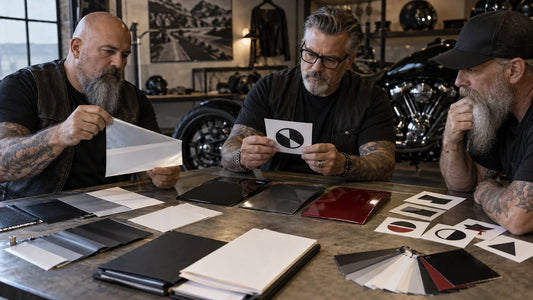
Ask for samples using the same authorized, original artwork or comparable geometry. View them on the specified filled form under representative clubhouse light. Inspect whether essential shapes remain distinct, whether small spaces stay open, how surface relief changes the design, and whether curvature moves details toward seams.

If embroidery requires simplification, the authorized artwork owner must approve that variant. Do not let a decorator remove letters, merge shapes, add borders, or reshape the club identity without an explicit versioned proof.
Check seams, zipper, and removable-cover behavior
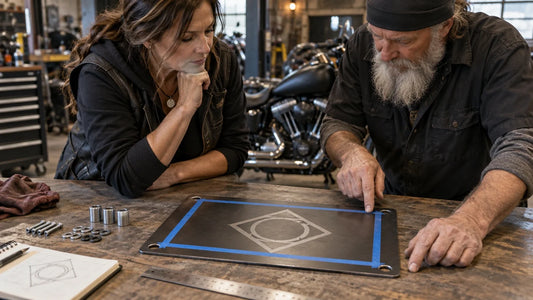
Put seam allowance, piping, zipper position, and the usable decoration area on the full-size proof. Keep critical emblem details and letters away from the closure and seam zones according to merchant guidance. Review the sample both filled and, when applicable, removed from its insert so the club can understand what each approval covers.
A proof that shows a clean front but leaves the closure and care fields blank is incomplete. The corrected record names the cover fabric, order format, insert or fill when included, closure, decoration process, finished dimensions, safe area, artwork revision, sample, and product-specific care guidance.

Keep the handoff version-controlled
Save the exact cover and insert specification, decoration method, artwork and proof revisions, sample ID, filled dimensions, closure, care record, quantity by variant, quote, approver, and date. A change to fabric, size, insert, seam, closure, decoration process, or artwork reopens the affected checks.
Separate visual preference from verified specification
Club reviewers can rank samples for color relationship, detail, surface relief, and how the emblem reads at room distance. Record those observations as visual approval, not technical performance. The merchant must separately confirm what fabric, process, closure, insert, care method, quantities, and schedule are actually offered. Keeping those records apart prevents a preferred sample from being misread as proof of wash life, outdoor use, fire behavior, or another property that was never tested or documented.
If the quote changes after review, compare the revised specification with the sample record line by line and reopen every affected approval.
Frequently asked questions
Is printing always better for detailed artwork?
Do not assume so. Ask what the merchant offers for the exact cover and approve an applicable sample at finished size.
Is embroidery always more durable?
No durability claim should be made without product-specific evidence covering the fabric, thread, construction, use, and care.
Can a flat decoration sample approve the cushion?
It may inform surface appearance, but placement and curvature should be reviewed on the specified filled form.
Does a removable cover mean it is machine washable?
No. Removability does not define cleaning. Follow the merchant’s current care instructions for the exact decorated cover.
What makes the final approval complete?
It connects cover fabric, format, insert or fill, closure, decoration, safe area, filled sample, care, proof version, and authorized approver.
Request a cushion decoration review
Send your authorized artwork, quantities and completed measurement or sample checklist to request a design and quote review for pillows & cushions.
Confirm available decoration, construction, and care for the exact quoted cushion before approval.
Tags:
Previous
How to Position a Club Logo Around Cushion Seams and Curves
Next
How to Position a Club Logo Around Cushion Seams and Curves
Related articles
How to Prepare a Club Decal for a Curved Surface
Sep 17 2026