
Winter Camping Checklist for Elefantentreffen
Short answer: an Elefantentreffen winter camping checklist should be built in risk order, not as one long shopping list. Pack the motorcycle’s legal and repair essentials first; then shelter and ground insulation; a sleep system matched to expected conditions; dry clothing and moisture protection; water, food and a tested stove; lighting, first aid and communications; and only then comfort extras. Keep every load within the motorcycle manufacturer’s limits, secure it so it cannot move, and test the fully loaded bike before departure.
The 69th BVDM Elefantentreffen is confirmed for 28–31 January 2027 at Thurmansbang-Solla/Loh. The organiser lists admission at €50, or €40 for BVDM and FEMA members, with tickets available only at the entrance. This guide combines the current BVDM rules with authoritative winter-camping guidance; it separates event requirements from general planning advice.

Why ordinary adventure packing lists fail here
Generic lists often mix survival-critical equipment with useful-but-optional accessories. The result is volume without a plan: two cooking systems but no dry sleep layer, several tools but no verified fit for a common fastener, or a warm sleeping bag resting on an inadequate mat. A motorcycle adds a second constraint: everything must fit within the permitted payload and remain stable, clear of controls, lights, wheels and exhaust.
Use three filters for every item:
- Consequence: what happens if this item is missing or wet?
- Redundancy: does another item already perform the same job?
- Load cost: how much weight, bulk and access time does it add?
This does not produce one universal kit. A rider’s motorcycle, route, medical needs, experience, weather forecast and sleep comfort all matter. It does produce a defensible order for making decisions.
The seven-layer Elefantentreffen winter camping checklist
| Priority | Core items | Pre-trip proof |
|---|---|---|
| 1. Motorcycle and documents | Registration, insurance, licence, manufacturer tool kit, tyre/repair plan, recovery contacts | Bike is road legal, serviced and within its stated load limits |
| 2. Shelter | Weather-capable tent, groundsheet, poles, pegs/anchors, repair sleeve and cord | Pitch it once with winter gloves and in low light |
| 3. Cold-night sleep system | Full-length insulated pad, sleeping bag appropriate to expected conditions, dry sleep clothing | All components fit together and stay dry in waterproof packaging |
| 4. Clothing | Wicking base, insulating mid-layer, wind/water shell, spare dry socks and gloves, warm head/neck layer | Layers allow movement and do not interfere with motorcycle controls |
| 5. Water and food | Protected bottles, compact food, stove/fuel if used, cup, utensil, ignition backup | Stove is tested outdoors and fuel choice suits expected conditions |
| 6. Safety and camp operations | First aid, medication, headlamp and spare power, phone/offline information, rubbish bags, small towel | Every rider knows where shared items are carried |
| 7. Comfort extras | Chair, entertainment, duplicate cookware, nonessential electronics | Add only after the loaded-bike test succeeds |
Build a cold-night system, not a collection of warm items
The U.S. National Park Service recommends a sleeping pad and a sleeping bag suited to the season and expected conditions. Its winter checklist also includes a tent or tarp, groundsheet, waterproof stuff sacks, layered synthetic or wool clothing, a shell, gloves, headlamp, first aid, stove and fuel. These are general winter-camping references, not Elefantentreffen rules, but the system logic is useful.
Start from the ground upward. The pad provides insulation from the cold surface; the sleeping bag manages the air around the sleeper; dry base and mid-layers protect that system from moisture carried in during the day. Do not assume an impressive sleeping-bag label compensates for poor ground insulation or wet clothing. Choose equipment for the forecast, your own cold tolerance and the manufacturer’s rating method.
Keep the sleep system in a waterproof inner bag even if the outer luggage is sold as waterproof. Pack dry sleep clothing with it, not with wet riding gear. Before bed, change out of damp layers. The NPS also cautions against breathing into the sleeping bag because the added moisture can make the sleeper colder over time.

Load the motorcycle by priority and access
Check the motorcycle owner’s manual for maximum load, luggage limits and mounting instructions. Include the rider, passenger, accessories and every bag in the calculation. General road guidance is consistent on the central point: do not overload the vehicle and secure the load so it cannot move or project dangerously. A universal kilogram figure would be misleading because limits vary by motorcycle and luggage system.
Use this practical loading sequence:
- Remove duplicate and “just in case” items that do not answer a specific risk.
- Put dense items low and close to the motorcycle’s centreline, within the luggage system’s instructions.
- Keep shelter and sleep gear balanced between sides.
- Place first aid, documents, headlamp, water and an extra layer where they can be reached without unloading the camp.
- Keep straps away from wheels, chain or belt, brakes, steering, suspension, hot exhaust parts and lights.
- Compress suspension, turn the bars lock to lock, inspect clearances and re-tension the load.
- Ride a local test loop at low speed and normal road speed, then inspect every attachment again.
A club should weigh shared equipment once and assign it before departure. “Someone will carry it” is not a load plan. Record the rider, bag and access priority for the shelter repair kit, first aid, stove and emergency tools.

Elefantentreffen-specific camp rules that affect packing
The BVDM’s 2027 general information changes several packing decisions:
- Fire: no fire may be lit within 20 metres of the forest. Keep flames low enough to prevent sparks reaching the forest, supervise continuously, extinguish in strong wind, burn wood only, obtain firewood from the organiser’s sales points, and put the fire fully out with water or snow before leaving.
- Fire access: extinguishers and fire blankets are placed around the grounds. Locate the nearest station and keep access clear.
- Ice: the organiser warns that the site can be very slippery and cannot be gritted everywhere. Choose suitable footwear and avoid packing arrangements that force you to carry unstable stacks.
- Waste: use the marked containers and the rubbish bags distributed at the entrance. Pack an extra bag for wet clothing and camp waste.
- Security: do not leave wallets or valuables unattended in the tent. Keep them on your body and take them into the sleeping bag at night.
- Wristband: the sealed admission band must remain attached to the wrist; opened or torn bands are invalid.
Do not build the food plan around a campfire. Wind or the campsite position may make a fire inappropriate, and the event rules require extinguishing in strong wind. If you carry a stove, use it only according to its manufacturer’s outdoor-use instructions and current site directions; never operate a combustion stove inside a tent.
A motorcycle-club packing drill
Run the drill two weeks before departure, then repeat it after the final weather check:
- Lay out every personal and shared item by the seven priorities above.
- Mark each shared item with one carrier and one backup plan.
- Pitch the shelter and assemble the sleep system wearing gloves and using headlamps.
- Pack each sleep system inside its waterproof liner.
- Load every motorcycle exactly as planned, with full water and normal riding clothing.
- Check manufacturer load limits and bag mounting instructions.
- Ride the test loop, recheck straps, and remove anything that creates instability or blocks access.
- Send the final load map, official BVDM links and emergency contacts to the group.
The drill exposes problems that a spreadsheet cannot: a tent pole that does not fit a pannier, a strap that touches a silencer, gloves too bulky for a buckle, or a sleeping pad that cannot be rolled small enough after use.
Functional club identity without consuming luggage space
Only after the safety and sleep system is complete should a club decide how to remain recognisable under winter layers. A custom neck gaiter can carry the club’s own authorised logo while serving as a compact camp and off-bike layer. It is not protective motorcycle equipment, a medical device, an official Elefantentreffen product or a substitute for the organiser’s admission wristband.

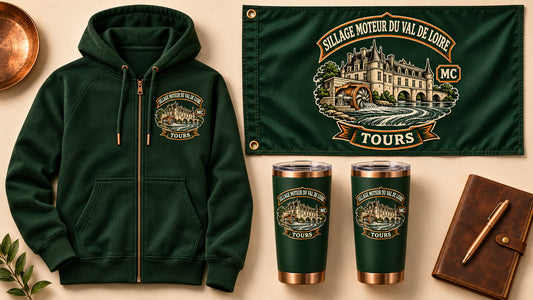
A custom club hoodie can be packed as a protected, dry camp layer and can give the group a consistent identity away from the motorcycle. It does not replace certified riding apparel, weather shells or the cold-night sleep system.
Product note: MotorClubShop is not affiliated with BVDM or Elefantentreffen. Custom products shown are private club concepts, not official event merchandise, admission credentials, certified protective equipment or guarantees of warmth.
Frequently asked questions
What are the most important items for Elefantentreffen winter camping?
Prioritise a legal and reliable motorcycle, weather-capable shelter, an insulated ground pad, a sleeping bag suited to expected conditions, protected dry layers, water and food, lighting, first aid and a secure load. Comfort extras come last.
How do I avoid overpacking my motorcycle?
Give every item a specific risk or task, remove duplicates, weigh shared gear, follow the motorcycle and luggage manufacturers’ limits, and complete a fully loaded test ride. Do not use a generic payload number.
Can I rely on a campfire for cooking and warmth?
No. BVDM requires fires to remain at least 20 metres from the forest, supervised, low, wood-only and extinguished in strong wind and before departure. Build a plan that remains viable without a fire.
How should I keep my sleeping gear dry?
Use a waterproof inner liner or dry bag for the sleeping bag and sleep clothing, even inside weather-resistant luggage. Separate wet riding gear and change into dry layers before sleeping.
Where should valuables be kept at Elefantentreffen?
BVDM warns against leaving valuables or wallets unattended in tents. Keep them on your body and take them into your sleeping bag at night.
Are custom neck gaiters official Elefantentreffen merchandise?
No. The products discussed here are private motorcycle-club customisations. They are not affiliated with BVDM, do not replace the official wristband and are not certified protective riding equipment.
Sources and verification date
- BVDM: official Elefantentreffen information
- BVDM calendar: 69th Elefantentreffen, 28–31 January 2027
- BVDM: general Elefantentreffen information for 2027 (German PDF)
- U.S. National Park Service: What to Bring — Camping
- U.S. National Park Service: Winter Backpacking Gear Checklist
- UK Department for Transport: vehicle condition, planning and load-security guidance
Sources checked 9 November 2026. Event facts and organiser rules may change. Recheck the BVDM pages, the weather forecast, road conditions and your motorcycle manufacturer’s instructions shortly before departure.
Etiquetas:
Anterior
2027 CSBK Calgary at RMM: Dates, Tickets, Location & Motorcycle Club Guide
Siguiente
2027 CSBK RMM Race-Team & Paddock Operations Guide