

Types of Motorcycle Lighting and When to Use Each One
Motorcycle lighting falls into distinct functional groups: headlights for forward road illumination, auxiliary or driving lights for supplemental coverage, running lights for continuous presence, turn signals and brake lights for communication, and accent lighting for decoration. Use each only for its stated function after confirming exact fitment, wiring, mounting and road-use requirements.
Safety note: Lighting affects visibility and legal compliance. Decorative or auxiliary products must not replace, obscure or interfere with required lamps. Follow current product and motorcycle instructions and use a qualified installer when wiring or fitment is uncertain.
Headlights: primary forward illumination
A headlight provides the motorcycle’s primary forward beam. Compare the exact housing or insert, mounting bracket, connector, voltage and supported beam functions. Beam pattern and aim matter; a brighter-looking source is not automatically safer.

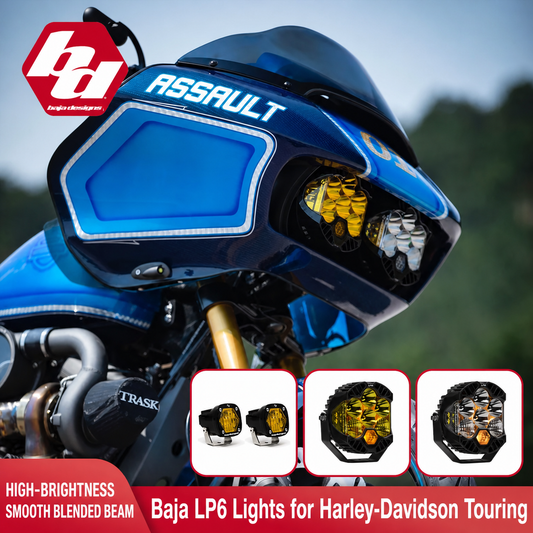
This modular Baja-style range includes headlight and auxiliary components plus brackets and wiring accessories, so the selected function and complete configuration must be identified.
Running lights: continuous presence
Running lights operate continuously or with the motorcycle’s normal lighting mode to improve presence. They are not automatically turn signals or headlights. A combined product needs verified wiring for each supported function.

These leg-guard units combine white running-light and amber turn-signal functions for specified Touring applications.
Auxiliary and driving lights: supplemental coverage
Auxiliary lights supplement rather than replace required primary lighting. Lens type, mounting position, controller, switch and beam use need confirmation. Some systems group lamps and supporting components as separate options.

The DENALI range contains D3, D4 and D7 light options plus separate lenses, controllers, switches, wiring and mounts.
Accent lighting: decorative illumination
Accent lights add color or visual emphasis to body, fork or engine areas. They must not be treated as required road-lighting functions. Confirm controller and zone requirements and check local restrictions on color, flashing and use while riding.

This modular RGB accent system uses model-specific lighting zones and controller-dependent configurations for compatible Road Glide applications.
Turn signals: directional communication
Turn signals communicate intended direction and must provide the correct color, placement, flash behavior and visibility for the application. Confirm connector, load management and whether a selected option is the signal itself or a resistor.

This hidden handlebar-signal listing contains model-specific light options and a separate load-resistor option, so the part number is essential.
Rear combination lights: running, turn and brake
Combination rear lights can integrate several functions in one housing. Each circuit and behavior must match the motorcycle, and the lamp must remain visible with saddlebags, racks and other accessories installed.

These sequential saddlebag lights combine running, turn and brake functions and use different model-year variants for Harley Touring applications.
Function comparison
| Lighting type | Primary purpose | Key checks |
|---|---|---|
| Headlight | Forward road illumination | Beam, aim, housing, connector and mount |
| Auxiliary | Supplemental coverage | Lens, switch, controller, bracket and use |
| Running | Continuous presence | Circuit, color, placement and visibility |
| Turn signal | Directional communication | Flash behavior, load, connector and spacing |
| Brake light | Braking communication | Activation, visibility, wiring and placement |
| Accent | Decoration | Controller, zone, color and legal use |
Choose by function before style
- Identify the required or desired function.
- Match exact model, year, trim and mounting location.
- Select the exact lamp or component option.
- Confirm connector, controller, harness, load and fuse guidance.
- Check package contents, clearance and wire routing.
- Verify applicable color, placement and operating rules.
Frequently asked questions
Can auxiliary lights replace a headlight?
No. Use every lamp only for its stated and legally permitted function.
Are running lights the same as turn signals?
No. Some products combine both, but each function requires the correct circuit and behavior.
Are accent lights road lights?
No. Accent lighting is decorative and must not replace required lamps.
Does a light listing always include a complete kit?
No. Options may be lenses, brackets, controllers, harnesses or resistors.
Can one rear light perform three functions?
Some combination products support running, turn and brake functions when correctly matched and wired.
Functions, configurations and availability verified against active Motor Club Shop listings on September 13, 2026. Current product pages, manufacturer instructions and applicable law take priority.
Etiquetas:
Anterior
Compare Harley Touring Seats by Comfort, Construction and Use Case
Siguiente
Types of Leather Crossbody Bags and Which One Fits Your Carry Style
Artículos relacionados
How to Inspect and Maintain Motorcycle Lighting
Sep 13 2026
Full-Grain vs Top-Grain Leather Crossbody Bags
Sep 13 2026