
Woven or Sublimated Club Lanyards? An Artwork Comparison
Quick answer: Choose woven sublimated club lanyard artwork by comparing the same authorized design at actual strap width. Woven construction may express the design through interlaced yarn, while sublimation may support a different color-and-detail route, but the actual result depends on the offered material, edge, join, print area and artwork. Approve applicable physical samples and the worn repeat before selecting.
Process labels are not complete specifications and do not guarantee detail, color, feel or durability. This article owns the artwork-process comparison; attachment fit and the overall purchase belong in the shared buying guide. Use the Custom Club Lanyards buying guide for that wider decision.
Woven or Sublimated Club Lanyards? An Artwork Comparison
Judge woven and sublimated lanyard artwork at the offered strap width with the same authorized emblem, color intent and repeat spacing. A zoomed screen proof can hide lost fine lines, altered edges or a color shift; an actual-width process sample makes those differences visible. Compare the flat strip and worn loop, then ask the merchant which process, colors and minimum detail are available for the quoted order.
Confirm strap width, artwork detail, repeat and color requirements
- Record the offered strap width and finished construction with units, distinguishing requested from supplier-confirmed values.
- Identify the smallest essential emblem line, gap and color boundary at actual width, plus any intentionally simplified detail.
- Record repeat spacing, desired direction, color requirements, face/reverse treatment, edge, join and hardware as separate fields.

Compare the offered options with the same original club artwork
- Use the same original simplified emblem and repeat spacing on both offered process proofs.
- Compare actual-width samples under neutral light and inspect face, reverse, edges and join.
- Review the longest required information and smallest logo detail without relying on a magnified rendering.
- Form both samples as worn and confirm repeat direction on the two hanging sides.
- Record the selected process, exact sample, artwork adaptation, color evidence and hardware.

Compare actual-width samples
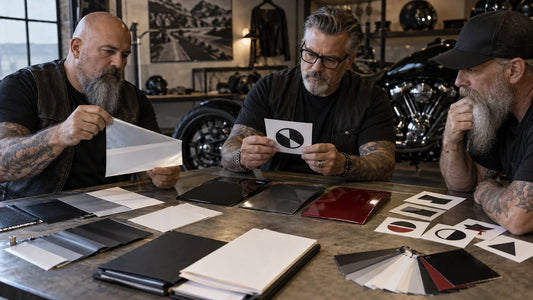
Place the woven and sublimated samples side by side under similar light and view them at normal wearing distance. Inspect small lettering or geometric edges, repeat alignment near the join and whether the intended colors remain distinguishable on both hanging sides. Record which differences are observed on the physical samples and which process specifications still require merchant confirmation.
Approve the specification and sample as one record
A proof labels one route “woven” and one “sublimated” but omits repeat direction and color requirements. The committee cannot tell whether differences come from process, width or changed artwork. The correction fixes width and emblem geometry, records each color requirement and shows both flat and worn proofs. Acceptance means the chosen sample preserves the primary motif at actual width and its worn repeat matches the approved direction.

Retain the actual strap width, artwork revision, color reference, repeat spacing and photographs of each process sample at the same scale. Identify the selected sample and its supplier proof version; do not approve one process by referring to a larger mockup or a different artwork file.
Prepare the design-review inquiry
Submit the selected process request, strap width, artwork detail, repeat and color requirements, authorized artwork and quantities. Include actual-width flat and worn sample photographs and identify the reviewed hardware. Ask the merchant for current process limits, attachment dimensions and exact-product breakaway documentation only if that construction is offered.
Separate requested values from supplier-confirmed ones, and tie each decision to a sample, proof, artwork revision or named approval. A screen rendering can communicate layout but should not silently become evidence for physical color, woven detail, reverse treatment or riding safety. Before the inquiry leaves the committee, name the person responsible for resolving every open construction, color and attachment question. Record the answer beside its source instead of relying on meeting memory.
Frequently asked questions
Which process shows more detail?
There is no responsible universal answer. Compare applicable samples using the same artwork at the offered strap width and ask the supplier to confirm limits.
Can screen color approve the final lanyard color?
A screen proof can approve placement and relationships, but use current physical or supplier-supported color evidence where exact appearance matters.
Should face and reverse be specified separately?
Yes. Ask how the offered construction treats each side and how the join changes orientation.
What belongs in the final specification?
Record strap width, process, material description, artwork adaptation, repeat and color requirements, edge, join, hardware, sample ID, proof version, approver and date.
Request a design and quote review
Send your authorized artwork, quantities and completed measurement or sample checklist to request a design and quote review for lanyards.
Explore Lanyards Read the buying guide
A design inquiry is not production approval. Confirm current specifications, quote and final proof in writing.
Etiquetas:
Anterior
How to Make a Repeating Club Logo Read Correctly on a Lanyard
Siguiente
How to Make a Repeating Club Logo Read Correctly on a Lanyard
Artículos relacionados
How to Prepare a Club Decal for a Curved Surface
Sep 17 2026