
How to Match a Club T-Shirt Print Method to the Actual Fabric
Quick answer: Match a print method only after confirming the exact shirt blank, its actual fabric composition, the artwork’s colors and smallest details, and the intended decoration area. Compare the same authorized artwork on supplier-offered samples, ask which processes are currently available for that blank, and approve a physical decoration sample plus garment-specific care instructions before production.
A useful club t shirt printing method fabric decision does not begin with a favorite process name. It begins with product-specific evidence. The Custom Motorcycle Club T-Shirts buying guide covers the broader format, roster, proof, and order handoff; this article stays focused on the decoration decision.
Confirm actual fabric composition, artwork detail, and decoration area
Request the current specification for the exact short- or long-sleeve blank. Record the stated fabric composition, garment color, size range, and any construction detail that intersects the placement. Separate confirmed values from open supplier questions. Do not copy a composition from a competitor, a previous blank, or a shirt that merely looks similar.
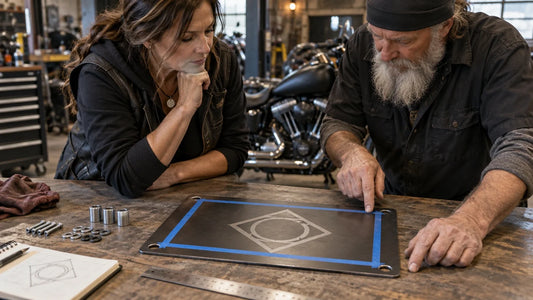
Audit the authorized artwork at intended finished size. Count required colors, identify gradients or photographic detail, note very small lines or gaps, and mark which elements may not change. Then specify the intended front, back, left-sleeve, or right-sleeve area and ask for the current usable dimensions and process limits. “Large back print” is not a complete decoration-area specification.

Compare only processes offered for the chosen blank
| Decision input | What to ask the merchant | What to approve |
|---|---|---|
| Supplier-offered printing processes | Which options are currently available on this exact blank, color, placement, and quantity? | An applicable merchant sample using comparable artwork detail |
| Embroidery where suitable | Is it offered on this garment and placement, and what artwork simplification or backing is required? | A garment-specific sample and approved stitch-ready interpretation |
| Artwork preparation | Which color mode, vector or raster format, resolution, separations, underbase, or transparency treatment is required? | The production artwork revision tied to the proof |
| Care | What written wash and care instructions apply to this garment-decoration combination? | Care information associated with the approved sample |
Process categories such as screen printing, transfer or digital printing, and embroidery can help organize the inquiry, but their availability and behavior vary with the actual product and supplier. Do not promise feel, wash life, stretch, opacity, color match, or detail limits without current merchant evidence.
Compare the same original club artwork on physical samples
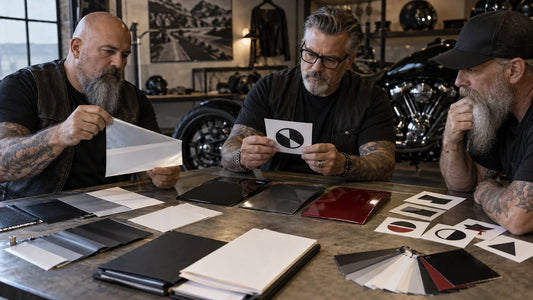
Use one authorized, original artwork revision so the comparison does not confuse process differences with design changes. Ask for applicable samples on the chosen garment or the closest merchant-supported construction, with any differences documented. View the sample in normal indoor and outdoor light, at actual wearing distance, and close enough to inspect edges and small detail.
Check whether essential shapes remain distinct, fine gaps stay open, colors relate acceptably to the shirt, and the decoration sits within the confirmed area. If embroidery is offered, separately approve any necessary simplification; a print-ready file is not automatically stitch-ready.

Ask which options are available on every selected blank
A mixed short- and long-sleeve order may require two confirmations. Ask whether the preferred process, artwork dimensions, and colors are supported on each exact blank and placement. If the offered routes differ, keep separate specification rows and proofs rather than assuming one process choice covers the whole order.
Request actual garment size charts, available physical samples, decoration method, print dimensions by placement, and written care instructions. Keep performance statements narrow: these shirts are club apparel, not verified protective riding gear. The decoration method should not be used to imply impact, abrasion, flame, or weather protection.
Approve specification, sample, and care as one record
Review the approved sample against a record containing exact blank, fabric composition, garment color, artwork colors and detail, decoration area, supplier-offered process, artwork revision, proof version, sample ID, care instructions, quantity, approver, and date. Mark any merchant-confirmed limitations next to the affected field.
Reject a proof that leaves the decoration area unspecified. For example, if a back emblem is shown on a generic mockup with no blank, size, dimensions, or collar reference, the organizer cannot verify what was approved. The corrected proof names the blank and size, shows the intended finished dimensions, uses the supplier-confirmed placement reference, and links to the applicable sample.

Frequently asked questions
Which printing method is best for a club T-shirt?
There is no universal best method. Compare only processes the merchant offers for the exact blank, artwork, placement, color, and quantity.
Can we use the fabric specification from a similar shirt?
No. Request the current specification for the exact product because visually similar blanks can differ.
Is embroidery always available on T-shirts?
No. Ask whether it is offered and suitable for the selected garment and placement, then approve an applicable sample and artwork interpretation.
Why does the decoration area matter?
It connects the artwork’s finished scale and detail to a real placement. Without it, the process comparison and proof are incomplete.
What should the club save after approval?
Save the garment specification, offered process, artwork and proof revisions, sample ID, approved area, care guidance, quote reference, approver, and date.
Request a fabric and decoration review
Send your authorized artwork, quantities and completed measurement or sample checklist to request a design and quote review for short-sleeve t-shirts / long-sleeve t-shirts.
Explore Short-Sleeve T-Shirts Review Long-Sleeve T-Shirts
A quote inquiry is not production approval. Confirm the current process, sample, proof, and care guidance in writing.
タグ:
以前の
How to Keep a Club Logo Readable in a Textured Rug
次へ
How to Keep a Club Logo Readable in a Textured Rug
関連記事
How to Prepare a Club Decal for a Curved Surface
Sep 17 2026