

Brass vs Stainless Steel vs Silver-Tone Biker Belt Buckles
Solid brass and stainless steel identify base metals; silver-tone usually identifies appearance, not silver content or a specific base metal. When comparing biker belt buckles, read the exact material statement for the selected variant, then compare finish, weight, construction, skin-contact considerations, care and strap compatibility. Color alone cannot prove composition.
Solid brass: a base-metal statement
Solid brass means the main stated material is brass rather than merely brass-colored. It can develop surface change with handling and environment. Verify whether every component is brass, whether an antiqued or plated finish is used, and how the care instructions treat polishing.

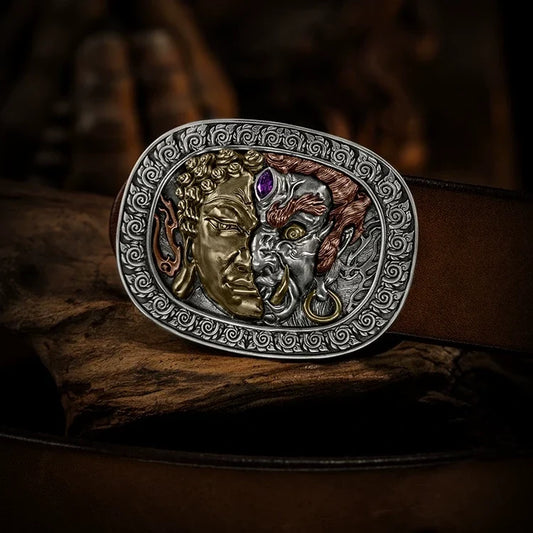
This mixed-metal listing shows why the complete material statement matters more than gold or silver color.
Brass designs can vary by option
A multi-design listing may contain different relief patterns, dimensions or finishes. Confirm that “solid brass” applies to the exact chosen buckle and read the selected option rather than assuming all gallery images represent one configuration.

Use the selected design specification to verify base metal, dimensions, weight and finish.
Stainless steel: verify the grade only when stated
Stainless steel generally offers a different color and care profile from brass, but “stainless” is not a visual conclusion. If grade, coating or finish matters, look for an explicit statement. Do not convert “steel,” “silver color” or “silver-tone” into a stainless-steel claim.

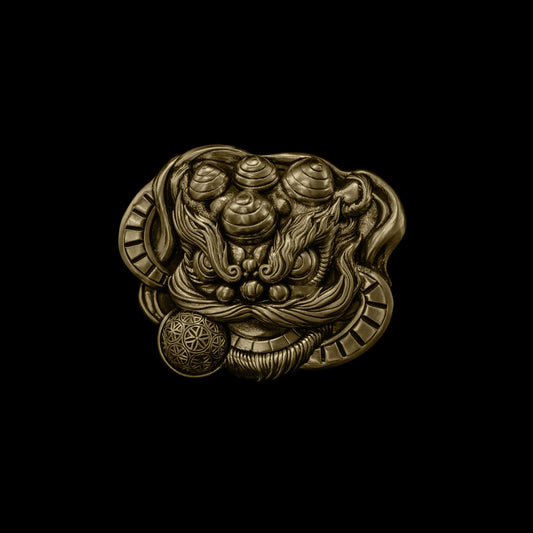
A sculptural buckle may combine materials or finishes; use written specifications for the chosen configuration.
Silver-tone describes appearance
Silver-tone means the surface looks silver-colored unless the listing separately identifies sterling silver, stainless steel or another metal. Ask what the base material and coating are when composition affects care, allergies, weight or purchasing preference.

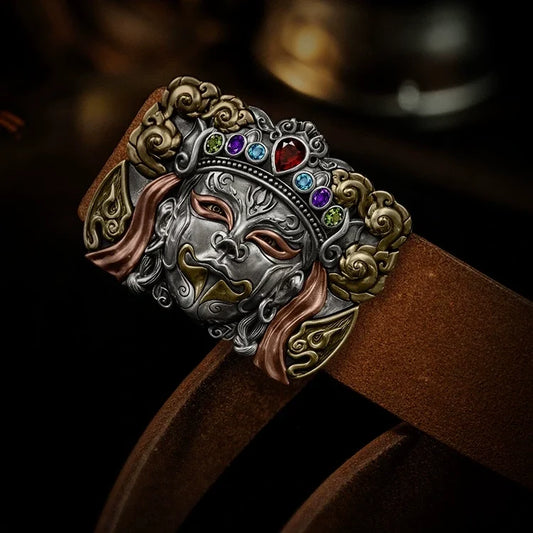
Mixed-metal styling demonstrates why color labels and composition labels must be read separately.
Mixed-metal buckles require component-level reading
A buckle can combine a base body, contrasting relief, plated accents, screws, hooks and decorative inserts. The material line may not describe every small component. Inspect front and rear images and ask which parts contact skin or carry load if that matters.

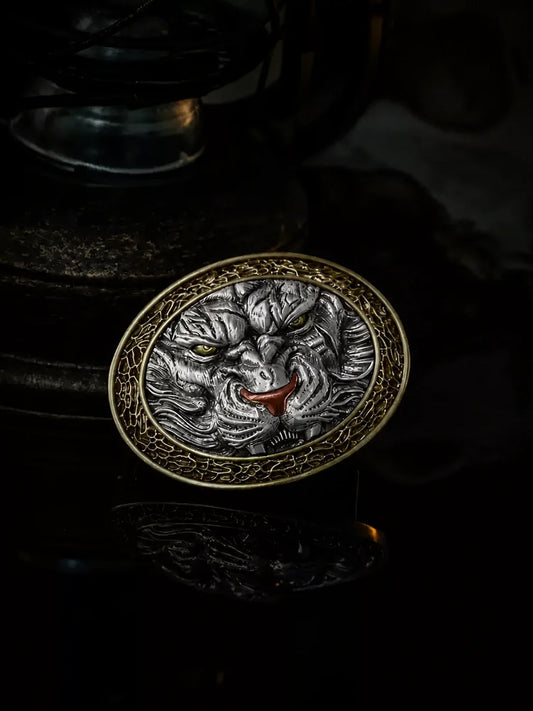
Dense contrasting relief is a reason to inspect base material, surface treatment and rear hardware separately.
Natural-stone and color options can change the claim
Accent options may use different stones, colors or metal treatments. The exact option name should agree with the material description and product images. Never assume a colored accent is natural stone without an explicit statement.

Review the selected metal and accent option together before comparing price or care requirements.
Material comparison checklist
| Label | What it tells you | Still verify |
|---|---|---|
| Solid brass | Stated brass base material | Finish and other components |
| Stainless steel | Stated steel family | Grade, coating and hardware |
| Silver-tone | Silver-colored appearance | Base metal and plating |
| Mixed metal | More than one metal or finish | Which component uses which material |
Frequently asked questions
Is silver-tone the same as sterling silver?
No. Silver-tone describes color unless the listing separately states a silver alloy.
Can I identify stainless steel from a photo?
No. Use the written material specification for the selected variant.
Does solid brass mean every component is brass?
Not necessarily. Hooks, screws, accents or coatings may differ, so read the complete specification.
Which material is best?
Choose according to verified composition, finish, care, weight, skin-contact needs, fit and style rather than a universal ranking.
Product images, configurations and availability verified against active Motor Club Shop listings on September 13, 2026. Current product pages remain the final ordering reference.
タグ:
以前の
How to Match Biker Belt Buckles to Belt Width
次へ
Biker Pendants: Frequently Asked Questions Before You Buy
関連記事
How to Change a Biker Belt Buckle Safely
Sep 13 2026
How to Wear Large Biker Belt Buckles Comfortably
Sep 13 2026
How to Choose a Biker Belt Buckle as a Gift
Sep 13 2026
How to Clean and Care for Biker Belt Buckles
Sep 13 2026
Biker Belt Buckle Attachment Systems Explained
Sep 13 2026
Biker Belt Buckle Size and Weight Guide
Sep 13 2026