
Event Badges as Rewards: A Practical Engagement Guide
Quick answer: Event badges work best when they recognize a clearly defined action—such as completing a route, volunteering or demonstrating a skill—and when every participant can understand the criteria before the event. They should support belonging and feedback, not pressure people to take unsafe risks.
At a glance

Define the behavior before designing the badge

Start with one observable achievement: completing a published route, staffing a check-in table, attending a safety workshop or contributing a set number of volunteer hours. Publish the eligibility rule, evidence required and deadline before registration closes. A badge should confirm what happened; it should not imply rank, riding ability or club status beyond the stated achievement.
Make participation safe and inclusive

Reward systems can change behavior. Do not create criteria that encourage speeding, riding while fatigued, skipping rest stops or competing on public roads. Offer equivalent ways to participate when disability, motorcycle type, travel distance or weather makes one activity inaccessible. A volunteer badge and a ride-completion badge can carry equal visual weight without pretending the tasks were identical.
Choose a badge format that fits the event
| Format | Good for | Check before ordering |
|---|---|---|
| Embroidered patch | Annual rides and fabric placement | Size, border, backing and sewing area |
| Metal pin | Milestones and compact keepsakes | Clasp type, sharp points, weight and finish |
| Digital badge | Online profiles and repeat programs | Verification, privacy and expiration rules |
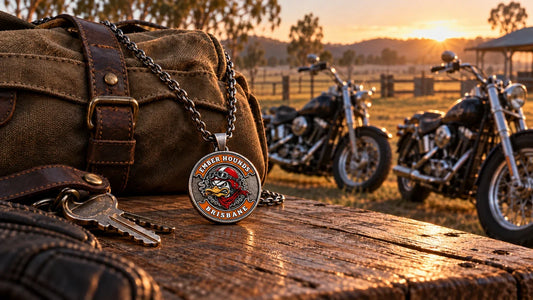
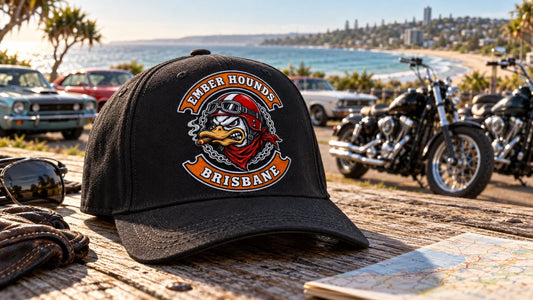
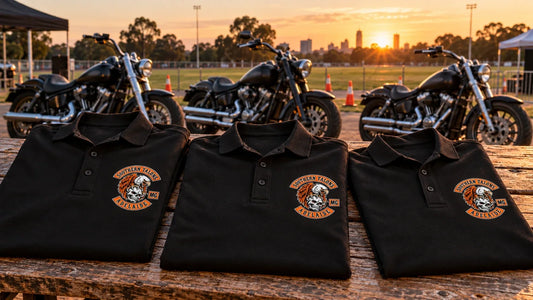
If a physical badge uses a club name or logo, secure approval for the exact artwork, dimensions, colors and placement. Participation in an event does not automatically authorize someone to reproduce club identity.
Build a fair award process
- Record the criterion in plain language.
- Name who verifies completion and how disputes are handled.
- Use the minimum personal data needed.
- Set a replacement policy for lost or damaged items.
- Review the program after the event using participant feedback.
Recognition feels credible when the rule is consistent and the award arrives promptly. Avoid surprise categories that favor insiders, public leaderboards that expose personal information, or scarce rewards that were advertised as guaranteed.
Measure more than badge collection
Count registration, safe completion, volunteer retention and satisfaction separately. A large number of claimed badges does not prove that an event improved belonging. Short post-event questions—what helped, what felt unclear and what should change—provide better evidence for the next event.
Frequently asked questions
Should every participant receive the same badge?
Not necessarily. A participation badge and role-specific recognition can coexist if the distinctions are explained without creating a misleading hierarchy.
Can a badge look like an official club patch?
Only with the relevant club's explicit approval. Event organizers should avoid layouts, rockers or insignia that could be mistaken for membership or office.
Tags:
Previous
On the Road T-Shirts: Every Mark Tells a Story
Next
Choosing Fonts for Motorcycle Club Badges and Patches