
Printed or Tufted Clubhouse Rugs? Match the Construction to the Artwork
Quick answer: Choose printed tufted custom clubhouse rugs by comparing the same authorized artwork on current physical samples at the proposed scale. A printed option may handle some tonal or compact graphic detail differently; a tufted option may favor larger shapes and a different surface character. Neither label proves quality, durability, slip resistance, fire behavior, outdoor use or cleanability—confirm the exact construction, backing, edge and care documents with the supplier.
The process name is only the start of the specification. Within either broad category, surface, density, color method, backing, edge and available size can vary. The right decision is the one whose current sample reproduces the approved artwork for the actual room and whose written product documents meet the club’s needs.
This article owns the construction-to-artwork comparison. Use the Custom Clubhouse Rugs buying guide for floor planning, quantities and the complete purchase workflow.
Printed or tufted clubhouse rugs? Match the construction to the artwork
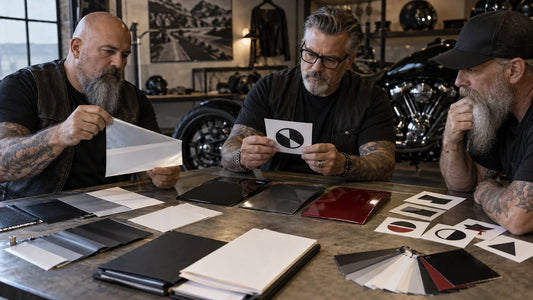
Ask the supplier which constructions are currently offered and request representative face, edge and backing samples. Keep the artwork, physical scale and evaluation conditions consistent. If one sample uses simplified art and another uses the original, the committee is comparing two variables at once and cannot isolate the process decision.
Use “printed” or “tufted” only as the merchant defines it for the quoted item. Do not transfer fiber, pile, backing, cleaning, tolerance or performance statements from another supplier’s product.
Confirm pile or print sample, logo detail, backing and care documents
- Identify the exact face sample and the process represented.
- Record the proposed finished dimensions and artwork scale with units.
- Measure essential logo lines, gaps and color boundaries on the physical sample.
- Photograph the edge and reverse, then request the supplier’s current construction description.
- Collect the applicable cleaning guidance and any floor-compatibility instructions.
- Leave slip, fire, wear and outdoor performance open unless exact-product evidence is supplied.

Compare the offered options with the same original club artwork
| Question | Physical evidence | Decision boundary |
|---|---|---|
| Does the main emblem read? | Same artwork, same proposed size, applicable samples and normal viewing position | Approve only the authorized adaptation that survives the sample |
| How does the surface affect detail? | Actual-scale face and edge inspection under representative light | Do not infer density, composition or wear life from appearance |
| What backing and care apply? | Named reverse sample and current supplier documentation | Do not convert documentation gaps into performance promises |

Compare the same logo on material samples
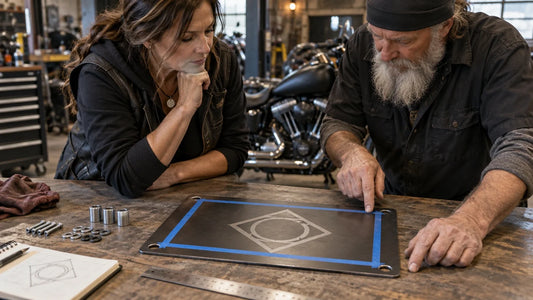
- Inspect both samples close enough to document surface and edge construction.
- Move to the intended viewing position and judge the primary silhouette and negative space.
- Note only observable differences; ask the supplier to explain material or process causes.
- Confirm whether the proposed backing, edge and size correspond to the reviewed sample.
- Record only documented cleaning and performance statements for the exact offered item.
Approve the specification and sample as one record
An incomplete proof names a face process but omits the backing and care documents. That leaves the committee unable to connect the visual sample to the quoted construction or room requirements. The correction adds the exact sample identity, face and reverse views, edge treatment, artwork revision, finished dimensions, current care guidance and every still-open question.

Acceptance means the selected physical sample preserves the essential emblem at the proposed scale, the proof matches the authorized revision, and the current specification identifies the offered face, edge, backing and care information. Open evidence remains visibly open.
Prepare the design-review inquiry
Submit the selected process request, named pile or print sample, proposed size, logo-detail requirements, backing and care questions, authorized artwork and quantities. Include the room use and viewing position. Ask for the current actual pile and backing sample, dimensions, edge details, cleaning guidance and floor compatibility. Request anti-slip, fire, abrasion or outdoor evidence only when relevant, and do not approve those claims without exact-product documentation.
For the full order sequence, current option questions and approval workflow, return to the Custom Clubhouse Rugs buying guide.
Frequently asked questions
Are tufted rugs always more durable than printed rugs?
Do not assume that from the process label. Durability depends on the exact construction and evidence; request current product-specific documentation.
Which process is better for a detailed club emblem?
Compare the same authorized artwork at the proposed scale on current applicable samples. The result depends on the supplier’s offered construction and approved adaptation.
Why inspect the backing if the decision is about artwork?
The club is ordering a complete floor product. The backing, edge and care information must correspond to the same quoted construction, even though they do not decide logo detail alone.
What should remain open in the comparison?
Leave materials, tolerances, cleaning, floor compatibility, price, lead time, slip, fire, wear and outdoor performance open until the merchant confirms them for the exact item.
Request a design and quote review
Send your authorized artwork, quantities and completed measurement or sample checklist to request a design and quote review for custom rugs & carpets.
Explore Custom Rugs & Carpets Read the buying guide
A design inquiry is not production approval. Confirm current specifications, quote and final proof in writing.
Tags:
Previous
Custom Clubhouse Rugs: Buying Guide for Club Organizers
Next
Custom Clubhouse Rugs: Buying Guide for Club Organizers
Related articles
How to Prepare a Club Decal for a Curved Surface
Sep 17 2026