
Lone Star Rally 2026: A Custom Bike Show Crew Readiness Checklist
Direct answer: A reliable motorcycle show crew checklist should lock five responsibilities—entrant, documents, motorcycle presentation, club identity and movement/security—against the event’s actual clock. For the Friday motorcycle show listed by Lone Star Rally for November 6, 2026, that means an 8–10–12–5 framework: prepare for the 8:00 a.m. load-in, complete registration by the 10:00 a.m. opening, protect the bike’s judging readiness for noon and keep one accountable handback plan through the 5:00 p.m. awards.
This framework is based on the organizer’s current public timetable, not a promise that the schedule will remain unchanged. The official Motorcycle Show page lists Friday, November 6 at Pier 21, 2100 Harborside Drive in Galveston, with load-in at 8:00 a.m., registration opening at 10:00 a.m., judging at noon and awards at 5:00 p.m. Verify the current participant instructions directly before travel and again before moving the motorcycle.
The information gain is operational: instead of another polishing or packing list, this guide turns four public time markers into a controlled handoff system. It also separates a private club support crew from event staff. Matching apparel and a club display can help members recognize one another, but they do not create official authority or an affiliation with Lone Star Rally, its show organizers or any motorcycle manufacturer.
Why a show crew needs a clock, not a longer packing list
A custom-bike show compresses several kinds of work into a few hours. The entrant must follow organizer instructions. Documents must be available. The motorcycle needs to arrive in the condition the owner intends to present. Club equipment has to remain inside the permitted area. Someone must know who may move, touch or receive the bike. A generic checklist records objects; a useful run sheet records ownership, time and handoff.
The same weekend also includes other custom-bike formats with different schedules. Lone Star Rally’s Local Builders Spotlight page currently lists Thursday, November 5 from noon to 5:00 p.m. at Pier 21 and describes a display of 15 custom motorcycles from eight Texas builders. The Cycle Source Ride-In Custom Bike Show page lists Saturday sign-up from 11:00 a.m. to 2:00 p.m., judging from 2:00 to 3:00 p.m. and awards at 4:00 p.m. at Beach Central on the Seawall. Do not carry Friday’s 8–10–12–5 clock into those programs without checking their own instructions.
The 8–10–12–5 motorcycle show crew framework
8:00 a.m.: arrive with movement already assigned
Before load-in, write down one entrant, one authorized bike mover and one backup contact. Confirm the organizer’s current access instructions, route and permitted unloading or arrival method. Keep unrelated club equipment out of the movement path. If the motorcycle is ridden in, the rider still controls the motorcycle; a club member should not wave unrelated traffic, block public access or invent a priority lane.
Use a short arrival record: actual arrival time, current event instruction checked, motorcycle custody accepted by the entrant and any issue that could prevent registration. That record is more useful than a group message saying “we are here,” because it identifies who owns the next action.
10:00 a.m.: lock registration and documents
By the published registration opening, the entrant—not an informal club volunteer—should retain the required identification, entry confirmation and any other materials specified by the organizer. Keep only the minimum operational note in the club run sheet. Do not photograph identity documents, copy payment information or store private records in a shared chat simply for convenience.
If the official page, participant email and on-site instruction differ, pause and ask the organizer through the published channel. The club checklist cannot override eligibility, class assignment, fees, placement or judging rules.
Noon: protect judging readiness without crowding the bike
The official page currently lists judging at noon. Set a club cut-off before that point: one final visual pass, then hands off unless the entrant or organizer requires a change. Avoid last-minute sprays, loose cloths, open tool cases or club merchandise around the motorcycle. They create clutter and can interfere with adjacent entrants or the permitted display footprint.
A practical “judging lock” is three lines: the entrant approves the presented condition; the display lead clears loose items; the movement lead confirms the bike will not be moved without the entrant’s agreement or an organizer’s instruction. This is presentation control, not a mechanical inspection or a safety certification.
5:00 p.m.: close with a named handback
The page currently lists awards at 5:00 p.m. Do not let the crew disperse without a closeout. The entrant confirms custody, club equipment is counted, rubbish is removed and the departure route is checked against current organizer instructions. A member who brought a banner, garment tote or tool roll should be named on the return list; “someone has it” is not a handoff.
Assign five narrow responsibilities
1. Entrant and owner
The entrant is the decision owner for the motorcycle and the official entry. They approve who may touch or move it, retain required documents and receive organizer instructions. A club president or road captain does not automatically replace the entrant in this role.
2. Documentation lead
This person maintains the public-source links, timetable checks and the crew’s minimal run sheet. They record when information was checked and flag conflicts. They do not collect unnecessary personal data or interpret rules on the organizer’s behalf.
3. Presentation lead
The presentation lead manages clean cloths, permitted tools and the final clutter check. They should know the display boundary and return every item to a closed container before judging. Any mechanical concern belongs with the owner and an appropriately qualified person.
4. Club identity lead
The identity lead makes the support crew easy to recognize without imitating event staff. One club logo, one restrained color system and role-neutral wording work better than unofficial labels such as “marshal,” “official” or “security.” The objective is internal recognition, not authority.

5. Movement and equipment lead
This role owns the arrival path, club-equipment count and final handback record. It does not include directing public traffic, providing venue security or moving another entrant’s motorcycle. The boundary should be written on the run sheet.
Use apparel as recognition, not rank
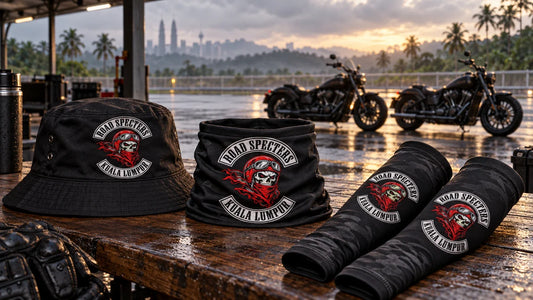
Show weekends are visually busy. A restrained shirt-and-cap system can help the entrant find the right club member quickly, especially when several members rotate through the display area. Keep the same authorized club identity across items. Do not add event logos, manufacturer marks, invented chapter names or official-looking titles without permission.
Caps are best treated as an optional recognition layer, not proof that someone belongs in a restricted area. Match them to the club apparel, keep role instructions in the run sheet and follow any venue or organizer requirements about attire.

Build a display that stays inside its boundary
A club banner can mark the private display area and create a consistent backdrop, but placement matters more than size. Confirm permission, the available footprint and how the banner may be supported. Keep it clear of public walkways, emergency access, adjacent entries, moving motorcycles and hot exhaust components. Use stable hardware appropriate to the permitted site; do not attach anything to venue structures without approval.
The banner should identify the club only. It should not copy Lone Star Rally branding, imply sponsorship or suggest the club is administering the show. If the organizer restricts signage, the restriction wins and the banner stays packed.

A one-page custom-bike show crew run sheet
- Official facts: event page, participant channel, current date, location and four timetable checkpoints.
- People: entrant plus one named owner for documents, presentation, identity and movement/equipment.
- Custody: who may touch or move the motorcycle and who receives it at closeout.
- Judging lock: final presentation cut-off, loose-item check and no-move status.
- Display boundary: permitted footprint, banner decision and clear access paths.
- Equipment count: garments, banner, hardware, cleaning items and containers in and out.
- Boundaries: no public traffic control, no event-staff claims and no unauthorized branding.
Keep the operational sheet shorter than this article. It should point to the latest official source instead of copying details that may change. Each line needs one owner and one completion time.
Frequently asked questions
What time should a Friday motorcycle show crew arrive?
The current Lone Star Rally Motorcycle Show page lists load-in at 8:00 a.m. on Friday, November 6, 2026. The entrant should confirm the latest access and participant instructions directly before arrival because schedules and procedures can change.
What records should stay with the entrant?
The entrant should retain required identification, entry confirmation and any materials specified by the organizer. A club run sheet should hold only minimal operational information and should not copy identity, payment or other unnecessary personal data.
Can club apparel imply that members are event staff?
No. Club-branded shirts and caps can support internal recognition, but they do not create event authority, access rights or an official relationship. Avoid unapproved event logos and words such as “official,” “marshal” or “security.”
Should the crew polish the motorcycle immediately before judging?
Use only a controlled final visual pass approved by the entrant. Before judging, remove loose cloths, containers and tools from the display area. Do not introduce liquids, debris or last-minute work that could affect adjacent displays or access.
Are the published times final?
No timetable should be treated as immutable. The 8–10–12–5 framework reflects the official public page when checked on October 21, 2026. Confirm current details on the organizer’s site and through participant communications.
Sources and verification note
- Lone Star Rally: Motorcycle Show — Friday date, Pier 21 location, load-in, registration, judging and awards times; checked October 21, 2026.
- Lone Star Rally: Local Builders Spotlight — Thursday date, time, Pier 21 location and published builder/bike counts; checked October 21, 2026.
- Lone Star Rally: Cycle Source Ride-In Custom Bike Show — Saturday sign-up, judging, awards and category information; checked October 21, 2026.
- Lone Star Rally: Parking — current 2026 motorcycle parking information; checked October 21, 2026.
Editorial note: This independent guide is general event-planning information. It is not official Lone Star Rally guidance, legal advice, mechanical inspection or a claim of affiliation with an event, club or motorcycle manufacturer. Event rules, access and schedules can change; verify them directly before acting.
Etiquetas:
Anterior
Sawmill Rally 2026: A Motorcycle Club Wet-Weather Staging Checklist
Siguiente
Motoverse 2026: A Three-Day Motorcycle Club Festival Crew Checklist