Malle Rally100 Lisbon 2026: A Motorcycle Club Route-Card Custody Checklist
Direct answer: a motorcycle club should manage a road-rally route card with one named document owner, two custody checks and no unofficial changes to the organizer's instructions. For Malle Rally100 Lisbon 2026, use the 3–2–1 Route-Card Control: respect the official three-minute team release interval, complete two recorded checks—before departure and after the return—and assign one person to hold the organizer-issued route card whenever the team is off the motorcycles.
This checklist is timely because the first Lisbon edition of Malle Rally100 is scheduled for 30 October–1 November 2026. The organizer's current page says rider registration and briefing begin at 10:00 on Saturday, 31 October; teams receive their Malle Rally100 Route Cards and Rally Graphics at that briefing, depart from 11:00 at three-minute intervals, seek checkpoints along the coast and through the Arrábida hills, and return between 16:00 and 17:00.
The details above are organizer facts. The custody method below is an independent club recommendation. It does not replace the live briefing, route card, checkpoint rules, road law, organizer support instructions or a rider's judgment. If a club note conflicts with the official material, the official material wins.
Verified planning signal — checked 22 October 2026
- Malle lists the Lisbon rally weekend for 30 October through 1 November 2026.
- The road rally is described as a 100-mile curated route from Lisbon toward the Arrábida Natural Park and beyond.
- Route cards and rally graphics are issued at the Saturday briefing, not created by participating clubs.
- Teams are released every three minutes and return to the Lisbon finish after the checkpoint route.
- The Motorcycle Safety Foundation recommends a pre-ride meeting, experienced lead and sweep riders, manageable groups and a pre-planned regroup procedure.
Why route-card custody matters at a timed road rally
A route card is more than a souvenir. It is part of the organizer's current event information, delivered at a known point in the programme. A club can create confusion when several members photograph different versions, annotate them independently or assume an earlier social post contains the final route. The practical goal is not to lock information away. It is to make sure the team knows which document came from the briefing, who is holding it and whether the whole team has heard the same instructions.
Timed releases increase the value of a calm handoff. Malle's published three-minute interval is an organizer fact, not a three-minute target for club members to chase. A team that is not ready should follow the organizer's direction rather than rushing to preserve its imagined place. The club method should reduce pressure, not create it.
Authority boundary: club flags, lanyards and bags may identify the club's own people and equipment before or after the ride. They must not imitate Malle credentials, Rally Graphics, route cards, checkpoint signs or traffic-control devices. The official route card stays visibly separate from custom club merchandise.
The 3–2–1 Route-Card Control
| Control | What it means | What the team can verify |
|---|---|---|
| 3-minute release | Treat the organizer's published interval as a staging instruction, not a race pace. | The team is assembled, briefed and released only under the organizer's current process. |
| 2 custody checks | Check the official document before departure and reconcile it after the return. | The same route card entered and left the club's custody, with no unofficial page substituted. |
| 1 document owner | Name one person to hold the route card off-bike and lead the verbal confirmation. | Members know where the original is without searching multiple pockets or message threads. |
Before registration: choose an assembly point, not an unofficial checkpoint
The club's first control happens before the organizer distributes anything. Choose a lawful, permitted meeting place outside moving traffic, confirm the time everyone should arrive and name the person who will attend the briefing as the route-card owner. Keep the group marker modest and remove it when the club moves. Do not place a club flag where it can be mistaken for an event entrance, marshal post, parking direction or checkpoint.
A rally flag can help members identify their own assembly point, especially when riders arrive separately. Its message should be limited to club identity. The organizer still controls registration, queue order, briefing access and departure. If the location does not permit flags, use the agreed map pin and a direct message instead.

At the briefing: receive, label and repeat the official information
1. Receive the document from the official source
The route-card owner should be present for the organizer's briefing and identify the exact material distributed there. If the organizer replaces a page or issues a verbal correction, mark the earlier copy as superseded rather than keeping two apparently current versions. Do not scan, rewrite or publicly post route details unless the organizer explicitly permits it.
2. Separate the original from club notes
Use one sleeve for the organizer-issued document and a different blank sheet for the club's internal information, such as the names of team members or a private contact sequence. Never write a club meeting place over a checkpoint instruction. The distinction should be obvious even to someone joining the table late.
3. Run a short verbal read-back
The owner repeats only what the organizer communicated: departure process, checkpoint method, return expectation, support contact and any change announced at the briefing. Each rider confirms understanding. Questions go back to the organizer's published channel or staff; the club should not guess.
For off-bike registration, a custom lanyard can identify the club's document owner and backup without copying event credentials. Remove and stow loose lanyards before riding so nothing hangs near controls, clothing closures or moving parts. The badge should display club identity only, not “official,” “marshal,” “staff” or any organizer mark.

Custody check one: confirm readiness before departure
Complete the first check while the motorcycles are stationary and before the team enters the release area. The route-card owner shows that the original is present and protected; the team lead confirms the correct members; the sweep confirms the regroup procedure; and each rider confirms fuel, personal protective equipment and phone readiness under the club's normal process.
MSF recommends discussing the route, rest and fuel stops, and hand signals at a riders' meeting. It also recommends experienced lead and sweep riders and manageable groups—ideally five to seven riders, with larger groups divided into smaller units. That guidance is not a rule for this event, but it supports a clear club structure. If the club is entering more than one team, each team should have its own brief and its own named document owner rather than sharing one card between moving groups.
For a different situation involving a very large organized field, the motorcycle club mass-ride muster checklist explains why small internal pods and lawful authority boundaries matter. A road-rally team is not identical to a mass ride, but both benefit from roles that riders can understand before engines start.
On the route: protect the instructions without creating pressure
The route card should remain accessible only when the team is safely stopped. No rider should try to read or retrieve loose paper while moving. If the team is uncertain, follow the organizer's support process and stop in a safe, lawful place. A missed turn or separation is not a reason to exceed a rider's skill, break traffic law or race another team.
MSF advises groups to pre-plan what happens after separation and warns riders not to break the law or ride beyond their abilities to catch up. Turn that principle into one sentence the club can remember: the route card tells us where the event goes; the regroup plan tells us what our club does when someone is no longer with the team. The two should support each other without being confused.
During off-bike briefing and post-ride reconciliation, keep the official paper in one club-marked bag controlled by the owner. A drawstring bag can separate the document kit from personal luggage, but it should not be described as waterproof or protective unless the selected product specification actually supports that claim. Use an appropriate inner sleeve for weather protection and secure the bag according to the motorcycle manufacturer's loading guidance if it is transported.

Custody check two: reconcile the card after the finish
The second check happens after the team has returned and the organizer has completed any relevant finish procedure. The owner confirms the original route card is present, removes temporary club notes that contain personal information and records only the operational lessons worth keeping. Do not publish checkpoint details, private contacts, other riders' names or organizer material without permission.
A five-minute debrief is enough:
- Did every team member close the ride or formally leave under the agreed process?
- Did any organizer correction fail to reach part of the team?
- Was the original route card easy to locate at every stop?
- Did anyone feel pressure to catch up after a separation?
- What one change should be made before the next club road rally?
The route card may become a keepsake if the organizer permits it, but the useful asset is the process: one source, one owner and two visible checks. That pattern can be reused without copying this event's branding or treating one rally's procedure as universal.
Printable motorcycle road-rally route-card checklist
- Verify the organizer's current programme and briefing location.
- Name one route-card owner and one backup before registration.
- Choose a permitted assembly point clear of moving traffic.
- Use only club identity on flags, lanyards and bags.
- Receive the route card and corrections from the official briefing.
- Keep the original separate from club notes and personal luggage.
- Repeat departure, checkpoint, support and return instructions aloud.
- Confirm lead, sweep and the pre-planned regroup method.
- Stow all loose lanyards and paper before motorcycles move.
- Never read, retrieve or adjust the route card while riding.
- If uncertain, stop safely and use the organizer's support process.
- Reconcile the original document and close the team after the finish.
Frequently asked questions
Who should carry a motorcycle rally route card?
Assign one named owner for the organizer-issued original whenever the team is off-bike. Every rider should hear the same briefing, but several independently marked “master” copies can create version confusion.
What is the 3–2–1 Route-Card Control?
For this event, “3” recognizes the organizer's published three-minute team release interval, “2” means a custody check before departure and after return, and “1” means one named route-card owner. The two checks and owner role are independent club recommendations.
Can a club copy or redesign the official Malle route card?
Do not copy, alter, publish or redesign organizer materials without permission. Keep separate club notes for internal coordination and follow the current briefing if a page is replaced or corrected.
Should a rider wear a lanyard while riding?
This guide recommends using lanyards only during the off-bike briefing and stowing them before riding. Nothing loose should hang where it can interfere with clothing, controls or moving parts.
What should a club do if it misses a checkpoint or becomes separated?
Use the organizer's stated support process and the club's pre-planned regroup procedure. Stop only where safe and lawful; do not exceed a rider's ability or break traffic law to catch up.
Does a custom club flag or badge create official event authority?
No. Custom club gear identifies the club only. It must not imitate organizer credentials, checkpoint signs, Rally Graphics, marshal equipment or traffic-control devices.
Sources
- Malle London, The Malle Rally 100 — Lisbon official event page, checked 22 October 2026.
- Malle London, Malle Rally100 official overview, checked 22 October 2026.
- Motorcycle Safety Foundation, Guide to Group Riding, checked 22 October 2026.
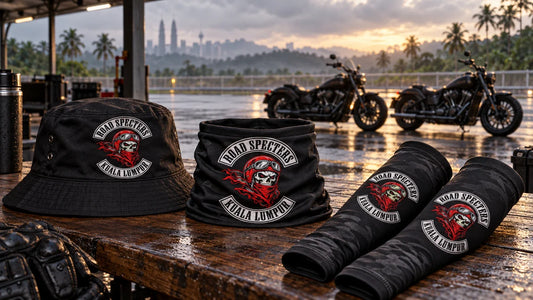
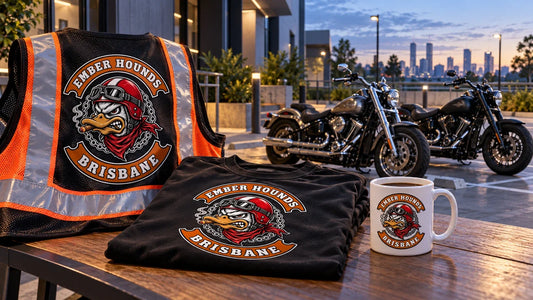
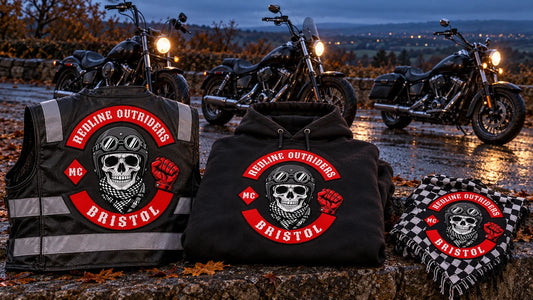
Editorial independence: Motorcycle Club Store is not affiliated with or endorsed by Malle London, Malle Rally100, the Motorcycle Safety Foundation, Harley-Davidson or the club shown in the concept visuals. Event details can change; verify the organizer's current briefing, route materials and support instructions before riding. Product concept images use one client-supplied club identity to demonstrate coordinated custom club merchandise.
Etiquetas:
Anterior
Changing of the Colors Rally 2026: A Motorcycle Club Camp & Schedule Coordination Plan
Siguiente
UK Clocks Go Back 2026: A Motorcycle Club Dusk-Ride Reset Checklist