How to Plan a 2,000 km Motorcycle Club Charity Ride
The safest way to plan a 2,000 km motorcycle club charity ride is to treat it as a five-day operation, not one long group ride. Build one approved route card per day, assign named roles, give every rider authority to call a fatigue stop, log what moves between bikes and the support vehicle, and publish only verified charity updates.
That planning question is timely in Australia. Merri Community Services says 17 Melbourne United Motorcycle Club riders will cover more than 2,000 kilometres from 5–9 November 2026 to raise funds and awareness for people experiencing homelessness and housing insecurity. The campaign is real and public; this guide is an independent planning framework inspired by its scale, not an official MUMC or MOSS document.
For club officers, the useful lesson is not the headline distance. It is the operating rhythm required to repeat safe decisions for five consecutive days. The framework below separates five controls: the daily route card, a role board, fatigue gates, a support-vehicle custody log and an evidence plan for charity communications.
What changes when a charity ride lasts five days?
A one-day ride can sometimes absorb a late start or a missed fuel stop. A five-day ride compounds small errors. A 20-minute delay on day one can become a rushed arrival, reduced sleep and a fatigued departure on day two. Wet apparel that is not separated can become a comfort problem. An unlogged tool transfer can leave the sweep rider without the item they expected.
The answer is a repeatable daily cycle:
- Brief: confirm route, weather, fuel, rest stops and responsibilities.
- Ride: maintain the agreed group plan, spacing and regroup points.
- Reset: stop when fatigue or conditions demand it, not only when the timetable permits.
- Recover: refuel riders and machines, dry gear and protect sleep.
- Record: document verified distance, donations and issues before publishing an update.
This cycle is the article’s original operating model. It turns “ride 2,000 km” into five manageable decisions repeated each day.
Control 1: issue one route card per day
Do not ask riders to navigate from a single five-day map. Produce a separate route card for each day and keep the same information order: departure window, fuel stops, planned rest points, lunch location, final destination, two regroup locations and the emergency contact process. Add the date and version so an updated card cannot be confused with an older screenshot.
Keep exact residential addresses, personal phone numbers and medical details out of the public version. The ride team can carry the minimum private information needed for an emergency, while supporters receive a delayed, general progress update. That protects the route from becoming a live public tracking feed.
Use arrival time as a constraint, not a promise
Plan a latest sensible arrival window that leaves time for food, machine checks and sleep. Do not turn that window into a deadline that pressures the road captain to skip a stop. If weather, roadworks or rider condition change the plan, the timetable must move.
Control 2: put roles on a visible board
A role exists only when the group knows who owns it. At the morning briefing, display the road captain, sweep, first-aid contact, support-vehicle lead, communications lead and charity liaison. A small group may combine roles, but it should never leave responsibility ambiguous.
Transport Victoria advises riders to keep at least a three-second gap to the vehicle in front, use lane position to maintain a buffer and avoid riding while fatigued or impaired. Those are individual riding principles; the role board helps the club support them operationally. The sweep reports a struggling rider. The support lead identifies the nearest planned safe stop. The road captain changes the schedule without debate on the roadside.

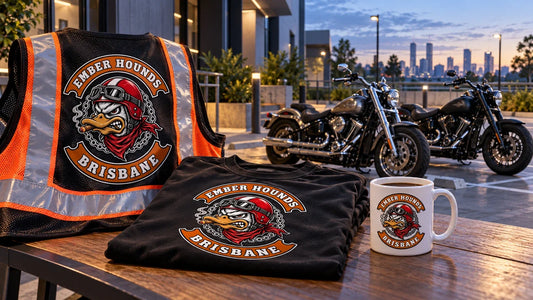
Collection-level visual: reflective role vests prepared beside the daily briefing board.
Plan Custom Reflective Role Vests
Control 3: create fatigue gates before departure
Fatigue policy cannot depend on a rider admitting failure in front of the group. Make stopping a normal operating decision. At each planned rest point, the sweep or road captain asks three neutral questions: Can everyone focus? Is anyone fighting the bike or missing instructions? Has anyone shown a warning sign such as repeated yawning, poor lane position or delayed responses?
The Transport Accident Commission says tired driving contributes to about 25% of road crashes in Victoria and recommends planning regular breaks on long journeys at least every two hours. TAC’s page is written for drivers generally, not as a motorcycle-specific timetable or legal standard. For a club, the practical inference is conservative: two hours is a maximum planning interval, not a target riders must reach. Stop earlier when a rider, weather or road condition requires it.
Write the authority into the plan: any rider may request a stop; the road captain chooses the next safe place; no one is mocked for using the rule. A short delay protects the remaining days of the ride.
Build recovery into the evening
The end-of-day checklist should cover food, hydration, medication routines, charging communications equipment, drying gear and a quiet-hours target. Assign tomorrow’s roles before riders disperse, but postpone non-urgent debate until everyone has rested.
Control 4: separate daily apparel kits
Five days of riding produces heat, rain, dust and wet layers. Pack daily apparel as separate kits instead of one loose bag. Each kit can contain a performance shirt, socks and a small pouch for used items. Keep clean, damp and used garments physically apart. That reduces searching at dawn and makes it easier to identify what must dry overnight.
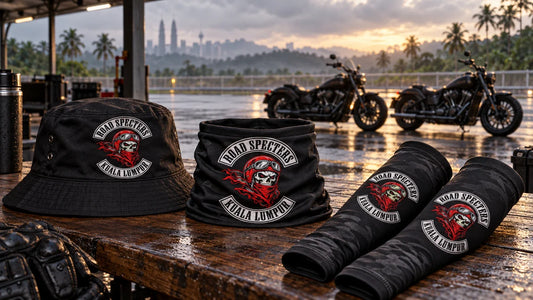
Custom club apparel is identification and team organization; it is not protective motorcycle equipment. Riders still need appropriate certified helmets and abrasion-resistant riding gear for every day. Performance shirts belong under or around the protective system, never in place of it.

Collection-level visual: five moisture-wicking daily kits arranged in a support vehicle.
Build Your Club Performance Shirt Set
Control 5: run a support-vehicle custody log
A support vehicle is useful only when its contents are findable and its driver knows what changed. Use a simple custody log with four fields: item, owner, storage position and last transfer. Log club tools, tyre-repair equipment, water, first-aid supplies, chargers, spare apparel and charity materials. Do not put controlled medicines or sensitive personal documents into a general shared box.
At each overnight stop, reconcile the log before unpacking spreads across rooms. The support lead flags missing items in the evening, when the group can act, rather than during the next departure.
Make rest and regroup points easy to identify
A safe regroup point should be approved in advance, entirely outside the traffic lane and large enough for the expected motorcycles and support vehicle. One coordinated marker is better than a wall of signs. It should help arriving riders identify the club’s planned stop without obstructing sight lines, pedestrian access or another venue’s signage.
Flags and banners can identify a briefing or hydration zone, but they are not traffic-control devices. Follow venue rules, secure every base for wind conditions and remove the display at departure. If a location is uncertain, keep the flags packed.

Collection-level visual: a compact flag system marking a planned rest zone outside the roadway.
Design Club Flags for Ride Checkpoints
Publish verified charity updates, not road drama
MOSS says the 2026 riders will share the organization’s story through their networks, social media, local venues, accommodation stops and conversations along the route. A club can support that goal with a short evidence packet after each day:
- verified kilometres completed, clearly labeled as a daily or cumulative figure;
- one approved image that does not reveal a private overnight location in real time;
- the charity’s official donation link, not an improvised personal payment account;
- one factual explanation of the cause, sourced to the charity;
- any route or schedule change described without blame or speculation.
Never convert a safety stop into a failure narrative. The most credible update may be: “The group changed today’s schedule to protect rider recovery and will confirm the revised distance after arrival.” Accuracy earns more trust than false precision.
Five-day motorcycle charity ride checklist
Before the ride
- Confirm the charity relationship, approved donation link and wording.
- Create five versioned route cards and two regroup points per day.
- Assign road captain, sweep, support, first-aid, communications and charity liaison roles.
- Write the fatigue-stop authority into the rider briefing.
- Check motorcycles, communications, first-aid supplies and support-vehicle inventory.
- Prepare daily apparel kits and a wet-gear separation plan.
Every morning
- Check weather, road alerts, fuel range and the current route-card version.
- Display today’s roles and confirm how the sweep contacts the road captain.
- Ask whether every rider is rested and fit to ride; change the plan if not.
- Confirm the first safe stop before departure.
Every evening
- Reconcile the support-vehicle custody log.
- Refuel, inspect machines and isolate any problem bike.
- Dry or separate apparel and protect the sleep window.
- Publish only verified charity and distance information.
- Carry unresolved non-safety issues into a scheduled debrief, not the next morning’s departure line.
Frequently asked questions
How often should a motorcycle club stop on a long ride?
There is no universal interval for every rider and condition. TAC recommends breaks at least every two hours for long drives; a motorcycle club should treat that as a conservative maximum planning interval and stop earlier for fatigue, heat, weather, fuel or rider concerns.
What roles are essential on a multi-day group ride?
At minimum, name a road captain, sweep, support-vehicle lead and emergency contact. For a charity ride, also assign a communications lead and charity liaison so safety decisions and fundraising claims do not compete for ownership.
Should a club publish its live route?
Usually not in full. Share delayed progress and public event locations while keeping overnight addresses, personal details and real-time regroup changes within the ride team.
Can custom club shirts replace protective riding gear?
No. Club apparel can help identification and daily organization, but it does not replace an approved helmet, abrasion-resistant jacket and pants, gloves, boots or other appropriate protective equipment.
Sources
- Merri Community Services / MOSS: MUMC Ride 2026 — event dates, rider count, distance and cause; checked 21 October 2026.
- MOSS: Every KM Counts — campaign participation and communications context; checked 21 October 2026.
- Transport Accident Commission: Tired driving — fatigue facts, warning signs and break guidance; checked 21 October 2026.
- Transport Victoria: Safe motorcycle riding tips — spacing, buffering and fatigue guidance; checked 21 October 2026.
Editorial note: This independent planning guide is not affiliated with or endorsed by MUMC, MOSS, Transport Victoria, TAC, Harley-Davidson or any motorcycle manufacturer. Event details can change; confirm current information with the organizer before travel.
Etiquetas:
Anterior
Motorcycle Charity Ride Planning: A Toy Donation Handoff Checklist
Siguiente
Asia Harley Days 2026: A Motorcycle Club Group-Booking Checklist