Rocky Point Rally 2026: A Motorcycle Club Border-Crossing Checklist
Direct answer: A motorcycle club riding to Rocky Point Rally 2026 should treat the border as three separate gates—not one group crossing—and require every rider to prove readiness before departure. Build four private document folders, run a seven-day audit, check the official rally program and live CBP conditions, and stop any rider whose identity, immigration, motorcycle, insurance or return-document status is unresolved. Club apparel can help members find the right coordinator, but it is never a travel document, border credential, safety certification or claim of official authority.
The Rocky Point Rally official site lists the 26th annual event for November 12–15, 2026 in Puerto Peñasco, Sonora. Its published schedule is preliminary, and the separate Program & Events page says the 2026 program will be added as activities, times and locations are confirmed. That combination creates a clear planning problem: a club can lock its document process now, but it must keep event timing flexible.
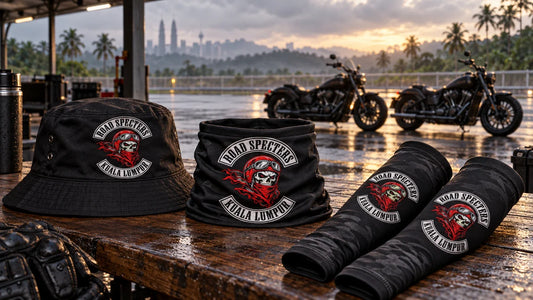
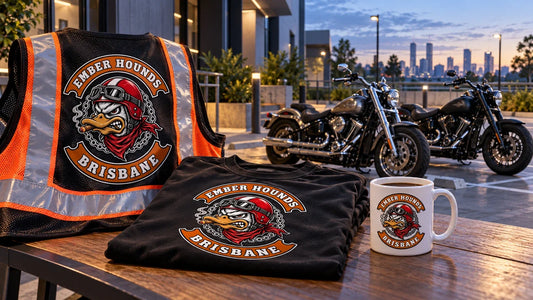
Scope note: This article is an operational planning guide, not legal, immigration, insurance or safety advice. Requirements and advisories can change. Every rider should use current instructions from U.S. Customs and Border Protection (CBP), Mexico's Instituto Nacional de Migración (INM), the Government of Sonora and the U.S. Department of State. MotorClubShop is not affiliated with Rocky Point Rally, any government agency or the club identity shown in the customization visuals.
Why a club checklist matters more than a convoy checklist
Cross-border trips tempt coordinators to think in one moving block: one departure time, one fuel stop, one border line and one arrival. The documents do not work that way. Each traveler is inspected as an individual. Each motorcycle may have a different owner, registration, insurance arrangement or permit question. Each rider must also be able to return independently if the group splits.
A better operating principle is shared timing, individual proof. The club shares deadlines, official links, regroup coordinates and escalation contacts. The individual holds the original documents, answers the authorities and accepts the decision to enter or return. This model reduces the risk that one coordinator becomes the informal custodian of a dozen passports or that a group chat turns into a permanent archive of sensitive identity records.
The four folders every rider should own
Folder 1: traveler and immigration documents
For U.S. citizens returning by land, CBP says travelers should present a valid Western Hemisphere Travel Initiative-compliant document, such as a passport or passport card, as applicable. The exact document depends on the traveler, so the club should link members directly to the current CBP guidance rather than converting it into a homemade one-line rule. Non-U.S. citizens may have additional requirements and should verify their own status with the competent authorities.
Mexico's official INM electronic FMM page describes the land-entry process and its conditions, including the need to present the relevant travel document and complete immigration formalities. An online form is not a promise of admission. The rider must follow current INM instructions and present themselves to immigration as required.
Folder 1 should contain the traveler's originals in a secure, weather-resistant carrier plus a personal backup that the traveler controls. The club roster should record only a status such as “verified by rider on October 30,” never a passport number or image.

Customize Club Lanyards for Coordinator ID
Use club lanyards only to identify a coordinator at a private staging point. Do not place passports, immigration forms or border credentials in a visible badge sleeve.
Folder 2: motorcycle, authority to use it and insurance
The official Sonora “Only Sonora” guidance explains that foreign vehicles may circulate in the state's Free Zone without a temporary import permit when current conditions are met, including valid plates, insurance, driver's license, proof of ownership and immigration status. The same guidance says travel outside the Free Zone can require an “Only Sonora” permit. Because zone boundaries and document rules matter, riders should read the current Government of Sonora material and confirm any route-specific questions before departure.
Folder 2 should therefore answer five questions without guessing:
- Is the registration current and does the motorcycle identification match the document?
- If the rider is not the registered owner, what current authorization is required and available?
- Does the insurance policy apply in Mexico for this motorcycle, rider, dates and route?
- Does the planned route stay within the relevant zone, and has any required permit been confirmed?
- Can the rider produce the required originals or accepted documents without relying on another member's phone?
A screenshot in a club chat is not a substitute for policy verification. The rider should confirm coverage with the insurer and carry the documents in the form current authorities and the insurer require.
Folder 3: route, communications and emergency plan
The route folder is a compact continuity plan. It should list the planned crossing, fuel stops, lawful off-road regroup points, overnight address, event location, emergency contacts and a “lost contact” procedure. It should also tell members exactly when the club stops waiting and switches from group coordination to individual escalation.
Before fixing the route, review the current U.S. Department of State Mexico Travel Advisory, including the state-level section for Sonora and any restrictions that apply to U.S. government employees. An event date, a popular route or a large group does not override an advisory. The club should identify what is an official fact, what is organizer information and what is its own operational judgment.
Do not plan a regroup in a border inspection lane, highway shoulder or entrance queue. Pick a legal fuel station, hotel lot or other agreed location where the property rules permit the group to stop. A missed regroup should trigger the written communications plan—not an improvised road block.

Customize Club Reflective Vests
A custom vest can identify a designated club coordinator at a lawful off-road staging area. It does not create traffic-control authority, replace protective riding equipment or certify visibility performance.
Folder 4: event information and flexible timing
As of October 21, 2026, the official Rocky Point Rally site shows a preliminary schedule: Thursday registration and charity activities, Friday rides and social events, Saturday a parade, bike show and fiesta, and Sunday closing activities. The organizer also warns that times and venues can change. A responsible club plan therefore stores the event link, not just a screenshot copied weeks earlier.
Set one person to monitor official updates, but do not make that person the owner of everybody's trip. If a parade time changes, the member can still cross, check in and navigate to the hotel using their own folder. If an activity is canceled, the group still has a lawful regroup location and a return plan.
The three decision gates
Gate 1: the seven-day document audit
Seven days before departure, each rider completes a private self-check against the four folders and reports only red, amber or green. Green means every required item is current and physically available. Amber means a named issue has an owner and a deadline within 48 hours. Red means the rider is not cleared for the club departure.
The coordinator should challenge vague answers. “I have it on my phone” is not the same as knowing whether the format will be accepted. “My insurance should cover it” is not a verified policy. “We are only going to Rocky Point” is not a route analysis. The purpose of Gate 1 is to surface uncertainty while there is still time to contact the correct authority, insurer or document issuer.
Gate 2: outbound crossing readiness
At the final U.S.-side fuel or staging stop, riders confirm that documents are on their person, luggage is closed, fuel range is sufficient and the next legal regroup point is loaded offline. The club then breaks into manageable arrival waves if needed. It does not promise that the group will be processed together.
One coordinator may hold a non-sensitive attendance list, but every rider must be able to proceed, wait, turn back or seek help independently. No member should hand over their passport to a road captain for the convenience of “one packet.”
Gate 3: return-to-U.S. readiness
The return gate begins the night before departure from Puerto Peñasco. Riders re-check their WHTI-compliant return document, motorcycle papers, fuel, communications and the next day's live port information. If the trip changed—for example, a rider stayed behind or the group split—the return plan must identify who will confirm that member's safe status without holding the entire club indefinitely.
The two live checks that cannot be frozen in a PDF
Live check 1: the official rally program
Use the event's own site to verify times and locations at seven days, 72 hours and the morning of each event day. A club calendar entry should contain the official URL and the time it was last checked. That makes a schedule change auditable and reduces the chance of circulating an old social screenshot as current information.
Live check 2: official border conditions
Use the official CBP Border Wait Times page close to departure and return. Port hours, lane availability and wait estimates are dynamic. Do not publish a fixed wait time or promise that one lane will be open when the club arrives. Record the check time and build enough schedule margin that a longer line does not create pressure to speed or skip fuel.
The one no-go rule
If any rider has an unresolved identity, immigration, ownership, insurance, authorization or route-permit question at the final deadline, that rider does not depart with the club. This is not punishment. It protects the individual from making a high-consequence decision under group pressure and protects the rest of the ride from being converted into an improvised legal or recovery operation.
The rule must be written before the audit. A road captain should not invent exceptions in a parking lot because a member has already booked a room. The member can rejoin only after resolving the issue through the competent authority and confirming a safe, independent plan.
Build a regroup marker without claiming authority
Club flags and banners can make a private staging area easier to find, especially when arrival waves are separated. The safe use case is identification on property where stopping and display are permitted. The unsafe use case is placing a flag in a live travel lane, border queue, public shoulder or any position that looks like an instruction to other road users.

Customize Club Flags & Event Gear
Use flags only at lawful, permission-based regroup locations. They do not reserve space, control traffic or create priority at a port of entry.
A privacy-aware club status board
The coordinator needs readiness information, not copies of identity documents. A minimal board can use five columns: member name, contact confirmed, traveler folder status, motorcycle folder status and last check time. Keep passport numbers, birth dates, policy numbers, document images and immigration details off the shared sheet unless a qualified professional has established a lawful, necessary and secure process.
Use plain status language:
- Green: rider confirms all required current documents are in hand.
- Amber: rider is waiting on a named answer and will update by a fixed deadline.
- Red: rider will not join the departure.
Delete the operational roster after the trip according to the club's retention policy. The safest sensitive document is often the one the club never collected.
The 72-hour Rocky Point club checklist
At 72 hours
- Re-open the official rally program and record the check time.
- Each rider rechecks travel documents, FMM process, motorcycle papers and insurance.
- Review the current Sonora and U.S. travel information for the actual route.
- Confirm legal fuel, rest and regroup locations in both directions.
- Download offline route information and share only non-sensitive emergency contacts.
At 24 hours
- Resolve every amber status; unresolved items become red.
- Check weather, fuel range, motorcycle condition and charging arrangements.
- Confirm who monitors official event updates and who handles a lost-contact escalation.
- Verify that no member is carrying another rider's only copy of a required document.
Before departure and return
- Check official CBP conditions and the selected port's current information.
- Confirm each rider has the four folders and can access them independently.
- Repeat the next regroup location and the no-roadside-waiting rule.
- Do not allow schedule pressure to override the one no-go rule.
Frequently asked questions
What documents does a U.S. rider need to return by land?
CBP says U.S. citizens returning by land should present a valid WHTI-compliant document, such as a passport or passport card, as applicable. Travelers with other citizenship or immigration circumstances should verify their own requirements with the relevant authorities before departure.
Does an online FMM guarantee entry into Mexico?
No. Mexico's INM explains the electronic process and required immigration formalities, but completing a form does not guarantee admission. Each traveler must follow current INM instructions and present the required documents.
Do motorcycles always need a temporary import permit for Puerto Peñasco?
Sonora's official guidance describes a Free Zone where qualifying foreign vehicles may circulate without a temporary import permit when current conditions are met, while travel outside that zone can require an “Only Sonora” permit. Riders must verify the current zone, route and document rules for their own trip.
Can a club vest, lanyard or flag help at the border?
It can help members identify their coordinator at a lawful staging point, but it has no immigration, customs, traffic-control or safety authority. Never present club gear as an official credential or use it to occupy a border lane or road shoulder.
When should a motorcycle club check border wait times?
Check the official CBP Border Wait Times page close to both outbound planning and the return trip. Because conditions and operating details can change, treat the result as a time-stamped planning input—not a guarantee.
Sources and verification date
Official sources checked October 21, 2026: Rocky Point Rally official site and Program & Events page; U.S. Customs and Border Protection WHTI document guidance and Border Wait Times; Mexico INM electronic FMM page; Government of Sonora “Only Sonora” guidance; U.S. Department of State Mexico Travel Advisory. Recheck every source before travel.
Bottom line: The club's most valuable cross-border asset is not a larger convoy. It is a clear decision system that keeps documents with the traveler, separates official facts from club judgment, and removes unresolved riders from the departure before peer pressure takes over.
Etiquetas:
Anterior
Asia Harley Days 2026: A Motorcycle Club Group-Booking Checklist
Siguiente
Shipwreck Rally 2026: A Motorcycle Club Mass-Ride Muster Checklist