UK Clocks Go Back 2026: A Motorcycle Club Dusk-Ride Reset Checklist
Direct answer: before the UK clocks go back on 25 October 2026, a motorcycle club should reissue every ride time from one named schedule owner, move its briefing earlier than the expected loss of daylight, and complete three separate visibility checks: motorcycle lights, a clean clear visor and visible reflective elements. Use the 25–3–1 Clock-Change Reset: 25 October is the official change date, three checks cover what riders can see and how they can be seen, and one person controls the final timetable.
The timing is specific. GOV.UK confirms that the clocks go back on 25 October 2026. At 2:00 am British Summer Time, the UK returns to 1:00 am Greenwich Mean Time. The change gives an extra hour in the morning clock, but it also brings darkness earlier by the clock during the following evenings. A club that repeats last week's 4:00 pm meet without recalculating sunset and route time may unintentionally turn a daylight ride into a dusk or night ride.
The date and published riding guidance are facts. The 25–3–1 method below is an independent planning framework, not an official rule, training course or guarantee of safety. Weather, traffic, road closures, rider experience and machine condition can change the correct decision. The safest club plan may be to shorten, postpone or cancel.
Verified planning signal — checked 22 October 2026
- GOV.UK lists 25 October as the 2026 date when UK clocks go back.
- IAM RoadSmart's 13 October 2026 autumn guidance connects the clock change with darker journeys and advises motorcyclists to check lights, visor and reflective elements.
- The Motorcycle Safety Foundation's current autumn guidance notes shorter daylight, changing road conditions and the importance of being visible.
- MSF night-riding guidance identifies dusk as a difficult transition period and recommends more space, reduced speed and a clean clear face shield.
Why the UK clock change creates a motorcycle-club planning problem
The clock change does not make one route unsafe by itself. It changes the assumptions around that route. An advertised start time may still look familiar, but the same journey can now include lower sun, dusk, headlight glare or full darkness. Members may also read an old poster, calendar invite or screenshot that was created in British Summer Time. A one-hour misunderstanding at the start can consume the club's entire daylight buffer.
That is why this checklist begins with administration rather than riding technique. The club should first establish one current time, one source and one owner. Only then should it decide whether the route, stops and return window still fit the available light and the ability of every participant.
Safety and product boundary: custom club clothing can support identity and, where the actual product specification confirms it, may include reflective elements. It is not a substitute for an approved helmet, protective riding jacket, gloves, boots, working lights, rider training or any product-specific certified protective equipment. Never infer protection from a concept image or from the word “reflective” alone; confirm the current product specification before ordering or relying on it.
The 25–3–1 Clock-Change Reset
| Control | Club action | Evidence before departure |
|---|---|---|
| 25 October | Recalculate the meeting, departure, stop and return plan for GMT. | The final message names the date, local time and expected daylight condition. |
| 3 visibility checks | Inspect motorcycle lights, visor clarity and visible reflective elements separately. | Each rider confirms all three while stationary; no club garment is treated as proof of certified protection. |
| 1 schedule owner | Give one officer responsibility for the final timetable and changes. | Every current post, calendar entry and direct message points back to the same version. |
Step 1: rebuild the timetable around light, not habit
Publish the time in full
Write “Sunday, 25 October 2026, 14:30 GMT” rather than “same time as usual.” Include the precise meeting location, briefing time, planned departure and latest return target. If members are travelling from another time zone or using a device that may not update automatically, ask them to confirm the converted local time before leaving home.
Use two confirmations without creating two authorities
The schedule owner publishes the final version. A second officer checks the date, time zone, map pin and route duration, but does not maintain a competing message. Riders acknowledge the final post directly. If the plan changes, edit or withdraw the old version instead of adding another screenshot to the thread.
A custom club hoodie can identify the off-bike coordinator at a cool-weather briefing and keep the same authorized artwork across the club's casual gear. It should not be presented as protective motorcycle clothing. If a member wears one while travelling, it belongs underneath or alongside whatever approved protective gear is appropriate for that rider and ride.

Step 2: complete the three visibility checks while stationary
Check 1 — motorcycle lights
Confirm the headlight, rear light, brake-light response and indicators using the motorcycle manufacturer's instructions and applicable law. Clean dirty lenses and check for obvious damage. A working lamp does not mean the road ahead is fully visible at every speed; the ride must still fit the distance each rider can see and stop within.
Check 2 — visor and rider vision
IAM RoadSmart tells motorcyclists to keep visors clean and use a suitable anti-fog treatment where needed. MSF's night-riding material also warns that scratches can distort light. A club check should therefore look for a clean, clear and undamaged field of view before departure. If a rider cannot see comfortably through the expected conditions, that rider should not be pressured to continue.
Check 3 — reflective elements
Inspect whether the reflective material that is actually present is clean, unobstructed and visible from relevant angles. Do this with a torch or headlamp from several metres away while the wearer is stationary. The aim is to find blocked, dirty or poorly positioned material—not to make a promise that another road user will always see it.
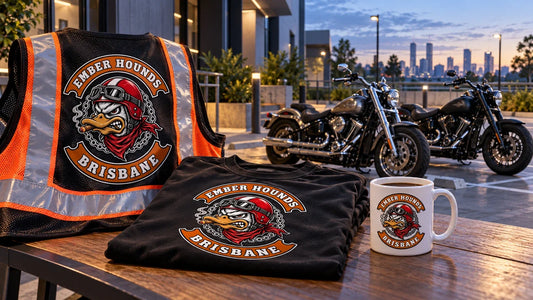
A custom reflective vest can give a club a consistent identity at a briefing or regroup point, provided the garment's real construction, placement and current specification suit the intended use. Keep the authorized club artwork clear without covering the reflective bands, and do not add words such as “police,” “marshal” or “official” unless the wearer genuinely holds an authorized role and the organizer permits it.

Step 3: shorten the route before darkness shortens the margin
Build a primary route and a shorter fallback. The fallback should remove the least predictable section first—such as an unfamiliar rural loop or an optional stop—without creating a rushed return. Set a decision time at the briefing and another at the planned midpoint. If the group reaches either gate late, use the shorter plan rather than trying to recover the schedule on the road.
The Motorcycle Safety Foundation advises night riders to reduce speed, increase distance and avoid overriding the distance illuminated by the headlight. For a club, that means the lead rider should not set a pace based on the quickest member, and the sweep should not become a recovery vehicle for a schedule that was too ambitious. No member should ride beyond skill or comfort to preserve the itinerary.
Step 4: brief autumn hazards without pretending to predict them
IAM RoadSmart's 2026 guidance highlights headlight glare, fog, wet leaves and changing visibility. MSF's current autumn alert also discusses cooler temperatures, debris, reduced daylight and wildlife activity. These sources do not tell a club exactly what it will encounter on one route. They identify conditions that deserve a fresh check rather than an assumption.
Keep the briefing short and observable:
- What does the current forecast show for the route and return window?
- Are wet leaves, fog or surface debris visible at the departure point?
- Which rider is lead, which is sweep and what is the regroup method?
- What exact condition triggers the shorter route, delay or cancellation?
- Has every rider been told that opting out carries no penalty?
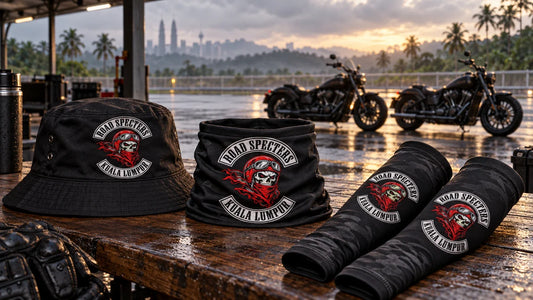
A club bandana may carry authorized identity at the briefing table, but it is not a visor cleaner, anti-fog product or protective face covering unless the specific product is designed and documented for that purpose. Keep a proper clean microfiber cloth and the helmet manufacturer's care guidance with the visor kit.

A simple go, shorten or cancel decision table
| Observed condition | Club response | Do not do |
|---|---|---|
| Schedule confirmed, checks complete and conditions remain within every rider's ability. | Use the agreed plan and continue reassessing. | Treat the initial decision as permission to ignore later changes. |
| Departure is late, daylight buffer is shrinking or one optional section is uncertain. | Use the shorter route or return earlier. | Increase pace to recover the old timetable. |
| Critical light fails, visor vision is inadequate, weather deteriorates or a rider is uncomfortable. | Delay, withdraw the affected motorcycle or cancel under the club's safe process. | Use custom clothing or group pressure as a substitute for the missing control. |
Printable motorcycle club night-ride checklist
- Confirm 25 October 2026 as the UK clock-change date.
- Name one schedule owner and one checker.
- Publish the date, local time zone, meeting point and return target in full.
- Withdraw or clearly supersede old posters, screenshots and calendar entries.
- Recalculate the route for the expected light, weather and traffic window.
- Prepare a shorter fallback route and an unambiguous decision time.
- Check headlight, rear light, brake light and indicators while stationary.
- Check the visor for cleanliness, clarity, damage and fogging risk.
- Check actual reflective elements for cleanliness, placement and obstruction.
- Confirm lead, sweep, regroup method and member opt-out.
- Use only authorized club identity; do not imply public or event authority.
- Shorten, delay or cancel rather than rushing to recover daylight.
Frequently asked questions
When do the clocks go back in the UK in 2026?
GOV.UK lists Sunday, 25 October 2026. At 2:00 am British Summer Time, clocks go back to 1:00 am Greenwich Mean Time.
What is the 25–3–1 Clock-Change Reset?
It is an independent club planning framework: 25 October is the official 2026 change date, three checks cover motorcycle lights, visor clarity and visible reflective elements, and one named schedule owner controls the final timetable.
Should a club keep the same meeting time after the clocks change?
Only after recalculating the route, expected light, weather and return window. A familiar clock time may place more of the ride in dusk or darkness, so the correct response may be an earlier start, shorter route or cancellation.
Does a custom reflective vest replace protective riding gear?
No. A custom vest does not replace an approved helmet, protective jacket, gloves, boots, working motorcycle lights or training. Confirm the vest's actual current specification and do not assume certification or protection from its appearance.
What should a motorcycle club check before riding at dusk?
At minimum, confirm the current time and route, inspect motorcycle lights, clean and check the visor, examine actual reflective elements, review the weather and road conditions, and set clear shorten-or-cancel triggers.
Can a club ride be cancelled because one member is uncomfortable?
A rider should never be pressured to continue beyond skill or comfort. The club can help that member withdraw safely, shorten the route for everyone or cancel when the available controls do not match the conditions.
Sources
- GOV.UK, When do the clocks change?, checked 22 October 2026.
- IAM RoadSmart, Five Top Hints for Safer Autumn Driving, published 13 October 2026 and checked 22 October 2026.
- Motorcycle Safety Foundation, Autumn Calls for Extra Attention from Motorcyclists and Drivers, checked 22 October 2026.
- Motorcycle Safety Foundation, Night Riding guidance, page 30, checked 22 October 2026.
Editorial independence: Motorcycle Club Store is not affiliated with or endorsed by GOV.UK, IAM RoadSmart, the Motorcycle Safety Foundation, Harley-Davidson or the club shown in the concept visuals. Safety guidance and weather can change; riders remain responsible for applicable law, current conditions, appropriate training, protective equipment and individual judgment. Product concept images use one client-supplied club identity to demonstrate coordinated custom club merchandise and do not prove certification or protective performance.
Tags:
Previous
Malle Rally100 Lisbon 2026: A Motorcycle Club Route-Card Custody Checklist
Next
Halloween Motorcycle Ride 2026: A Motorcycle Club Costume Safety Checklist