
Motorcycle Charity Ride Planning: A Toy Donation Handoff Checklist
Direct answer: The most reliable way to plan a motorcycle charity ride is to treat every donated item as a tracked payload moving through five gates: recipient approval, route authorization, rider briefing, controlled intake, and signed handoff. That system protects the charity’s requirements, reduces confusion at busy checkpoints, and gives the club a clear record of what it delivered.
Late-October toy rides make this planning problem especially visible. The Children’s Advocacy Center of Collin County currently lists its 34th Annual Teddy Bear Ride for Sunday, October 25, 2026. Its public event page says registration starts at 8:00 a.m., kickstands go up at 9:45 a.m., and riders travel from IKEA Frisco to Harley-Davidson Financial Services; it also notes that the route may change. The organization says the ride delivers new teddy bears for children receiving forensic interviews.
That event is the timely signal behind this guide, but the framework below is intentionally reusable. It is an independent editorial checklist for motorcycle clubs, riding clubs, ministries and volunteer groups; MotorClubShop is not affiliated with the Teddy Bear Ride, its organizers, Harley-Davidson, or any club mentioned.
What is the five-gate donation handoff?
The five-gate handoff is a simple operating model for a motorcycle charity ride:
- Recipient gate: confirm exactly what the beneficiary can accept.
- Route gate: approve the route, permissions and hazard controls.
- Rider gate: brief manageable groups with named leaders and sweep riders.
- Intake gate: count and sort donations away from motorcycle traffic.
- Handoff gate: reconcile the final count with the receiving organization.
Original operating principle: A donated toy is a payload, not a prop. It should have an acceptance rule, a custody path and a confirmed destination before the first engine starts.
Gate 1: Let the recipient define an acceptable donation
Start with the beneficiary, not with a club shopping list. Ask the receiving organization to confirm product condition, age range, packaging, prohibited items, delivery window, storage capacity and the name of the person authorized to accept the shipment. Put those answers into one page that every collection partner receives.
For example, the 2026 Teddy Bear Ride page specifically says riders are delivering new teddy bears. “New” is not a decorative adjective; it is an acceptance criterion. Clubs should not quietly substitute used items, unrelated toys or unapproved goods because they appear generous. When an item falls outside the recipient’s rules, route it to a different approved program instead of adding it to the ride-day load.
Recipient confirmation checklist
- Accepted item type, condition and packaging
- Quantity target or storage ceiling
- Drop-off address, window and receiving contact
- Rules for cash, online donations or late arrivals
- Photo, name and privacy limits at the handoff
Keep product purchases and charitable donations separate in your communications. A club may order identification gear for its own volunteers, but it should never imply that buying club merchandise automatically benefits a charity unless a documented fundraising arrangement actually exists.
Gate 2: Approve the route before promoting it
A public-road charity ride is not just a longer club ride. It may involve unfamiliar participants, a visible queue, collection vehicles and a time-sensitive arrival. The U.S. National Transportation Safety Board’s investigation of a 2017 toy-run crash identified a broader planning lesson: special events using public roads should address safe route selection, required permits and hazard mitigation. The agency’s public investigation summary explains why those controls belong in the event plan.
Before publishing a route, organizers should confirm requirements with the relevant road authority and law-enforcement agencies. Identify difficult merges, construction, toll points, fuel gaps and locations where a large group could block normal traffic. Do not promise road closures, escorts or right-of-way unless the responsible authority has confirmed them.
Write two route plans
Plan A is the approved ride route. Plan B is the no-ride or interrupted-ride handoff: where donations go if weather, a road closure or a safety concern cancels the group movement. The charity should still receive the goods even when the ceremonial ride cannot proceed.
Gate 3: Build rider pods around communication, not spectacle
The Motorcycle Safety Foundation’s group-riding guidance recommends a pre-ride meeting, experienced lead and sweep riders, and manageable groups—ideally five to seven riders, with larger groups divided into smaller units. MSF also advises riders not to exceed their skills or break traffic laws to catch up after a separation.
Translate that guidance into a printed pod card. Each pod should have a lead, a sweep, a roster, the destination, planned stops, a regrouping rule and a contact number. Charity cargo should travel in a suitable support vehicle unless the recipient and organizers have approved another secure method; do not overload motorcycles or attach loose packages that can affect control.
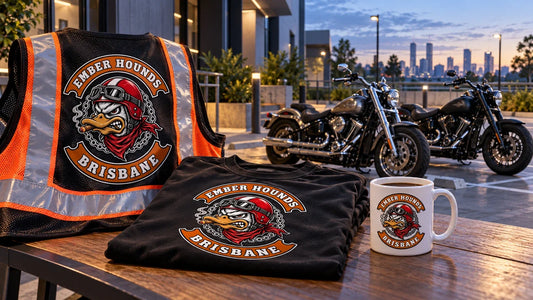
Volunteer apparel should clarify who is performing an event function. Use one authorized club identity and a restrained role system so participants can find the road captain, donation-intake team and recipient liaison without turning clothing into a substitute for instructions.

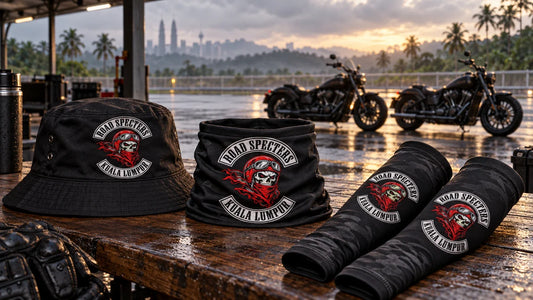
Build a coordinated visual system for club volunteers without mixing identities or unrelated retail gear.
Customize Your Club Volunteer ApparelGate 4: Separate motorcycles, people and donations at intake
A good collection point has three visible zones: arrival, donation intake and departure. Motorcycles move through the arrival lane; donated items move to a stationary table or support vehicle; riders move to the briefing or departure zone. That separation prevents a crowd from forming around moving bikes.
Stationary flags and banners can help riders recognize the correct zone, but they should never conceal traffic control devices, narrow a walkway or create a sail hazard. Use weighted bases, keep sightlines open and remove signage when the staffed checkpoint closes. The words on a sign should describe a real function—such as intake or check-in—rather than suggesting sponsorship or official status that does not exist.

Use coordinated, stationary event gear to make intake and departure zones easier to identify.
Customize Your Club Event GearUse a two-person count
At intake, one volunteer handles the item and one records it. Count sealed cartons or agreed item units, mark rejected or redirected goods separately, and photograph only the shipment—not children, recipients or private records—unless the organization has approved a different media protocol.
Gate 5: Close the handoff with one shared number
The ride is not complete when motorcycles arrive. It is complete when the donor group and recipient agree on what changed hands. Reconcile the intake tally, support-vehicle load and recipient count. Record the date, time, location, total, exceptions and the names of the authorized club and recipient representatives.
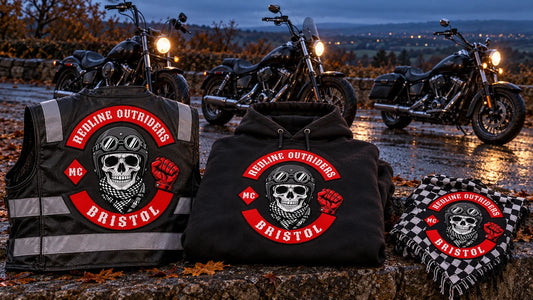
Role patches or badges can make volunteer responsibilities visible, but the record matters more than the emblem. Assign each marker to a defined function, keep issuance under club approval and retire event-specific identifiers after the event. Never imitate emergency services, law enforcement or another organization’s insignia.

Create an approved patch-and-badge system that supports clear volunteer roles and club-controlled issuance.
Customize Club Role Patches & BadgesA 24-hour motorcycle charity ride checklist
- Reconfirm the recipient’s item rules and receiving contact.
- Check the official route source for changes; do not rely on an old screenshot.
- Send pod assignments, lead/sweep names and the regrouping procedure.
- Confirm the support vehicle, load limit and backup delivery plan.
- Place cones, tables, flags and signs before motorcycles arrive.
- Brief intake volunteers on accepted, rejected and redirected items.
- Prepare one count sheet for collection and one for recipient sign-off.
- Repeat privacy, photography and media rules.
- Publish weather or cancellation changes through one official channel.
Frequently asked questions
How many riders should be in one charity-ride group?
MSF says a manageable group is ideally five to seven riders. Larger turnouts can be divided into pods, each with an experienced lead and sweep rider. Local event plans and authority requirements still control.
Should riders carry donated toys on their motorcycles?
Use a suitable support vehicle when possible. If any item is carried on a motorcycle, it must be secured within the motorcycle’s load limits and must not interfere with controls, balance, lights or visibility. The organizer and recipient should approve the transport plan in advance.
What should a motorcycle charity ride receipt include?
Record the date, receiving organization, handoff location, agreed item count, exceptions and the names of authorized representatives. Ask the charity which acknowledgment format it uses; do not invent a tax receipt or promise deductibility.
Can a club use custom flags and patches at a charity event?
Yes, when the designs are authorized by the club and used accurately. Keep stationary flags out of traffic paths, assign patches to real roles, and do not imitate official agencies or imply that the charity endorses the club or vendor.
The measure of a successful ride
Attendance and photos are visible; a clean handoff is more important. The strongest motorcycle charity ride plan can answer three questions at any moment: What is being accepted? Who is responsible now? What happens next? When the club, road team and recipient share those answers, community goodwill becomes a repeatable operation rather than a one-day spectacle.
Sources checked October 20, 2026: Children’s Advocacy Center of Collin County, “34th Annual Teddy Bear Ride”; Motorcycle Safety Foundation, “Group Riding”; National Transportation Safety Board, “Motorcycle and Pickup Truck Crash During ‘Toy Run’ Group Ride.” Event details can change, so readers should confirm the latest information with the organizer. This article offers general planning information, not legal, safety-training or tax advice.
Tags:
Previous
Thunder Beach 2026: A Motorcycle Club Packing and Coordination Guide
Next
How to Plan a 2,000 km Motorcycle Club Charity Ride