Sawmill Rally 2026: A Motorcycle Club Wet-Weather Staging Checklist
Direct answer: A motorcycle club preparing for a forest rally in changeable weather needs two simple controls before anyone rides: a red–amber–green weather gate that decides whether the club proceeds, delays or stands down, and a three-zone staging map that keeps arrival, wet gear and ready-to-depart activity separate. Check the organizer’s latest instructions, Bureau of Meteorology warnings, local emergency alerts and access conditions first; then let every rider make an individual no-pressure go/no-go decision.
This approach is timely for riders monitoring the ADMCC Sawmill Rally 2026. Alexandra & District Motorcycle Club’s official registration page lists the event for November 15, 2026, from 6:30 am to 4:00 pm AEDT at Mansfield State Forest, 1380 Buttercup Road, Merrijig, Victoria, and currently shows registration open. This independent article does not forecast rain, describe the rally course, confirm eligibility or replace event instructions. Weather and access can change, so participants must rely on direct organizer communications and current official information.
The information gain is practical: instead of another generic packing list, this motorcycle club wet-weather rally checklist turns public safety advice into a decision record a club can use without pretending to certify riders, motorcycles or conditions.
Why wet-weather staging is an operations problem
Rain affects more than grip. It changes arrival times, visibility, communication, clothing management, parking surfaces and the confidence of individual riders. A club that discusses only what to pack can still create a crowded shelter, mix wet and dry gear, obscure the exit lane or pressure an uncomfortable rider to continue.
Separate official facts from club decisions
Four information layers should remain distinct. The event organizer controls registration, venue rules, timetable and event instructions. The Bureau of Meteorology publishes official forecasts and warnings. Victorian emergency and land-management authorities publish alerts or closures. The club controls only its own meeting point, internal communications, voluntary role assignments and decision to withdraw. If those layers conflict, the official warning, closure or organizer instruction wins.
Do not turn a forecast into a promise
A long-range weather screen can help with preparation, but it cannot guarantee ride-day conditions. Use the Bureau of Meteorology’s Victoria weather and warnings hub for current warnings, forecasts, radar and rainfall information. Record when the club checked it. Avoid screenshots without a timestamp, and never publish “safe to ride” as a club conclusion.
The red–amber–green weather gate
The gate is a shared language, not a legal or mechanical certification. It lets a coordinator state the club’s operating status while preserving each rider’s right to decline.
Red: do not enter or depart
Red applies when an official closure, warning or event cancellation prevents access; when the organizer directs riders to stop; when floodwater blocks the route; or when a rider cannot see, control or operate the motorcycle confidently. A red decision means stand down and use the agreed communication tree. It does not mean finding a back road around a closure.
Amber: pause, verify and reduce complexity
Amber means conditions or information are uncertain. The club delays its own departure, checks the official source again, contacts the organizer through the published channel if necessary and reassesses the meeting point. An amber plan can reduce the number of moving parts—smaller arrival waves, a later check-in window or cancellation of non-essential club displays—without rewriting the event plan.
Green: proceed under current instructions
Green means the organizer’s event information, official warnings and the club’s own access check show no known stop condition at the time of review. It is not a guarantee. Transport Victoria advises riders to ride to conditions, keep at least a three-second gap, slow before curves, increase distance in poor conditions, use lights and take extra care around painted lines, shiny bitumen, loose surfaces, potholes and oil. Every rider still makes a personal decision and can change it at any time.
Build the three-zone staging map
A wet-weather meeting point should have a one-way logic that members can understand in seconds. Draw the layout before the event and confirm the venue permits it. Never place club equipment on a public road, emergency access route or area controlled by the organizer.
Zone 1: arrival and engine-off area
Choose firm, level ground where riders can enter without a tight turn, stop, place a foot down and park without blocking the next arrival. Keep the lane free of bags, cords, flag bases and spectators. Engines go off before the check-in conversation begins. A member may guide clubmates on private property only within venue rules; this is not authority to stop public traffic.
Zone 2: sheltered readiness check
Use a dry position for the short status check: rider green/amber/red, organizer update received, lights functioning, luggage visibly secure, fuel plan understood and emergency contact method available. This is not a mechanical inspection. A concern about tyres, brakes, controls or protective equipment belongs with a qualified person and may justify standing down.

Zone 3: ready line and clean exit
Only riders who have completed the check move to the ready line. Point motorcycles toward the permitted exit, leave room for a rider to withdraw without reversing through a crowd, and keep the route to emergency access clear. Release riders in the sequence specified by the organizer. A club coordinator should not create a competing departure order.
Assign four narrow club roles
Wet weather rewards clarity. Four narrow roles are usually more useful than a long list of titles. Each role needs one named person, one backup and a written boundary.
Source monitor
The source monitor checks the event’s official page or direct participant message, BOM Victoria, VicEmergency and any published closure source at agreed times. They report the URL, timestamp and status—never a personal assurance that conditions are safe.
Staging coordinator
The staging coordinator keeps the three zones clear, confirms that club displays remain inside the permitted private area and prevents gear from spreading into the arrival lane. This person does not direct unrelated road users.
Readiness recorder
The recorder notes only the minimum information needed for the day: rider name, status, contact method and whether the person has departed, withdrawn or returned. Avoid medical histories, identity-document copies and unnecessary location tracking. Delete or archive the operational record under the club’s privacy practice after the event.
Withdrawal contact
This person supports a rider who decides not to proceed, confirms transport or accommodation arrangements when needed and closes the loop with the club. The role matters because a good stand-down option reduces peer pressure. No rider should have to defend a red decision.
Keep wet and dry gear physically separate
A crowded shelter becomes harder to manage when gloves, layers, paperwork and personal items are mixed on one table. Use a simple two-stream system: one container or branded bag for clean, dry items and another for wet items. Give every rider ownership of their own gear; the club should not make unverified waterproof or protective claims about ordinary bags.
Label by purpose, not by person
Labels such as “dry layers,” “wet return” and “shared admin” are easier to scan than a pile of named bags. Keep phones, keys, medicines and identity documents with their owners unless the club has an explicit, secure custody process. Never assume a drawstring bag is waterproof; use appropriate sealed protection inside it when needed.

Run a return-side reset
After the ride, do not put wet items back into the readiness area. Reopen the wet-return stream, account for riders, separate borrowed club equipment and note anything that needs drying or inspection. The reset prevents tomorrow’s problem from being sealed into today’s bag.
Use official checks at three decision times
Seven days before
Confirm registration and participant instructions directly with the organizer. Check the broad forecast only for planning, not for a final decision. Share source links with members and identify the private fallback meeting point. VICSES advises travellers to tell someone their plans, carry appropriate emergency supplies, check severe-weather warnings and elevated Fire Danger Ratings, and understand local flood risks.
Twenty-four hours before
Recheck the organizer, official warnings and access information. Confirm the red–amber–green call time, role owners and the cancellation channel. Riders should inspect their own motorcycles and protective gear. Transport Victoria recommends quality tested motorcycle protective equipment, including helmet, jacket, gloves, pants and boots; ordinary club apparel should never be presented as a substitute.
Before departure and before return
Record a timestamped source check immediately before the club’s movement. Repeat it if conditions change, a warning arrives or the organizer updates the plan. Before leaving the venue, verify the route and conditions again. A “green” decision from the morning does not carry automatically into the afternoon.
Make private-site markers useful and lawful
Flags or signs can help club members find a sheltered check-in point, dry-gear area or return marker. Use them only where the venue or organizer permits. Weight stands for wind, keep fabric clear of hot exhausts and never narrow an emergency path.
A marker is not a traffic-control device
Do not put a club flag on a public shoulder, intersection or shared access point to imply right of way. Do not add “official,” “marshal” or event branding without permission. The safest visual system is modest: one club identity, one private location and no claim of authority.

A one-page club run sheet
Keep the operational version shorter than the article. One page is enough:
- Event facts: official URL, date, location and organizer contact channel.
- Source checks: organizer, BOM, VicEmergency and closure source with timestamps.
- Weather gate: red, amber or green, plus who recorded it.
- Three zones: arrival, sheltered check and ready line.
- Four roles: source monitor, staging coordinator, recorder and withdrawal contact.
- Counts: arrived, withdrawn, departed and returned.
- Boundaries: no traffic control, no safety certification and no pressure to ride.
The run sheet should point to official sources instead of copying details that may change. That makes updates faster and reduces the chance that yesterday’s screenshot becomes today’s instruction.
Frequently asked questions
Is Sawmill Rally 2026 currently open for registration?
The ADMCC official registration page showed registration open when checked on October 21, 2026, and listed the event for November 15 at Mansfield State Forest. Status can change, so confirm on the organizer’s current page before making plans.
Does a green weather gate mean the ride is safe?
No. Green means the checked sources did not show a club-level stop condition at that recorded time. It is not a safety guarantee, a road assessment or permission to ignore organizer instructions, warnings, closures or a rider’s own judgment.
Who can call red for the club?
The club should name who records the shared operating status, but every rider retains the right to stand down individually. An official warning, closure, organizer cancellation or lawful direction overrides the club’s plan.
Can custom club apparel replace protective riding gear?
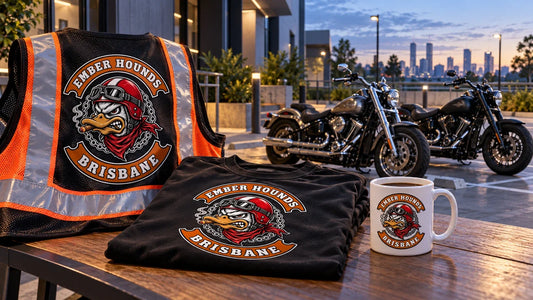
No. Club-branded vests, shirts and bags are for identity and organization. Riders should use appropriate, tested motorcycle protective equipment and follow applicable laws and official guidance.
Are the images official Sawmill Rally or ADMCC products?
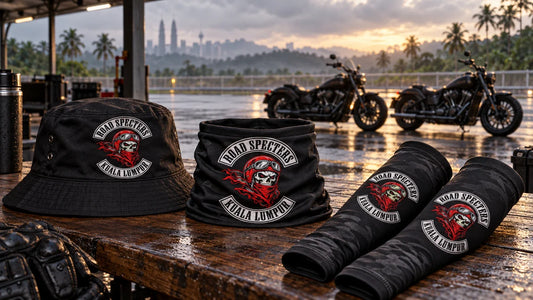
No. They are original editorial illustrations using one client-authorized club identity. They do not show the event venue, course or organizers, and they do not imply affiliation with ADMCC, Sawmill Rally or any motorcycle manufacturer.
Sources and verification note
- Alexandra & District Motorcycle Club: Rally Registration — event date, time, location and open registration status; checked October 21, 2026.
- Transport Victoria: Safe motorcycle riding tips — visibility, following distance, curves, poor-weather adaptation and surface hazards; checked October 21, 2026.
- Victoria State Emergency Service: Plan for emergencies when on holidays — trip plans, warning checks, emergency supplies, flood awareness and closure checks; checked October 21, 2026.
- Bureau of Meteorology: Victoria Weather and Warnings — current warnings, forecasts, radar and rainfall information; checked October 21, 2026.
Editorial note: Event details, access and weather can change. Verify current organizer communications and official sources before travel. This article is general planning information, not legal, medical, mechanical, meteorological or official event advice.
Tags:
Previous
Shipwreck Rally 2026: A Motorcycle Club Mass-Ride Muster Checklist
Next
Lone Star Rally 2026: A Custom Bike Show Crew Readiness Checklist